Error Codes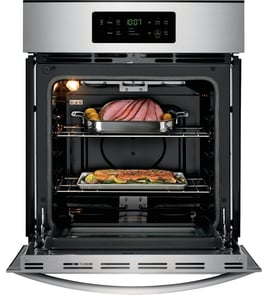


How much does a 24 inch wall oven weigh?
A 24-inch electric wall oven typically weighs about 90 to 140 lb. For the GE JRP24GT1BB, the exact installed weight depends on the cabinet cutout, trim, and any attached hardware; use the model’s spec label and compare parts like the cabinet WB63K5112 to confirm what you are handling.
Typical weight ranges (what to expect)
Most 24-inch single wall ovens fall into these ranges:
- Compact electric wall oven: 90 to 140 lb
- Heavier builds (more insulation, thicker door glass): 120 to 160 lb
- Shipping weight vs. installed weight: shipping is often higher due to packaging
| What you are measuring | What it includes | Typical difference |
|---|---|---|
| Installed oven weight | Oven only, mounted in cabinet | Baseline |
| Shipping weight | Oven plus packaging | +10 to +30 lb |
| “Lift weight” during removal | Oven plus any attached trim or brackets | Varies |
How we recommend confirming the weight for GE JRP24GT1BB
Because weight can vary by configuration, we use these practical checks:
- Check the model and serial tag (often on the oven frame behind the door) for rating/spec info.
- Plan for a 2-person lift; many wall ovens are awkward even when under 120 lb.
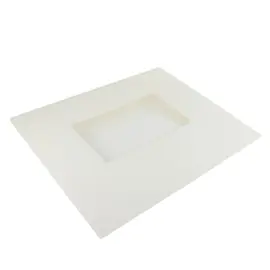
- Support the door and glass; the door assembly can shift the center of gravity.
- If you are removing it, shut off power at the breaker and verify power is off.
- Use a sturdy platform (cart or table) at cabinet height to slide the oven out safely.
Why it matters
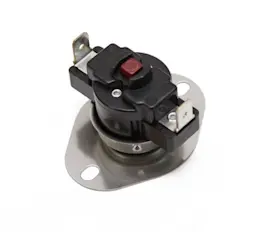
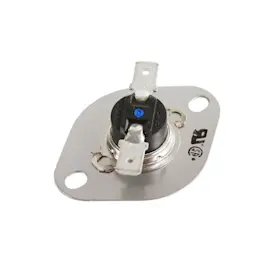
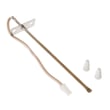
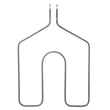
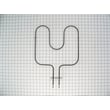
Knowing the weight helps prevent cabinet damage and injury, and it also helps you plan a safe removal if you are troubleshooting heating issues (for example, checking wiring to the wall oven thermal fuse WB24K5085 or inspecting the GE range bake element WB44K5013).
Last updated: January 2026
Does a wall oven need a special outlet?
Yes. A GE electric wall oven like model JRP24GT1BB typically needs a dedicated 240-volt circuit hardwired to a junction box (or a properly rated receptacle if your installation uses a cord), not a standard 120-volt kitchen outlet.
What to expect for power requirements
Most electric wall ovens use a 240V supply and a dedicated breaker because the bake and broil heating elements draw far more power than a regular outlet can provide.
- Dedicated circuit only (no sharing with microwave, dishwasher, etc.)
- 240 volts is typical for electric wall ovens
- Correct wire gauge and breaker size must match the oven’s nameplate rating
- A local electrical code compliant junction box or receptacle is required
- Proper grounding is required for safe operation
Typical setups (what’s “special” about it)
The “special” part is the circuit and connection method, not a unique plug shape.
| Setup type | What you’ll see | Common in wall ovens | Notes |
|---|---|---|---|
| Hardwired | Oven wires connect in a junction box | Very common | Often required by the installation design |
| Plug-in | Heavy-duty 240V receptacle and cord | Sometimes | Must be correctly rated for amperage |
Quick checks before installation
Use these checks to avoid nuisance tripping, weak heating, or unsafe wiring.
- Confirm the breaker is a 2-pole breaker (for 240V)
- Verify the circuit is dedicated and sized for the oven
- Check the electrical rating label on the oven frame (often visible with the door open)
- Inspect for heat damage or loose connections at the junction box
- If the oven is dead after a power event, test the wall oven thermal fuse WB24K5085
Why it matters
A standard 120V outlet cannot safely supply the wattage needed for baking and broiling. Correct 240V wiring helps the oven heat properly, prevents breaker trips, and reduces the risk of overheated wiring.
Last updated: January 2026
Are electric wall ovens 110 or 220?
Most electric wall ovens, including the GE JRP24GT1BB, are designed to run on a 240-volt (often called 220-volt) circuit, not a standard 120-volt (110-volt) outlet. The exact requirement depends on the oven’s wiring configuration and breaker size, so confirm the circuit before installing or troubleshooting.
What to expect for power requirements
In U.S. homes, built-in electric wall ovens typically use a dedicated 240V circuit because the bake and broil heating elements draw high amperage.
- Dedicated 240V circuit is typical for electric wall ovens
- Hardwired connection is common (not a standard plug)
- Breaker size is often 30A to 50A depending on the oven’s load
- Some models also use 120V internally (controls, light) but still require a 240V supply
- If the oven is underpowered, it may not heat correctly or may trip the breaker
Quick check: 120V vs 240V symptoms
If you are unsure what your oven is actually getting at the junction box, these clues help.
| What you see | More likely power issue | What it can cause |
|---|---|---|
| Oven light works but no heat | Missing one “hot” leg (only 120V present) | Bake/broil won’t heat or heats very weakly |
| Breaker trips when heating starts | Shorted element or wiring issue | No operation, repeated trips |
| Display dead, no light | No power at all | Oven completely inoperative |
Why it matters
Using the correct voltage protects the wiring and ensures the bake and broil elements reach proper temperature. A 240V supply is what allows the oven to heat efficiently and maintain stable cooking performance.
Related parts that can be involved in “no heat” complaints
If correct voltage is present but the oven still will not heat, these model-compatible parts are common suspects:
- GE range bake element WB44K5013 (if bake does not heat)
- GE range broil element WB44K5009 (if broil does not heat)
- Wall oven thermal fuse WB24K5085 (if the oven is dead or loses power when overheated)
For safe electrical testing practices and basic diagnosis steps, use how to use a multimeter to test electrical parts video and how to tell if a fuse is blown.
Last updated: January 2026
What is the rough opening for a 24 inch wall oven?
For a 24-inch electric wall oven such as GE model JRP24GT1BB, the rough opening (cabinet cutout) is normally in the 22 to 23 inch width range, about 27 1/2 to 28 inch height range, and about 23 inch depth range. We recommend measuring your existing cutout and comparing it to the replacement oven’s installation requirements before you commit.
Typical rough opening ranges for 24-inch single wall ovens
These are the most common cutout ranges we see for 24-inch built-in wall ovens:
- Cutout width: 22 1/16 to 22 5/8 inches
- Cutout height: 27 1/2 to 28 1/8 inches (varies by trim and chassis)
- Cutout depth: 23 to 23 1/2 inches (allow room for wiring)
- Cabinet face clearance: confirm the oven trim will cover any small gaps
How we measure a cabinet cutout (so the oven fits)
Measure in at least two places each direction because cabinets are often out of square.
- Measure width at the front and back of the opening
- Measure height on the left and right sides
- Measure depth from the cabinet face to the back wall (note any junction box)
- Check that the opening is level and square so the oven slides in smoothly
- Verify door swing clearance so the door does not hit adjacent doors or drawers
Quick reference table
| What you’re measuring | Typical 24-inch wall oven range | What can cause problems |
|---|---|---|
| Cutout width | 22 1/16 to 22 5/8 in. | Oven will not slide in; trim will not cover gaps |
| Cutout height | 27 1/2 to 28 1/8 in. | Uneven reveal; mounting holes do not line up |
| Cutout depth | 23 to 23 1/2 in. | Pinched wiring; oven sits proud of cabinet |
Why it matters
A cutout that is even slightly undersized can stop the oven from seating fully and can pinch the power cable. Oversized openings can leave visible gaps that the trim may not cover.
If you’re pulling the oven to measure and it later will not heat, check high-heat safety parts such as the wall oven thermal fuse WB24K5085.
Last updated: January 2026