Installation guide
 Owner’s manual
 Error Codes



Are Whirlpool washer parts interchangeable?
Whirlpool washer parts are sometimes interchangeable, but only when the replacement part is listed as compatible with your exact washer model. For Whirlpool model WTW4815EW0, we recommend using Factory Specified Parts (FSP) equivalents to ensure proper fit, safe operation, and reliable performance.
Use these checks before ordering or installing a “similar” part:
- Match the model number exactly: WTW4815EW0 (not just WTW4815EW).
- Confirm the part is shown as compatible for your model in the parts list.
- Compare the part ID and description, not just how it looks.
- If a part was revised, use the replacement/substitute part listed for your model.
- Use the wiring connectors and mounting points as the deciding factor for electrical parts.
For model-specific part identification and diagrams, use the WTW4815EW0 owner's manual.
Some parts families are more likely to interchange across Whirlpool top-load platforms, but fit still depends on the exact design revision.
| Part type | Interchange likelihood | Why |
|---|---|---|
| Screws, clips, some hoses | Medium | Dimensions and routing still vary by cabinet/tub design |
| Belts and pulleys | Medium | Belt length and pulley profile must match |
| Control boards and lid locks | Low | Software, connectors, and safety logic must match |
These are examples from WTW4815EW0 where “close enough” often causes problems:
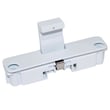
- Lid lock W10404050 (safety interlock and cycle logic)
- Washer water inlet valve WPW10683603 (fill rates and connector style)
- Washer electronic control board W10711300 (programming and diagnostics)
Using the correct Whirlpool-compatible part helps prevent issues like no-fill, no-spin, leaks, abnormal noise, or a lid that will not unlock. It also helps keep troubleshooting straightforward because the washer behaves as designed.
If the washer will not run or fill, we follow the basic checks in the WTW4815EW0 owner's manual first: confirm both hot and cold faucets are on, check inlet screens for clogs, and inspect hoses for kinks.
Last updated: February 2026
Do Whirlpool washers have a filter that needs to be cleaned?
Yes. For the Whirlpool WTW4815EW0 top-load washer, routine “filter cleaning” usually means checking for lint, coins, and debris in the wash basket and drain path, plus keeping the water inlet valve screens clear so the washer fills and rinses properly; see the WTW4815EW0 owner's manual.
Many Whirlpool top-load models do not have a front-access drain pump filter like many front-load washers. Instead, the most common maintenance points are:
- Inlet valve screens (at the hot and cold water connections)
- The drain hose (for kinks, clogs, or improper height)
- The basket area (items left in pockets that can block draining)
- Detergent use (too many suds can slow draining and spinning)
- Unplug the washer.
- Turn off both hot and cold water faucets.
- Remove the fill hoses from the washer.
- Rinse and gently brush debris off the small screens in the inlet ports.
- Reconnect hoses, turn water back on, and check for leaks.
If the washer still will not fill correctly after cleaning, a failing valve can be the cause; the correct replacement for this model is the washer water inlet valve WPW10683603.
| Symptom | What to check first | Common fix |
|---|---|---|
| Won’t fill or fills slowly | Faucets fully on; hose kinks; inlet screens | Clean screens; correct hose routing |
| Won’t drain or spin; load still wet | Drain hose height and clogs; oversudsing | Clear hose; run Rinse & Spin with no detergent |
| Poor rinsing | Inlet screens; correct hot/cold hookup | Clean screens; correct hose connections |
Keeping the inlet screens and drain path clear helps prevent long fill times, poor rinsing, and “won’t drain/spin” complaints. It also reduces strain on components like the inlet valve and drain system.
Last updated: February 2026
Is a 7 year old washing machine worth fixing?
A 7-year-old Whirlpool washer like model WTW4815EW0 is usually worth fixing because it is typically in mid-life; most washers run about 10 to 15 years. We recommend repairing when the total repair cost stays under about 50% of the price of a comparable new washer, especially if this is the first major failure.
- Fix it if the washer has been reliable and this is a one-time issue.
- Fix it if the problem is a common wear item (belt, pulley, lid lock, inlet valve).
- Replace it if the repair involves multiple major parts at once (motor plus gear case, repeated leaks, repeated no-spin).
- Replace it if the tub or cabinet is badly damaged or rusted.
- Either way: follow the maintenance steps in the WTW4815EW0 owner's manual to prevent repeat failures.
| Repair type | Common symptoms | Usually worth it at 7 years? |
|---|---|---|
| Drive system wear | Won’t spin, squealing, burning rubber smell | Yes, often |
| Lid lock issue | Won’t start, lid won’t lock/unlock | Yes, often |
| Water fill problem | Won’t fill, fills slowly, wrong temp | Yes, often |
| Major drivetrain | Loud grinding, oil leak under washer, no agitation and no spin | Depends on total cost |
If your symptoms match, these are common, practical fixes for WTW4815EW0:
- Washer drive belt WPW10006384 for slipping, squealing, or weak spin
- Whirlpool washer drive pulley W10721967 for wobble, noise, or belt wear
- Lid lock W10404050 for start issues tied to lid locking
- Washer water inlet valve WPW10683603 for no-fill or slow-fill complaints
At 7 years, the biggest factor is repair value versus remaining life. A targeted repair can buy several more years, while repeated major failures usually signal it is time to replace.
Whirlpool recommends replacing inlet hoses about every 5 years and inspecting for bulges, kinks, cuts, wear, or leaks; see the WTW4815EW0 installation guide for hose connection and replacement guidance.
Last updated: February 2026
What causes a Whirlpool washer to shake violently?
A Whirlpool WTW4815EW0 washer usually shakes violently when it is not level with the floor, the leveling feet are not firmly planted and locked, or the load is unbalanced in the basket. Correcting installation and loading issues stops most severe shaking.
- Confirm all four leveling feet touch the floor and the locknuts are tightened.
- Check the washer for rocking; if it rocks, re-level it.
- Verify the floor is solid; add a 3/4-inch (19 mm) plywood panel under the washer if the floor flexes.
- Reload the washer with dry items in loose heaps, evenly around the basket wall.
- Wash smaller loads; oversized loads amplify vibration.
- Do not add wet items mid-cycle; that commonly creates an instant imbalance.
Follow the leveling procedure in the WTW4815EW0 installation guide. In general, we use this sequence:
- Place the washer where it will be used.
- Adjust the front feet until the cabinet is level side-to-side and front-to-back.
- Lower the rear feet (if equipped) so they are firmly planted.
- Tighten the locknuts so the feet stay locked.
| What you notice | Most likely cause | What to do |
|---|---|---|
| Washer rocks when pushed | Feet not set or not locked | Re-level and lock feet |
| Shakes mostly on spin | Unbalanced load | Redistribute load, reduce size |
| Shakes even when empty | Floor flexing/sagging | Add plywood, move to sturdier spot |
If the washer is level and loads are balanced but it still bangs or walks, worn suspension components are a common next suspect on top-load washers. For this model, we often check the damper assembly W10780045 when vibration is persistent.
Violent shaking can damage the lid lock, tub ring, drive system, and even the floor. Getting the washer level and loading it correctly helps the WTW4815EW0 spin smoothly, reduces noise, and prevents repeat breakdowns.
Last updated: February 2026
What is the most common problem with Whirlpool washers?
For Whirlpool washers like model WTW4815EW0, the most common customer-reported problems are “won’t drain or spin,” “won’t fill,” and excessive shaking from an unbalanced load. Many of these start with installation, loading, or water-supply issues before a part actually fails (see the WTW4815EW0 owner's manual).
- Won’t drain or spin; clothes still wet: drain hose height/installation, clogs, or too much detergent creating suds.
- Won’t run or won’t fill: power supply issue, faucets off, kinked hoses, or clogged inlet screens.
- Shakes, bangs, or walks: washer not level, feet not locked, or uneven flooring; load distribution.
- Poor cleaning or residue: too much detergent, tightly packed loads, wrong cycle.
- Stops mid-cycle: load too tightly packed or unbalanced.
- Confirm the washer is plugged into a grounded 3-prong outlet (no extension cord).
- Verify both hot and cold faucets are fully open.
- Inspect inlet hoses for kinks; clean inlet valve screens if water flow is weak.
- Check drain hose setup: avoid sealing the drain opening; keep the hose end under about 96 in. high.
- Reload: place dry items in loose heaps evenly around the basket wall; avoid overfilling.
If the basics check out and the symptom repeats, these parts commonly come up on top-load Whirlpool washers:
| Symptom | Common suspect | Example part for WTW4815EW0 |
|---|---|---|
| Won’t fill or fills slowly | Water inlet valve | Washer water inlet valve WPW10683603 |
| Won’t drain well; water left in tub | Drain hose restriction/leak | Washer drain hose W11244231 |
| Loud noise, slipping, weak spin | Belt or pulley wear | Washer drive belt WPW10006384 |
Drain, fill, and balance problems can look like a major failure, but they often trace back to hose setup, detergent oversudsing, or loading habits. Fixing those first prevents repeat shutdowns, wet loads, and unnecessary part replacement.
Last updated: February 2026