Installation guide
 Owner’s manual
 Error Codes



How do I tell what model Kenmore fridge I have?
For Kenmore refrigerators, the model number is printed on the serial plate inside the fresh food (refrigerator) compartment. On Kenmore model 25360412611, the Use & Care Guide notes this serial plate location; use the exact model number on that plate when ordering parts or looking up instructions in the 25360412611 owner's manual.
Check these common spots first (use a flashlight and wipe dust off the label with mild soap and water):
- Inside the refrigerator compartment on a side wall (most common)
- On the ceiling of the fresh food compartment near the light
- On the inside wall behind or near the crisper drawers
- Along the door frame when the refrigerator door is open
- Behind the lower kick plate or toe grille (less common)
Kenmore model numbers are usually a string of numbers; for this series you will often see a prefix like 253. on the label. Record both the model and serial number so we can match the correct door gasket, evaporator fan motor, shelves, and other refrigerator parts.
- Model number: identifies the exact design and parts list
- Serial number: helps match production changes
- Purchase date: useful for maintenance history and service calls
- Mixing up 0 (zero) and O (letter O)
- Copying only the first few digits (always write the full model)
- Reading the Energy Guide sticker instead of the serial plate
| What you need | Where to find it | What to do with it |
|---|---|---|
| Model number | Serial plate inside refrigerator compartment | Use it to look up diagrams and compatible parts |
| Serial number | Same serial plate | Use it to confirm version/production run |
| Brand | Door badge and serial plate | Confirms Kenmore family and styling |
Using the exact model number prevents ordering the wrong part (for example, a door gasket color or a shelf rail that does not fit) and ensures the instructions you follow match your refrigerator’s layout.
Last updated: February 2026
How to read Kenmore model numbers?
For Kenmore model 25360412611, we read the model number to identify the product family and match the correct parts and documentation. On this top-mount refrigerator, the model and serial information is found on the serial plate inside the refrigerator compartment; record the full number exactly as shown. See the 25360412611 owner's manual for the exact location and how Kenmore formats the number.
On Kenmore top-mount refrigerators like 25360412611, the serial plate is typically inside the fresh food (refrigerator) compartment.
- Open the refrigerator door and look along the side walls
- Check near the crisper area and lower interior walls
- Look for a label that lists Model Number and Serial Number
- Write the number down exactly (include all digits)
- Use only mild soap and water if you need to clean the label before reading it
Kenmore model numbers are most useful when you treat them as a complete identifier.
- Prefix (often the first 3 digits): identifies the manufacturing source for many Kenmore appliances
- Core model digits: identify the base design and platform
- Suffix digits: identify variations such as color or feature packages
| What you see | What it tells us | Why it matters |
|---|---|---|
| 253 | Kenmore source prefix used on many refrigerators | Helps narrow the correct parts catalog |
| 60412611 | Model-specific identifier | Ensures exact-fit parts and correct instructions |
Using the full model number prevents ordering the wrong door gasket, shelf parts, or internal cooling components. For example, fit can vary even within the same Kenmore 253 series.
- Match the full model number first: 25360412611
- Then match the part by description and ID when available
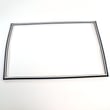
- For door seal issues, confirm door color before ordering a gasket (example: frigidaire refrigerator door gasket (white) 242193206 vs. Frigidaire refrigerator door gasket (black) 242193212)
Last updated: February 2026
What are the most common problems with Kenmore refrigerators?
The most common issues we see on Kenmore refrigerators like model 25360412611 are temperature problems (too warm or freezing food), moisture or leaks, door closing and sealing problems, and unusual fan or compressor noise. Many of these start with airflow restrictions, frequent door openings, or worn door gaskets; the troubleshooting charts in the 25360412611 owner's manual point you to the fastest checks.
- Not cooling or too warm: dirty condenser coils, blocked vents, evaporator fan not running, or defrost system trouble
- Food freezing in the fresh food section: temperature control set too cold or airflow aimed directly at items
- Moisture inside or outside the cabinet: humid weather, door slightly open, or doors opened too often (warm air brings in moisture)
- Doors will not close: refrigerator not level, door closed too hard causing the other door to pop open, or a gasket not sealing
- Noises: normal operating sounds, evaporator fan noise, or compressor/fan running more often during warm conditions
- Set freezer and fresh food controls to a mid setting; wait 24 hours for temperatures to stabilize.
- Confirm both doors close gently and fully; check for packages holding the door open.
- Look for frost or ice buildup on the freezer back wall (often points to a defrost or airflow issue).
- Clean condenser coils and make sure airflow around the refrigerator is not blocked.
- If drawers stick, remove items touching the shelf above and clean the drawer tracks and rollers.
| Symptom | Common suspect | Example part for this model |
|---|---|---|
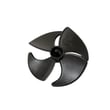
| Warm fridge, weak airflow | Evaporator fan motor | Refrigerator evaporator fan motor 242077705 |
| Frost buildup, warm temps | Defrost heater | Refrigerator defrost heater 242044008 |
| Door not sealing, moisture | Door gasket | Frigidaire refrigerator door gasket (white) 242193206 |
Temperature swings and air leaks make the compressor and fans run longer, which can shorten component life and lead to food spoilage. Fixing door sealing and airflow issues early is the most cost-effective way to prevent bigger cooling problems.
Last updated: February 2026
What is the cubic foot of my Kenmore refrigerator model 25360412611?
Your Kenmore top-mount refrigerator model 25360412611 has a total capacity of about 21.9 cubic feet. This is the overall storage volume for both the fresh food (refrigerator) compartment and the freezer combined; use the 25360412611 owner's manual for the exact capacity listing and configuration details.
Cubic feet is the total interior volume, not the usable shelf space. Usable space changes based on shelves, bins, and accessories installed.
- Total capacity includes refrigerator + freezer
- Usable capacity is reduced by shelves, ice maker, and air ducts
- Food loading and packaging shape affect how much you can actually store
- Door bins count toward volume but are not ideal for bulky items
| What you’re measuring | What it includes | What it’s used for |
|---|---|---|
| Total capacity (cu. ft.) | All interior compartments | Comparing refrigerator sizes |
| Usable space | What you can practically load | Meal planning and storage needs |
| Shelf footprint | Flat shelf area | Fitting trays, pizza boxes, and platters |
Capacity helps you match the refrigerator to household needs and also helps when choosing accessories like an optional ice maker. If you add an ice maker later, it typically reduces freezer storage space.
- Typical fit guide: 18 to 22 cu. ft. works well for many households
- Larger capacity helps reduce overcrowding (better airflow, steadier temperatures)
- Knowing capacity helps when replacing storage components (bins, drawers, covers)
Last updated: February 2026