Owner’s manual
 View engine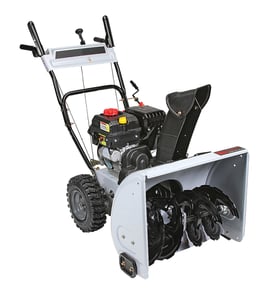




How many years should a snowblower last?
A gas snowblower like the Craftsman model 536885210 typically lasts 15 to 20 years with normal residential use and consistent maintenance. Lifespan is driven most by off-season storage, oil changes, lubrication, and replacing wear items before they cause bigger damage (see the owner's manual).
Typical lifespan by use and care
- Light use (small driveway, a few storms/year): 18 to 20 years
- Moderate use (regular storms, mixed snow): 15 to 18 years
- Heavy use (deep, wet snow; frequent runs): 10 to 15 years
- Commercial or rental use: 5 to 10 years
Maintenance that adds the most years
We see the biggest lifespan gains from these basics:
- Change engine oil on schedule and keep the oil at the correct level.
- Lubricate moving points before and after the season (auger area, wheels, drive components).
- Keep fresh fuel; treat fuel for storage and run the engine long enough to circulate it.
- Replace worn ignition and fuel-air items (spark plug, belts, filters) before hard-starting begins.
- Clean and dry the snow thrower after use; touch up chipped paint to slow rust.
Wear items that commonly limit lifespan
Some parts are designed to wear out; replacing them on time prevents secondary damage.
| Wear item | What you notice | Why it matters |
|---|---|---|
| Spark plug | Hard starting, misfire | Poor combustion stresses the engine |
| Belts | Weak drive or auger action | Slipping overheats and reduces performance |
| Shear pins (if equipped) | Auger stops turning | Protects gearbox and auger from impact |
| Air filter | Power loss, rich running | Dirty intake increases fuel use and fouling |
If your unit is running rough or losing power, start with the air filter; the filter 394358S is a common maintenance replacement for this model.
Why it matters
A snowblower that is maintained, lubricated, and stored correctly avoids the two biggest lifespan killers: fuel system problems during storage and accelerated wear from running dry, dirty, or unlubricated components.
Last updated: February 2026
How to read Craftsman snowblower serial number?
On the Craftsman snow thrower model 536885210, the identification label is the key to reading the serial number and model information. We use that label to confirm the exact unit version so you get the right parts and service specs; see the 536885210 owner's manual for label location and safety notes.
Where to look on the snowblower
Most Craftsman snowblowers place the product identification label on the rear or lower frame area. On a unit like 536885210, check these common spots first:
- Backside of the metal base between the rear wheels
- Rear frame near the axle area
- Side of the frame rail near the engine/drive assembly
- Handle support area (lower handle mounting zone)
- Auger housing edge (less common, but worth a quick check)
How to read the numbers (what they mean)
Once you find the label, you will typically see a model number and a serial number.
| Item on label | What it’s used for | Why you need it |
|---|---|---|
| Model number (example: 536885210) | Identifies the exact snowblower design | Ensures diagrams and parts lists match your machine |
| Serial number | Identifies your specific production unit | Helps confirm correct part revisions and service details |
Tips to make the label readable
If the label is dirty or faded, these steps usually make it readable without damaging it:
- Wipe with a damp cloth and mild soap; dry fully
- Use a flashlight at a low angle to highlight embossed printing
- Take a close-up photo and zoom in
- Avoid harsh solvents that can remove ink
Why it matters
Craftsman snowblower parts can vary by production run, even within the same series. Using the correct model number (536885210) and the unit’s serial number helps match items like belts, cables, and fuel system parts to the right configuration.
Last updated: February 2026
Is it worth fixing a snowblower?
Yes, it’s worth fixing a snowblower when the repair is a normal-wear item (belt, spark plug, shear pins, tune-up) and the machine is otherwise solid. For a Craftsman snow thrower model 536885210, we treat routine maintenance and minor repairs as the best value; major engine-speed or internal engine work is the point where replacement often makes more sense.
Quick way to decide (repair vs. replace)
Use these checks to make a clear call before you buy parts:
- Repair it if it starts reliably, drives/augers engage normally, and the issue is maintenance-related (oil, spark plug, belt, adjustment).
- Repair it if the machine has been maintained per the owner's manual.
- Replace it if it has repeated breakdowns each season or severe vibration after impacts (that usually signals deeper damage).
- Replace it if the repair estimate approaches about half the cost of a comparable new snowblower.
- Pause and inspect if it hit a foreign object; the manual directs you to stop, remove the key, inspect, and repair damage before operating again.
What “minor” repairs usually look like
Most “worth fixing” snowblower repairs are straightforward and inexpensive compared to replacing the whole unit.
| Repair type | Typical difficulty | Typical payoff |
|---|---|---|
| Tune-up items (spark plug, oil change) | Easy | Better starting and smoother running |
| Drive/auger adjustments | Medium | Restores traction or throwing performance |
| Belt replacement | Medium | Fixes no-drive or no-throw symptoms |
| Fuel system cleanup (stale fuel) | Medium | Fixes surging, stalling, hard start |
When fixing is not the best value
These situations usually push the decision toward replacement or professional evaluation:
- Abnormal vibration that returns after basic checks (vibration is a warning sign).
- Engine speed concerns (running too fast/slow). The manual says engine speed is factory set and should not be adjusted by the operator.
- Internal engine repairs if you are not fully qualified; the manual recommends trained technicians for engine repairs/adjustments.
Why it matters
A snowblower that’s maintained and repaired promptly is safer and more reliable in heavy snow. Following the manual’s safety steps (key OFF, remove key, disconnect spark plug wire before service) also prevents accidental starting during repairs.
Parts that commonly support a “worth fixing” repair
If your issue is basic maintenance, start with the parts list for this model and match by diagram and description. One commonly replaced maintenance item available for this model is the filter 394358S.
Last updated: February 2026