Owner’s manual
 View engine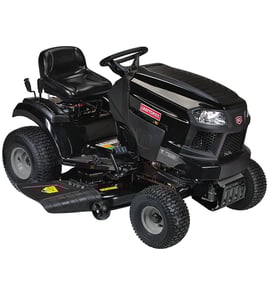


Do Craftsman mowers use Briggs and Stratton engines?
Yes, many Craftsman mowers use Briggs & Stratton engines, and the Craftsman lawn tractor model 917273460 specifically uses a Briggs & Stratton engine (engine model 446777, type 0165-E1) as shown in the 917273460 owner's manual.
What this means for parts and service
Engine brand matters most when you’re buying tune-up and fuel-system parts (air filter, carburetor parts, starter drive) or looking up engine specifications.
- Use the tractor model (917273460) to find chassis, deck, and steering parts.
- Use the Briggs & Stratton engine model (446777) and type (0165-E1) to match engine parts.
- If you’re ordering engine maintenance parts, confirm the engine model and type from the engine label or manual.
- For starting problems, check battery condition, safety interlocks, and starter circuit basics first.
Quick ID guide: tractor model vs. engine model
| What you’re identifying | Where to look | Example for this tractor |
|---|---|---|
| Tractor model number | Frame tag, under seat area, or manual | 917273460 |
| Engine model and type | Engine shroud label or manual | 446777 / 0165-E1 |
Helpful next steps (common reasons people ask this)
If you’re asking because the tractor won’t start or cranks slowly, these checks usually save time:
- Make sure the brake pedal is fully depressed and PTO is off (safety interlock conditions).
- Verify battery connections are clean and tight.
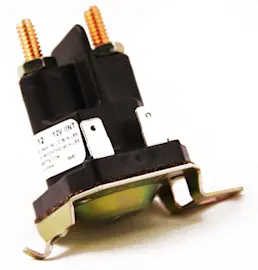
- Listen for a click at the starter solenoid vs. steady cranking.
- Inspect the ignition key for wear; replace if it’s loose or intermittent.
- Follow a proven diagnostic flow like riding lawn mower engine clicks but doesnt turn over video.
Why it matters
Craftsman tractors often share deck and chassis designs across model families, but engine parts are matched by the engine’s model and type. Using the correct Briggs & Stratton identifiers helps prevent wrong-part returns and speeds up repairs.
Last updated: January 2026
How much does it cost to replace a riding lawn mower engine?
Replacing the engine on a Craftsman riding lawn tractor like model 917273460 typically costs about $800 to $3,000 total (engine plus labor), depending on engine size, brand, and whether related items like belts or pulleys also need replacement. Labor is commonly 4 to 8 hours.
What drives the total cost
- Engine price: Most replacement riding mower engines run about $500 to $2,000.
- Labor time: Commonly 4 to 8 hours for a riding mower engine swap.
- Extra parts: Worn drive belts, pulleys, wiring, or fuel system parts can add cost.
- Shop rates: Local labor rates vary widely.
- Condition of the tractor: Rusted fasteners, damaged mounts, or wiring issues increase time.
Typical cost ranges (parts + labor)
| Scenario | What’s included | Typical total |
|---|---|---|
| Budget repair | Used or basic engine, minimal extras | $800 to $1,500 |
| Most common | New engine, standard labor, minor extras | $1,500 to $2,500 |
| Extensive | New engine plus multiple related repairs | $2,500 to $3,000+ |
Before you buy an engine, check these items first
Many “needs an engine” symptoms are caused by starting, fuel, or safety interlock issues. The manual notes the engine should only start with the brake fully depressed and the attachment clutch disengaged, and the operator presence system should shut the engine off if you leave the seat under certain conditions.
- Verify battery condition and cable connections
- Confirm brake pedal fully depressed and PTO/attachment clutch disengaged
- Check operator presence and interlock switches
- Inspect fuel quality (old fuel or water in fuel)
- Check spark plug wire and basic ignition items
For the model-specific safety interlock behavior and troubleshooting chart, use the 917273460 owner's manual.
Why it matters
An engine replacement is one of the highest-cost repairs on a riding mower. Confirming the no-start cause first helps you avoid paying for an engine when the real issue is a battery, safety switch, fuel problem, or a drive component.
Last updated: January 2026
What are the most common issues with 917273460?
The most common issues we see on the Craftsman 917273460 lawn tractor involve the mower deck (poor cut quality, vibration, or blades not engaging), drive problems (tractor won’t move or slips), steering looseness, and starting or no-crank complaints. Use the 917273460 owner's manual for model-specific adjustments, belt routing, and maintenance intervals.
Common symptoms and what usually causes them
- Uneven cut or poor bagging: dull/bent blades, deck not level, clogged deck, worn mandrel parts.
- Excessive vibration: damaged blade, loose blade hardware, failing mandrel bearings, debris wrapped on spindles.
- Blades won’t engage or stop slowly: worn deck belt, weak idler/brake springs, seized idler pulley.
- Tractor won’t move or loses drive: worn/slipping ground drive belt, incorrect belt routing, idler issues.
- Loose steering or wandering: worn tie rod/drag link joints, sector gear wear, loose fasteners.
- No-crank or intermittent start: weak battery connections, safety switch issues, worn key.
Quick checks we recommend first
- Park on level ground; set parking brake; remove the key.
- Inspect belts for glazing, cracks, and slack.
- Check blades for sharpness and bends; torque blade fasteners to spec.
- Spin deck pulleys by hand (key removed); they should turn smoothly with no grinding.
- Check steering linkage for play at each joint.
Parts that commonly fix these problems
| Symptom | Common wear item | Example part on this model page |
|---|---|---|
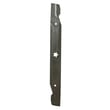
| Poor cut, streaking | Deck blades | Lawn tractor 42-in deck high-lift blade 532138971 |
| Vibration, rumble from deck | Mandrel/spindle parts | Husqvarna lawn tractor mandrel assembly 532130794 |
| Blades won’t stay engaged | Idler pulley or spring | Lawn tractor blade idler pulley 532139245 or lawn tractor blade idler spring 532169022 |
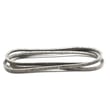
| Won’t move or slips | Ground drive belt | Lawn tractor ground drive belt, 1/2 x 82-in 532140294 |
| No-start due to lost/damaged key | Ignition key | Molded ignition key 532140403 |
Why it matters
Deck and belt issues on riding mowers usually start small (slipping, noise, uneven cut) and quickly turn into bigger failures like thrown belts, damaged pulleys, or spindle wear. Catching wear early protects the deck weldment, mandrel shafts, and engine pulley.
Last updated: March 2026