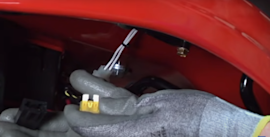
Installation guide
 Owner’s manual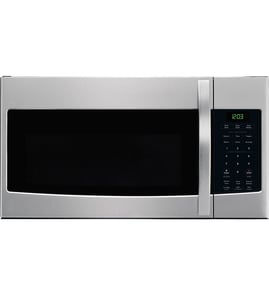



How big is a Kenmore microwave model 40185043310 in inches?
The Kenmore microwave/hood combo model 40185043310 is designed to fit a standard 30-inch-wide over-the-range opening. For the exact overall width, height, and depth in inches for your specific unit, we recommend confirming the dimensions in the 40185043310 installation guide.
What we can confirm from the installation requirements
The installation instructions for model 40185043310 specify the key fit constraints that determine whether it will physically work in your cabinet and over your range.
- Cabinet opening between side cabinets: 30 inches wide
- Intended range width below: up to 30 inches wide
- Minimum clearance from cooktop to cabinet bottom: 30 inches or more
- Mounting requirement: the microwave must be anchored to at least one wall stud
Typical outside dimensions (what most 30-inch OTR microwaves measure)
Most 30-inch over-the-range microwaves end up close to these outside dimensions:
- Width: about 29 7/8 inches
- Height: about 16 to 17 inches
- Depth: about 15 to 17 inches (not including handle on some designs)
Because handle style, door geometry, and venting duct design can change depth, the 40185043310 installation guide is the best place to confirm the exact numbers for your kitchen planning.
Quick fit checklist before you measure twice
- Measure the inside width between cabinets (should be 30 inches).
- Measure from the cooktop surface to the cabinet bottom (30 inches minimum).
- Check the cabinet above for a dedicated grounded outlet location.
- Confirm you have at least one wall stud in the mounting area.
Dimension and fit terms (so you compare correctly)
| Term | What it means | Why it matters |
|---|---|---|
| Opening width | Space between cabinets | Determines if the unit can be installed at all |
| Overall width | Outside left-to-right size | Affects trim alignment and cabinet clearance |
| Overall depth | Front-to-back projection | Impacts how far it sticks out over the range |
| Mounting height | Vertical placement and clearances | Prevents heat damage and improves ventilation |
Why it matters
Over-the-range microwaves are sized around a 30-inch opening, but small differences in depth and mounting clearances affect door swing, cabinet fit, and vent alignment. Using the model-specific installation specs prevents surprises during install.
Last updated: February 2026
How to silence a Kenmore microwave?
On Kenmore microwave/hood combo model 40185043310, you can silence the keypad and cooking-complete beeps by changing the control’s sound (tone) setting. Use the exact button sequence listed in the 40185043310 Owner's manual; the steps vary by control panel layout.
How to turn the beeps off (reliable approach)
We recommend using the model-specific steps in the manual because Kenmore microwave/hood combos use different key combinations for “Sound,” “Beeper,” or “Options.”
- Press Stop/Cancel to make sure no cycle is running.
- Open the owner's manual and find the section for sound, tone, beeper, or options/settings.
- Follow the listed sequence to set Sound/Tone = Off (or Beeper volume = 0/Low/Off, depending on wording).
- Save/confirm the setting if the instructions include a confirmation step.
- Test by pressing a number key; then start and cancel a short cook cycle to confirm end-of-cook tones changed.
What will and will not be silenced
| Noise or signal | What causes it | Typically affected by “Sound/Tone” setting |
|---|---|---|
| Keypad button beeps | Control panel feedback | Yes |
| End-of-cook beeps | Control board signal | Often yes |
| Reminder beeps | “Food reminder” feature | Sometimes |
| Vent fan noise | Fan motor | No |
| Surface light hum | Light bulb and wiring | No |
If the microwave still beeps after changing the setting
- Reset power at the breaker for 1 minute; then set the sound option again.
- If the keypad beeps randomly or settings do not “stick,” the control can be failing; replacing the microwave electronic control board DE92-02329B is a common fix.
- If beeping happens when opening or closing the door, inspect the door switch system; a failing microwave door interlock switch 3405-001034 can cause odd control behavior.
Why it matters
Silencing tones is a convenience feature, but it also confirms the control board is storing settings correctly. If the sound setting will not change or won’t save, that points to a control or door-switch input issue.
Replacement parts for model 40185043310 are available from the parts list for this model, or you can search by model number on Sears PartsDirect.
Last updated: February 2026
Where to put microwave when replacing with hood?
If you’re replacing your Kenmore 40185043310 microwave/hood combo with a dedicated range hood, the microwave cannot stay in the over-the-range location; it needs a new, safe spot such as a countertop, a microwave shelf, or a built-in cabinet opening that meets clearance and electrical requirements. Use the installation guide to confirm the original mounting space and clearances before you remove anything.
Best placement options (most common)
- Countertop location near an outlet (fastest, least carpentry)
- Microwave shelf (wall-mounted shelf designed for microwave weight)
- Pantry or tall cabinet on a dedicated shelf with ventilation space
- Base cabinet microwave opening (if you have a cabinet designed for it)
- Built-in wall cabinet opening only if the cabinet is sized and ventilated for a microwave
Key measurements and clearances to plan for
Over-the-range microwaves like model 40185043310 are typically installed in a 30-inch-wide space and must sit 30 inches or more above the cooking surface. Those numbers help you plan the hood swap and also remind you that the microwave’s old location is not a “free shelf” once the hood goes in.
| Item to plan | What to target | Why it matters |
|---|---|---|
| Space between cabinets (old OTR opening) | 30 inches wide | Many hoods and OTR setups assume this width |
| Height above cooktop (OTR spec) | 30 inches or more | Prevents heat damage and improves capture |
| New microwave location | Stable, level surface | Prevents tipping and door alignment issues |
| Power | Dedicated, properly grounded outlet | Avoids nuisance trips and overheating |
Installation notes that affect your decision
- If your upper cabinet bottom is recessed or has trim/overhang, leveling and mounting changes are often needed.
- The microwave installation uses a wall plate and must be level; removing it can leave holes that need patching.
- If you are changing ventilation (recirculating vs outside exhaust), plan duct routing before choosing where the microwave will live.
Why it matters
A microwave needs a stable, ventilated location and correct power. A range hood needs proper mounting height and a clear, unobstructed path for airflow. Planning both together prevents clearance problems, poor venting, and cabinet damage.
For replacement parts related to removal or repair of the existing unit, you can order parts for model 40185043310 from the parts list on this page, or search by model on Sears PartsDirect.
Last updated: February 2026