Owner’s manual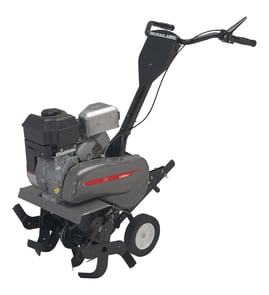



What is a dual rotating tiller?
A dual rotating tiller is a tiller designed to run the tines in two directions so you can choose a more aggressive “counter-rotating” action for breaking hard ground or a “forward-rotating” action for easier cultivating. On the Craftsman 917292402, tine direction is controlled through the machine’s forward and reverse tine operation described in the 917292402 owner's manual.
Dual rotation refers to tine direction options, not just wheel direction:
- Forward-rotating tines: Best for routine cultivating and mixing already-loosened soil.
- Counter-rotating tines: Best for first-pass work in packed soil; the tines bite harder.
- Two-direction capability: Lets you match tine action to soil conditions and operator effort.
This model’s manual describes forward and reverse tine operation and explains that tilling performance depends heavily on setup.
Key points that affect how the tiller “feels” in the ground:
- Set wheel height for stability and control.
- Set the depth stake to control how deep the tines dig.
- Use the tiller’s forward/reverse tine operation to match the job.
- Typical garden tilling depth is 4 to 6 inches.
If the tiller will not pull well, or tines do not behave correctly in forward or reverse, drive components are common checks.
| What you notice | Common area to inspect | Example part on this model |
|---|---|---|
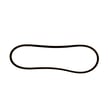
| Tines slip or stop under load | Belt drive and tensioning | Husqvarna tiller drive belt 532133035 |
| Reverse tine action is weak or intermittent | Reverse belt and linkage | Reverse drive belt (listed for this model) |
| Excess vibration or inconsistent depth | Depth stake and wheel settings | Depth stake adjustment (setup item) |
Choosing the right tine direction and setting the depth stake and wheels correctly reduces “skipping,” improves soil breakup, and lowers operator fatigue. Dual rotation is most noticeable when you move from hard, packed soil to routine seasonal cultivating.
Last updated: February 2026
What would cause a tiller to not start?
On the Craftsman 917292402 front-tine tiller, a no-start is typically caused by stale fuel or restricted fuel flow, a spark problem at the plug/ignition, or incorrect choke and throttle settings. Use the starting procedure and troubleshooting chart in the 917292402 owner's manual to pinpoint the cause.
- Drain old gasoline and refill with fresh unleaded regular fuel.
- Confirm the throttle control is not in the STOP position.
- Use the choke for a cold start, then open it as the engine warms.
- Check the spark plug condition and gap; replace if fouled or fuel-soaked.
- Verify spark with a spark tester; no spark points to the ignition coil or kill-switch wiring.
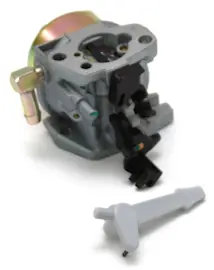
- Check the air filter and intake area; restricted airflow can cause flooding.
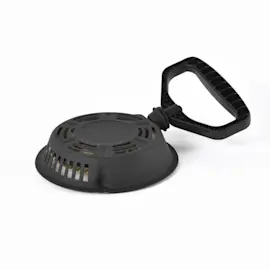
- Spark test first: Pull the plug, reconnect the wire, ground the plug to metal, and pull the recoil starter. A strong blue spark indicates ignition is working.
- Fuel delivery next: Make sure fuel flows freely from the tank through the fuel line; clear any blockage and confirm the tank cap vent is open.
- Flooding check: If the plug is wet, open the choke, hold the throttle open, and pull several times to clear excess fuel.
If the engine has spark and fresh fuel but still will not start reliably, a tune-up is often the next step.
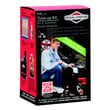
- Briggs & statton tune-up kit 5140B (typical maintenance kit items such as plug, filter, and fuel system service parts)
The exact engine specifications can vary by configuration; confirm the values for your unit in the manual.
| Spec to check | Where it helps |
|---|---|
| Spark plug type and gap | Prevents weak spark and hard starting |
| Fuel and oil recommendations | Reduces flooding, wear, and overheating |
| Control positions (choke, throttle, tine controls) | Ensures correct starting setup |
Repeated pulling with old fuel, a fouled plug, or the wrong choke setting quickly floods the engine and masks the real issue. A simple spark test and fresh-fuel reset usually identifies the failure point.
Last updated: February 2026
Where is the model number on a Craftsman tiller?
On a Craftsman front-tine tiller like model 917292402, the model number is printed on the product ID label or decal attached to the tiller frame. It’s most often located near the tine shield/guard area, on or near the fuel tank, or on the front of the unit. See the 917292402 owner's manual for diagrams and decal locations.
- Along the tine shield (tine guard) where debris protection panels mount
- On the frame rail near the engine or transmission housing
- On or near the fuel tank (tank support area or adjacent frame)
- On the front face of the tiller (forward frame section)
- Near the handle column/control panel area
- Turn the engine off and let it cool.
- Wipe dirt off the frame and tine guard with a rag.
- Look for a rectangular label or decal that includes 917.292402 (sometimes printed with a dot).
- If the label is worn, check nearby surfaces for a second decal.
| Item on label | What it’s used for |
|---|---|
| Model number (917292402 or 917.292402) | Matching the correct parts list and diagrams |
| Serial number | Identifying production run for service records |
| Brand name (Craftsman) | Confirming product family |
Using the exact model number ensures you get the right Craftsman tiller parts (for example, belts, control hardware, and tine-related fasteners) and the correct repair diagrams when you service the drive system or tine assembly.
You can order replacement parts for model 917292402 from the parts list for this model, or search by model number on Sears PartsDirect.
Last updated: February 2026