Owner’s manual
 View engine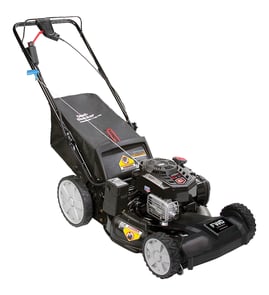



How to find Craftsman model number?
On the Craftsman walk-behind mower model 917375610, the model number is printed on the product ID sticker on the back of the mower deck, typically between the lower handle mounts. Use that exact number when ordering parts or checking specifications in the 917375610 owner's manual.
Where to look on the mower
Check these common label locations first:
- Back of the deck, between the lower handle mounts (most common)
- Rear skirt area (near the discharge side on some decks)
- Under the handle crossbar area (if the label migrated or was re-applied)
- Near the wheel height adjuster bracket (less common)
Tips for reading the label correctly
The sticker can be dirty or faded on a mower deck. These steps usually make it readable:
- Brush off dry grass and debris first
- Wipe the label area with a damp rag and mild soap
- Use a flashlight at a low angle to highlight embossed or faded print
- Write the number down exactly as shown (include dots or dashes if present)
Model number vs. engine information
Your mower has a Craftsman model number for the mower itself, and a separate model/type code for the Briggs & Stratton engine.
| What you are identifying | Where it’s found | What it’s used for |
|---|---|---|
| Mower model number (example: 917375610) | Mower deck ID sticker | Correct Craftsman parts diagrams and parts |
| Engine model/type/code | Engine shroud or valve cover label | Engine-specific parts like carburetor or ignition |
Why it matters
We use the mower model number to match the correct parts list for your exact deck and drive system. For example, the correct 22-inch mulching blade and drive components can vary by model family, even when the mower looks similar.
Last updated: January 2026
Should I use 87 or 91 gas for lawn mower?
For the Craftsman lawn mower model 917375610, use regular 87-octane unleaded gasoline for normal operation; higher octane (like 91) does not add power or improve reliability in a small mower engine. For fuel handling, storage, and safety details, follow the 917375610 owner's manual.
What to use (and what to avoid)
- Use 87 octane fresh, clean unleaded gasoline.
- Avoid old or stale fuel; it is a common cause of no-start problems.
- Do not store gasoline from one season to the next; replace it with fresh fuel.
- Keep fuel containers clean and in good condition; replace rusty gas cans to prevent dirt and rust from entering the tank.
- If you need better storage protection, use a fuel stabilizer (especially before winter storage).
Why 91 octane usually is not better
Octane is mainly about resistance to knock in higher-compression engines. Most walk-behind mower engines are designed to run correctly on regular fuel, so moving from 87 to 91 typically provides no performance benefit.
Quick comparison
| Fuel choice | Best for | What you will notice |
|---|---|---|
| 87 octane (regular) | Everyday mowing | Normal starting and power |
| 91 octane (premium) | Not required for this mower | Usually no change in power or starting |
If your mower is hard to start after fueling
Stale fuel and fuel contamination show up as “won’t start” symptoms. Check these basics first:
- Confirm you have fresh fuel in the tank.
- Check the air filter for heavy dirt buildup.
- Inspect the spark plug wire connection and spark plug condition.
- If fuel is old, drain and refill with fresh gasoline.
Why it matters
Using the correct fuel and keeping it fresh helps prevent carburetor varnish, starting issues, and rough running. The manual also emphasizes safe fuel storage practices and avoiding long-term storage with gasoline left over from a prior season.
Last updated: January 2026
What is the average lifespan of 917375610?
A Craftsman walk-behind mower like model 917375610 typically lasts 8 to 12 years with normal homeowner use and routine maintenance (clean oil, sharp blade, and a properly adjusted drive system). Following the maintenance schedule in the owner's manual keeps the engine and self-propel components from wearing out early.
What most affects lifespan
- Oil and air filter care: clean oil and a clean filter prevent accelerated engine wear.
- Blade condition: a bent or dull blade increases vibration and stresses the crankshaft and deck.
- Drive system wear: a worn belt, cable, or transmission parts reduce propulsion and can cause secondary damage.
- Storage and fuel habits: stale fuel and moisture during off-season storage shorten carburetor and engine life.
- Deck and wheel upkeep: packed grass and corrosion shorten deck life and strain wheel adjusters.
Quick maintenance checklist (high impact)
- Change engine oil on schedule; check level before mowing.
- Keep the underside of the deck clean (after the engine cools and the spark plug wire is disconnected).
- Sharpen or replace the blade when cut quality drops.
- Inspect the self-propel drive; replace a worn belt 532157769 if the mower stops pulling consistently.
- Check control cables for stretching or binding; adjust per the manual.
Typical lifespan by usage pattern
| Usage pattern | Typical lifespan | What usually wears first |
|---|---|---|
| Light (small yard, weekly) | 10 to 12 years | Blade, wheels, cables |
| Moderate (average yard) | 8 to 10 years | Drive belt, transmission wear items |
| Heavy (large yard, hills) | 6 to 8 years | Drive system, deck corrosion |
Why it matters
Knowing the expected lifespan helps you decide whether to tune up the mower (blade, belt, cables) or plan for larger repairs like a transmission assembly. Many “end of life” symptoms are actually routine wear parts that restore performance when replaced.
Last updated: March 2026