Owner’s manual
 Error Codes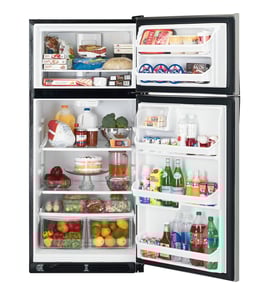


How many cubic feet is my Kenmore refrigerator model 79579293901?
The exact cubic-foot capacity for Kenmore refrigerator model 79579293901 is listed on the model’s rating label and in the specifications section of the 79579293901 owner's manual. For Kenmore 795-prefix top-freezer refrigerators, capacity is commonly in the 20 to 22 cu. ft. range.
Where to find the exact capacity (fastest options)
Use these model-specific places first; they match how Kenmore publishes capacity for this refrigerator family.
- Check the rating label inside the fresh food compartment (commonly on the right-hand side wall).
- Look in the specifications/features pages of the 79579293901 owner's manual.
- If your unit has a product record section, confirm the model and serial number match 79579293901 before relying on any spec.
Typical capacity guidance for this model family
Kenmore models that start with 795 are commonly LG-built designs, and top-freezer configurations in this group are usually mid-size to larger.
| What you have | Typical total capacity | What changes it most |
|---|---|---|
| Top-freezer refrigerator (Kenmore 795 family) | 20 to 22 cu. ft. | Cabinet width and interior layout |
| Compact or apartment-size top-freezer | 10 to 18 cu. ft. | Narrow cabinet, fewer shelves |
| Large top-freezer | 22 to 25 cu. ft. | Wider cabinet, deeper box |
Why it matters
Knowing the true cubic-foot capacity helps us match the right shelves, door bins, and storage accessories, and it also helps when comparing cooling performance expectations for a top-mount refrigerator.
Related tip if you are comparing models
The “795” portion of the model number identifies the manufacturing source family; it is not the capacity. For model-to-model comparisons, use the capacity listed in the 79579293901 owner's manual so you are comparing the same measurement.
Last updated: February 2026
How do I tell what model Kenmore fridge I have?
For Kenmore refrigerators, the model number is printed on the appliance identification label. On model 79579293901, that label is located on the right-hand side of the refrigerator compartment; use that exact model number when looking up parts, the owner's manual, or service information.
Where to look for the model number label
Check these common spots first (use a flashlight and wipe dust or condensation off the label):
- Right-hand side wall inside the fresh food (refrigerator) compartment
- Side wall inside the freezer compartment (on some configurations)
- Inside the door area near the gasket (less common)
- Behind the toe grille or kick plate area (varies by design)
What to write down (and why)
Record both the model and serial number exactly as shown. The manual recommends keeping this information available for any service or parts lookup.
- Model number: identifies the exact refrigerator design and parts list
- Serial number: helps match production variations
- Date of purchase: useful for maintenance records and warranty paperwork
Quick ID checklist
| Item on label | Example format | Why it matters |
|---|---|---|
| Model number | 79579293901 | Ensures correct Kenmore parts fit |
| Serial number | Letters and numbers | Helps match revisions |
| Electrical info | Volts/amps | Helps with safe troubleshooting |
Why it matters
Kenmore model numbers can look similar, but small differences change parts like door gaskets, sensors, shelves, and water valves. Using the exact model number helps you avoid ordering the wrong refrigerator door bin, temperature sensor, or water inlet valve.
Last updated: February 2026
What's the average lifespan of a Kenmore refrigerator?
Kenmore refrigerators typically last 10 to 15 years. For your Kenmore 79579293901 top-mount refrigerator, lifespan depends most on basic upkeep (airflow, clean condenser area, tight door seals) and fixing cooling or water issues early; see the care and troubleshooting sections in the 79579293901 owner's manual.
Typical lifespan and what changes it
Most refrigerators land in the same general range, but these factors move the needle:
- Condenser cleanliness and airflow: dust buildup makes the compressor run longer and hotter
- Door gasket condition: air leaks cause longer run times and temperature swings
- Room temperature and door openings: warmer kitchens and frequent openings increase run time
- Water and ice maker health: leaks or low water flow can create recurring service issues
- Timely repairs: replacing a failing fan motor, sensor, or valve early prevents bigger damage
Quick maintenance checklist (high impact)
We recommend these routine steps to help your 79579293901 reach its full service life:
- Vacuum dust from the condenser area and toe-kick region regularly
- Keep food organized so doors stay open for less time
- Confirm doors close fully and sit level (no rocking cabinet)
- Inspect gaskets for gaps, tears, or hardened sections
- Address water leaks or slow ice production promptly
Common “life-shortening” symptoms and likely areas
| Symptom | What it often points to | Example part on this model page |
|---|---|---|
| Warm fridge, freezer OK | Airflow/damper issue | Refrigerator air damper motor 4681JB1027N |
| Fridge not cooling well, noisy or hot back | Condenser fan problem | Refrigerator condenser fan motor EAU61644105 |
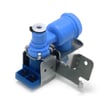
| Water dispenser/ice maker not filling | Water inlet valve issue | Refrigerator water valve AJU55759303 |
| Frost buildup or moisture around door | Door seal leak | Refrigerator freezer door gasket ADX52752665 |
Why it matters
A refrigerator that runs “too much” uses more energy and puts extra wear on the sealed system. The manual notes that modern units can run a large portion of the time under normal conditions, and they run even more in warm rooms or with frequent door openings; reducing that workload is one of the best ways to extend lifespan.
Last updated: February 2026
What are the most common problems with Kenmore refrigerators?
The most common problems we see on Kenmore refrigerators like model 79579293901 are cooling issues, water leaks, ice maker or dispenser problems, and unusual noises. These usually trace back to airflow being blocked, temperature controls needing adjustment, dirty coils, or a worn part such as a door gasket, fan component, or water inlet valve (see the 79579293901 owner's manual).
Common symptoms and what they usually mean
- Not cooling well (fresh food or freezer): vents blocked by food, controls set incorrectly, frost buildup from a defrost problem, or a fan issue.
- Freezer cold but refrigerator warm: restricted airflow or a damper problem (air is not moving into the refrigerator section).
- Water under the refrigerator or inside compartments: clogged defrost drain, loose water line connection, or a leaking inlet valve.
- Ice maker slow or not making ice: freezer temperature too warm, water supply issue, or inlet valve problem.
- Noises (buzzing, rattling, clicking): fan blade hitting ice/debris, condenser fan area vibration, or compressor start components cycling.
Quick checks we recommend first (no parts needed)
- Confirm airflow: keep packages from blocking vents; blocked vents cause temperature and moisture problems.
- Set temperatures correctly: start near the mid setting and adjust in small steps.
- Wait 24 hours between adjustments: temperature changes take time to stabilize.
- Limit door openings: frequent openings and large food loads warm the cabinet.
- Check the door seal: gaps or a torn gasket let warm air in and create frost and long run times.
Parts that commonly solve these problems on 79579293901
| Problem area | Common fix | Example part for this model |
|---|---|---|
| Water dispenser or ice maker not filling | Replace a leaking or stuck inlet valve | Refrigerator water valve AJU55759303 |
| Refrigerator section warm | Restore airflow control | Refrigerator air damper motor 4681JB1027N |
| Warm temps, long run time, odd noises near back | Repair condenser fan system | Refrigerator condenser fan motor EAU61644105 and refrigerator condenser fan blade ADP36665702 |
| Frost, moisture, or poor sealing | Replace door gasket | Refrigerator freezer door gasket ADX52752665 |
Why it matters
Most “big” refrigerator complaints are really airflow, temperature control, or sealing problems. Fixing those early helps prevent food spoilage, reduces compressor run time, and can stop repeat issues like frost buildup and water leaks.
Last updated: February 2026
How to tell if a Kenmore refrigerator compressor is bad?
If your Kenmore 79579293901 isn’t cooling and you hear repeated clicking, the compressor may be failing, but many “bad compressor” symptoms are actually caused by airflow, dirty condenser coils, or a start device issue. We confirm by checking cooling performance, run behavior, and basic electrical symptoms.
Quick signs that point toward a compressor problem
Look for a combination of these symptoms (one symptom alone is not enough):
- Refrigerator and freezer temperatures stay warm even after 24 hours of run time
- Compressor tries to start, clicks, then stops (repeats every few minutes)
- Compressor runs almost constantly but cooling is still weak
- Compressor is very hot to the touch after repeated start attempts (use caution)
- You do not hear normal fan and refrigerant “gurgling” sounds during operation
Rule out common look-alikes first (most important)
Your 79579293901 owner's manual notes that modern, high-efficiency compressors can run longer than older units, and that clicking and other sounds can be normal as controls cycle. Before condemning the compressor, check these high-impact items:
- Condenser coils: Dirty coils reduce heat transfer and make the compressor work harder; clean them.
- Door sealing and closing: Doors not closing fully or sticking gaskets can cause long run times.
- Recent startup: After plugging in, cooling can take up to 24 hours.
- Room temperature and door openings: Warm rooms and frequent openings increase run time.
- Airflow inside: Overpacked shelves can block vents and reduce cooling.
Symptom-to-cause cheat sheet
| What you notice | More likely cause | What to check next |
|---|---|---|
| Clicking every few minutes, no cooling | Start device or compressor overload | Inspect/replace start components such as refrigerator compressor overload protector 6750C-0005P and wiring at the compressor |
| Runs constantly, weak cooling | Dirty coils, door leak, airflow issue | Clean coils, verify door seal, confirm vents are clear |
| Warm fridge, freezer OK (or vice versa) | Air damper or sensor issue | Consider refrigerator air damper motor 4681JB1027N or refrigerator sensor 6500JB2001B |
Why it matters
A compressor replacement is one of the highest-cost refrigerator repairs. Ruling out airflow, coil cleaning, and start-device problems first prevents unnecessary parts replacement and gets cooling restored faster.
Last updated: February 2026