Owner’s manual
 View engine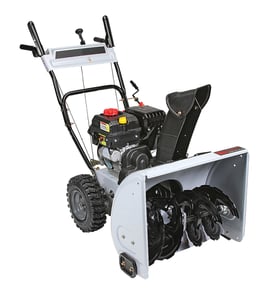





How to get rid of an old snowblower?
If you are getting rid of an old Craftsman snow thrower model 247887800, the simplest option is usually metal recycling. Drain fuel and oil first, then take the unit to a scrap metal yard or a local recycling facility that accepts small engines and steel equipment.
Before you dispose of it (important safety steps)
- Run the engine until it stops to empty the fuel tank, or drain the tank safely.
- Drain the engine oil into an approved container and take it to an oil recycling drop-off.
- Remove the ignition key and disconnect the spark plug wire so it cannot start.
- Let the muffler and engine cool completely before moving or loading.
- Brush off packed snow, salt, and debris so it is easier to handle.
For model-specific fuel handling and storage guidance, follow the safety and maintenance sections in the 247887800 operator's manual.
Best disposal options (most common)
- Scrap metal yard: Often the fastest option since most of the machine is steel.
- Municipal recycling center: Many accept outdoor power equipment; call ahead.
- Retailer or small-engine shop: Some offer take-back or recycling programs.
- Donation or resale: If it still runs, a local charity, community group, or resale listing may be an option.
What to do with fuel and oil
| Item | What to do | Why |
|---|---|---|
| Gasoline | Use it in another approved engine (if fresh) or take to a household hazardous waste site | Prevents fire risk and environmental harm |
| Engine oil | Take to an oil recycling center | Keeps oil out of drains and soil |
| Spark plug | Recycle as scrap metal where accepted | Reduces landfill waste |
Why it matters
Properly draining fuel and oil helps prevent spills, reduces fire risk during transport, and makes recycling easier for facilities that handle small engines.
Last updated: January 2026
How many years should a snowblower last?
A Craftsman snow thrower like model 247887800 typically lasts 10 to 15 years with normal residential use and consistent maintenance. For this specific model, the operator guidance also references an average useful life of 7 years or about 60 operating hours, which is a safety and inspection benchmark. See the 247887800 operator's manual.
What affects lifespan the most
- Fuel quality and storage (stale fuel is a top cause of hard starting and carburetor issues)
- Oil changes and correct oil level
- Wear items (auger paddles, shave plate, belts, skid shoes)
- Operating conditions (heavy, wet snow and gravel accelerate wear)
- Off-season storage (dry, clean storage reduces corrosion)
Typical lifespan ranges (what we see most often)
| Usage pattern | Expected service life | Notes |
|---|---|---|
| Light use (few storms per year) | 12 to 15 years | Maintenance is the deciding factor |
| Moderate use (regular driveway clearing) | 10 to 12 years | Wear parts replaced as needed |
| Heavy use (long runs, deep/wet snow) | 7 to 10 years | More frequent belt and paddle wear |
Maintenance that extends life on model 247887800
- Change engine oil after the first break-in interval, then on schedule
- Use fresh gasoline and avoid storing fuel for long periods
- Inspect and clean the chute and auger housing after use
- Check fasteners and controls for looseness or abnormal vibration
- Replace worn belts before they slip or shred
If you’re seeing loss of auger performance or self-propel issues, a worn auger belt is a common cause; the compatible replacement is the snowblower auger drive belt 256963.
Why it matters
A snowblower usually “fails early” due to neglected fuel, oil, or wear parts, not because the engine is inherently worn out. Staying ahead of routine service helps your Craftsman 247887800 start easier, throw snow farther, and avoid mid-storm breakdowns.
Last updated: January 2026
How to tell if a snowblower auger belt is bad?
On the Craftsman 247887800 snow thrower, a bad auger belt usually shows up as the auger hesitating, slipping, or not turning under load even though you’re squeezing the auger control. If the belt is loose, glazed, cracked, or stretched, it will not transfer power to the auger pulley reliably.
Quick safety steps before checking
- Shut the engine off and remove the ignition key.
- Disconnect the spark plug wire to prevent accidental starting.
- Let the muffler and engine cool.
- Tip the unit safely only as described in the 247887800 operator’s manual.
Signs the auger belt is failing
Look for these common symptoms during operation:
- Auger does not spin, or spins slowly, when you squeeze the auger control.
- Auger starts, then stops when it hits heavier snow (belt slipping).
- Burning rubber smell from the belt area.
- Squealing noise when engaging the auger.
- Visible belt damage: cracks, fraying, glazing (shiny surface), missing chunks.
Simple checks you can do
- Engagement test (no disassembly): With the engine running outdoors, squeeze the auger control. If the auger hesitates or stalls easily, suspect belt slip or cable adjustment.
- Inspect under the belt cover: Remove the belt cover and check belt condition and tension.
- Check cable adjustment first: This model’s manual notes that a stretched control cable can cause the auger to hesitate; if adjustment doesn’t help, belt replacement is the next step.
What to replace if the belt is bad
For this model, the compatible replacement is the snowblower auger drive belt 256963.
| What you notice | Most likely cause | Next step |
|---|---|---|
| Auger hesitates, belt looks OK | Cable out of adjustment | Adjust auger control cable |
| Belt looks cracked/glazed/frayed | Worn belt | Replace auger belt |
| Auger won’t turn at all | Belt broken or off pulley | Inspect belt routing, replace if damaged |
Why it matters
A slipping auger belt reduces throwing performance and can overheat the belt and pulleys, turning a small maintenance job into a bigger repair.
Last updated: January 2026
How can I tell how old my Craftsman snowblower is?
For Craftsman snow thrower model 247887800, the best way to tell its age is to read the serial number on the model and serial tag and use the serial format to decode the build date. The date printed on the 247887800 operator's manual is a document revision date, not your unit’s manufacture date.
Where to find the model and serial tag
Common locations on a Craftsman snowblower include:
- Rear frame near the handle supports
- Side of the auger housing
- Near the engine mounting area on the frame
- Under or behind a service cover panel
If the tag is hard to read, wipe it clean and use a flashlight; a phone photo zoom can help.
How to interpret the serial information
Craftsman equipment can be produced by different manufacturers over time, so the date encoding varies. For model 247887800, start by capturing the full serial exactly as shown.
- Write down every character (letters, numbers, dashes)
- Look for a separate “date” or “DOM” field if present
- If there is no explicit date, the build date is usually embedded in the serial
- If the tag includes an engine model, that can help narrow the production window
What the tag might show
| What you see on the tag | What it means | Best next step |
|---|---|---|
| Model + serial only | Date is encoded in the serial | Record serial and decode by maker format |
| Separate date/DOM field | Date may be stated directly | Use that date as the build date |
| Manual form/revision date | Documentation date only | Do not use it to date the machine |
Why it matters
Knowing the build timeframe helps us match the correct parts revision and maintenance schedule. Your manual also states an average useful life of 7 years or 60 hours of operation, which is helpful for planning upkeep.
Last updated: January 2026