Installation guide
 Owner’s manual
 Error Codes


How many cubic feet is a Kenmore Model 11025102311 washer?
The exact tub capacity (cubic feet) for Kenmore washer model 11025102311 is listed in the product specifications section of the 11025102311 owner's manual. Most Kenmore 110-series top-load washers of this design typically fall in the 3.2 to 3.5 cu. ft. range.
How to confirm the exact capacity for model 11025102311
We recommend using one of these reliable checks:
- Look for “Capacity” or “cu. ft.” in the specifications pages of the 11025102311 owner's manual
- Check the model and serial tag (often under the lid or on the rim of the opening)
- Compare the washer’s basket diameter and depth to typical top-load sizes
- If you are matching a replacement basket or tub, confirm by model before ordering
Typical capacity ranges (what most owners see)
These ranges help when you are planning load sizes or comparing to a newer washer.
| Washer type (common Kenmore 110 design) | Typical capacity range | Best for |
|---|---|---|
| Standard top-load (agitator or washplate) | 3.2 to 3.5 cu. ft. | Medium family loads |
| Larger HE top-load (newer designs) | 4.0 to 5.0+ cu. ft. | Bulky items, large loads |
Why it matters
Capacity affects how much you can wash per cycle and how well the washer can balance and spin. Overloading a smaller-capacity tub often leads to out-of-balance spinning, longer cycle times, and extra wear on suspension and drive components.
Related installation note (helps with planning space)
If you are also checking fit in a laundry area, the 11025102311 installation guide includes spacing and clearance guidance (including recommendations to allow extra space for service access and noise reduction).
Last updated: February 2026
How to identify a Kenmore washer model?
To identify your Kenmore washer model, we look for the model and serial tag on the washer cabinet, most often around the top or back of the control area, or low on the cabinet. For Kenmore model 11025102311, the exact label locations and examples are shown in the 11025102311 owner's manual.
Where to look on the washer
Check these common spots first (in order):
- Top edge of the cabinet (lift the lid and look around the rim)
- Back of the control panel (rear of the console)
- Inside the lid area (near the hinge or lid opening)
- Side of the main cabinet near the bottom (left or right side)
- Rear panel (especially if the washer has been moved or serviced)
What you need to write down
Record the information exactly as printed; it helps us match the correct parts diagram and compatible replacement parts.
- Model number (example: 11025102311)
- Serial number
- Brand (Kenmore)
- Electrical rating (volts/amps, if shown)
- Manufacturing code or type number (if listed)
Quick checklist: model tag vs. other labels
| Label type | What it’s used for | Keep it? |
|---|---|---|
| Model/serial tag | Correct parts, manuals, service info | Yes |
| EnergyGuide label | Energy use estimate | Optional |
| Installation notes sticker | Installer/date notes | Optional |
Why it matters
Kenmore washers can look similar across multiple series, but parts like a lid lock, drive belt, or water inlet valve can vary by model. Using the exact model number prevents ordering the wrong component and speeds up troubleshooting.
Last updated: February 2026
How to reset Kenmore washer model 11025102311 top loader?
To reset your Kenmore washer model 11025102311, cancel the current cycle, then remove power long enough for the control to fully clear. After restoring power, start a new cycle and let the washer complete its lid-lock self-test before adding options.
Quick reset steps (most effective)
- Press and hold CANCEL for 3 seconds to stop the cycle.
- Wait for the basket to stop; the lid can take several minutes to unlock after a high-speed spin.
- Unplug the washer (or switch the breaker off).
- Leave power off for 5 minutes.
- Restore power, then select a cycle and press START/PAUSE/Unlock Lid.
What “normal” looks like after a reset
During the first 2 to 3 minutes, this model may click, briefly unlock and relock the lid, and do short sensing spins to estimate load size. Avoid opening the lid during sensing because it restarts the sensing process.
| What you see/hear | What it means | What to do |
|---|---|---|
| Lid lock clicks, basket nudges | Lid-lock self-test | Wait; this is normal |
| Sensing light on, short slow spins | Load-size sensing | Let it run 2 to 3 minutes |
| Lid won’t open right away | Safety delay after spin | Wait several minutes, then try START/PAUSE/Unlock Lid |
If it still won’t run after resetting
- Confirm the cord is in a grounded 3-prong outlet (no extension cord).
- Check the home breaker or fuse.
- Make sure the lid is fully closed.
- Reduce oversudsing; use HE detergent and measure carefully.
- If the lid won’t lock or unlock correctly, inspect the washer lid lock assembly W10404050.
Why it matters
A proper reset clears a stuck cycle and lets the control re-run the lid-lock and sensing checks that this low-water Kenmore top-load washer uses to start safely and balance the load.
For control panel button functions and cycle behavior, follow the 11025102311 owner's manual.
Last updated: February 2026
What brand is Kenmore 11025102311?
Kenmore 11025102311 is a Kenmore-branded top-load washer. Kenmore is the brand name on the appliance and in the documentation; for operating details, cycle features, and care steps, use the 11025102311 use & care guide.
What “Kenmore” means for parts and service
Kenmore is the label on the washer, but many Kenmore washers are built by major manufacturers and use widely available component styles (lid lock, inlet valve, drive belt, gear case). For repairs, the most important thing is matching parts to model 11025102311.
- Always confirm the full model number from the lid or rim label before ordering.
- Use model-based diagrams to match the exact part ID.
- If a symptom points to a common failure item, start with the simplest checks first.
- Follow safety steps and access panels described in the 11025102311 installation instructions.
Common parts you may see on this model
If you are troubleshooting a no-start, no-fill, or spin issue, these are common components customers replace on Kenmore top-load washers like 11025102311:
| Symptom | Common part to check | Example part for this model |
|---|---|---|
| Won’t start, lid won’t lock | Lid lock assembly | Washer lid lock assembly W10404050 |
| Won’t fill or fills slowly | Water inlet valve, screens | Washer water inlet valve WPW10683603 |
| Won’t spin or weak agitation | Drive belt, actuator, gear case | Washer drive belt WPW10006384 |
Why it matters
Kenmore model numbers (like 11025102311) are the key to getting the right fit and function. Two washers can look similar but use different lid locks, valves, or drive systems, so ordering by model prevents returns and repeat repairs.
Last updated: February 2026
What is the average lifespan of a Kenmore washer?
A Kenmore washer typically lasts 10 to 15 years under normal household use. To reach the high end of that range with model 11025102311, consistent maintenance (especially cleaning and hose care) and avoiding chronic overloading make the biggest difference; wear items like belts and hoses usually need attention first.
Typical lifespan by use level
| Use pattern | Typical lifespan | What usually wears first |
|---|---|---|
| Light (1 to 3 loads/week) | 12 to 15 years | Hoses, lid lock, belt |
| Average (4 to 7 loads/week) | 10 to 13 years | Belt, suspension, valve |
| Heavy (daily loads) | 7 to 10 years | Drive system, suspension, gear case |
Maintenance that extends life (and prevents common failures)
We recommend focusing on the same items Kenmore calls out for washer care and safe operation in the 11025102311 owner's manual.
- Use HE detergent and do not overdose; excess suds and residue can lead to odor and performance issues.
- Run warm or hot washes occasionally to help reduce buildup.
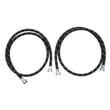
- Inspect fill hoses regularly for bulges, kinks, cuts, wear, or leaks.
- Replace water inlet hoses every 5 years (mark the date when you replace them).
- Keep loads balanced and avoid overfilling; chronic off-balance operation accelerates suspension and drive wear.
- Do not try to start cycles with the lid open; lid lock and spin safety features are designed to prevent damage and injury.
Parts that commonly affect “end of life” decisions
If the washer is otherwise in good shape, replacing a few common parts can restore performance and extend service life.
- Washer drive belt WPW10006384: slipping, squealing, weak agitation or spin
- Washer lid lock assembly W10404050: won’t start, lid won’t lock or unlock correctly
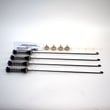
- Washer tub suspension rod assembly W10780044: banging, walking, frequent off-balance spins
- Washer water inlet valve WPW10683603: slow fill, no fill, temperature mix issues
Why it matters
A washer’s “lifespan” is usually limited by wear parts and maintenance-related stress (overloading, poor leveling, hose neglect). Staying ahead of hoses, detergent use, and vibration issues helps prevent bigger repairs like drive system or gear case problems.
Last updated: February 2026