Owner’s manual


Does my Kenmore top load washer have a filter?
Yes. Your Kenmore washer model 79640318900 uses multiple filters: small water inlet filter screens at the fill valves and a drain pump filter that catches lint and items like coins and buttons. Cleaning these filters helps prevent fill and drain problems.
Where the filters are on model 79640318900
- Drain pump filter: behind the lower access panel; it’s a twist-out filter on the pump.
- Drain hose plug: next to the pump filter; used to drain water before removing the filter.
- Water inlet filter screens: inside the hot and cold water valve ports where the inlet hoses connect.
- Dispenser drawer: not a “filter,” but it should be cleaned periodically to prevent dispensing issues.
For the exact access steps and illustrations, follow the 79640318900 owner's manual.
How to clean the drain pump filter (quick steps)
- Unplug the washer.
- Open the lower drain pump filter access panel.
- Unclip the small drain hose, pull it out, and remove the plug to drain water into a shallow pan.
- Twist the pump filter counterclockwise to remove it.
- Remove lint and foreign objects; reinstall the filter and plug.
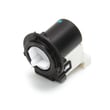
If your washer is failing to drain, a clogged filter is a common cause; the washer drain pump filter 383EER2001A is the replacement part when the filter is damaged or won’t seal.
How to clean the water inlet filter screens
- Turn off both water taps.
- Remove the hot and cold inlet hoses from the back of the washer.
- Pull out the small screens, soak them in white vinegar (or a scale remover), rinse, and reinstall.
- Reattach hoses and turn water back on.
Symptoms and what they usually point to
| Symptom | Most common cause | What to check first |
|---|---|---|
| Won’t drain or drains slowly | Drain pump filter clogged | Drain pump filter and drain hose |
| Fills slowly or won’t fill | Inlet screens clogged | Inlet filter screens at valves |
| Rattling/clanking | Objects in drum or pump | Drum and drain pump filter |
Why it matters
Keeping the drain pump filter and inlet screens clean protects the drain pump and inlet valve from debris and scale, reduces error conditions, and helps your Kenmore washer maintain normal water flow and draining.
Last updated: February 2026
How to identify a Kenmore washer model?
Your Kenmore washer model number is printed on the identification plate; on Kenmore model 79640318900, it’s located inside the washer door. Use that exact model number when ordering parts or looking up troubleshooting steps in the 79640318900 owner's manual.
Where to look on the washer
For Kenmore washers, the model/serial tag is usually in one of these spots:
- Front-load washer: inside the door opening (this model: inside the door)
- Top-load washer: under the lid near the tub opening
- Rear panel: on the back of the cabinet near the power cord or water hookups
- Control area: along the frame near the control panel (less common)
What the model number looks like (and why it matters)
Kenmore model numbers are typically 11 characters or longer and may be all numbers (like 79640318900) or a mix of numbers and punctuation (often starting with 110 on some Kenmore-built lines). Matching the model number ensures the correct fit for parts like a door lock switch, drain pump, or water inlet valve.
Quick ID checklist
- Copy the model number exactly as printed
- Record the serial number too (helps with production variations)
- Take a clear photo of the tag before ordering
- Use the model number to confirm compatibility before replacing parts
Common examples for this model’s parts
If you’re diagnosing a symptom (no drain, no fill, door won’t lock), the model number helps us match the right component.
| Symptom | Common part category | Example part for 79640318900 |
|---|---|---|
| Won’t drain | Drain pump / filter | Laundry appliance drain pump 4681EA2001T |
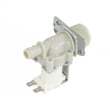
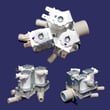
| Won’t fill / fills slowly | Water inlet valve | Washer water inlet valve 5221ER1003A |
| Door won’t lock | Door lock switch | Washer door lock switch EBF49827801 |
Why it matters
Kenmore uses multiple manufacturers across different model families; two washers can look similar but use different hoses, valves, and electronic parts. Using the identification plate info prevents wrong-part returns and speeds up repair.
Last updated: February 2026
What is the capacity of the Kenmore front load washer model 79640318900?
Kenmore model 79640318900 is a front-loading washer, and its exact tub capacity is listed in the specifications section of the 79640318900 owner's manual. Use that capacity (in cubic feet) to compare washer sizes and plan realistic load sizes.
Where to find the capacity
In the manual, look for the specifications table (often labeled “Key dimensions and specifications”). Capacity is typically shown as cu. ft..
- Open the 79640318900 owner's manual
- Go to Key dimensions and specifications
- Find the line for Capacity (cubic feet)
- Use that number to size loads (bedding, towels, mixed loads)
Helpful model specs from the manual
These specs help with fit, door swing clearance, and electrical planning.
| Spec | Value |
|---|---|
| Width | 27 in. |
| Depth | 29 3/4 in. |
| Height | 38 11/16 in. |
| Depth (door open) | 51 1/8 in. |
| Electrical | 120 VAC, 60 Hz |
Why it matters
Capacity impacts how well the washer tumbles clothes, rinses out HE detergent, and balances at high-speed spin. Staying within the designed capacity also helps reduce vibration and out-of-balance issues.
Last updated: February 2026
What is the life expectancy of a Kenmore washer?
Most Kenmore washers, including model 79640318900, have a typical life expectancy of 10 to 15 years with normal household use. Regular care (cleaning, correct loading, and fixing small leaks early) is what most often determines whether you land closer to 10 years or closer to 15.
What affects washer lifespan the most
- Load size and balance: frequent overloading and unbalanced loads shorten tub, bearing, and suspension life.
- Maintenance habits: cleaning the door seal, dispenser, and filters prevents odor, clogs, and pump strain.
- Water quality: hard water speeds mineral buildup in valves, hoses, and the tub.
- Drain performance: slow draining makes the pump work harder and can lead to repeated drain errors.
- Installation and leveling: a washer that is not level vibrates more and wears faster.
Maintenance that helps you reach the high end (15 years)
Use the care steps in the 79640318900 owner's manual and keep a simple routine:
- Run the Clean Washer cycle on schedule.
- Wipe and dry the door seal and glass after laundry days.
- Clean the dispenser and use the right amount of HE detergent.
- Clean the drain pump filter periodically (especially if you wash pet bedding or small items).
- Check and clean inlet screens if fills get slow.
Quick “do this” schedule
| Task | Good interval | What it prevents |
|---|---|---|
| Clean washer cycle | Monthly | Odor, residue, poor rinsing |
| Clean drain pump filter | Every 1 to 3 months | Drain clogs, pump strain |
| Clean door seal | Weekly | Leaks, mildew |
| Clean inlet screens | Every 6 to 12 months | Slow fill, fill errors |
When repair makes sense vs replacement
A good rule is to repair when the washer is under about 10 years old and the fix is straightforward (clog, hose, valve, lock). For common “won’t drain” complaints, cleaning the filter first is key; if the pump is noisy or seized, the laundry appliance drain pump 4681EA2001T is a common replacement part for this model.
Why it matters
Knowing the 10 to 15 year range helps you plan: consistent maintenance can delay major failures (like bearings, tub issues, or motor components) and reduce nuisance problems such as drain errors and odor.
Last updated: February 2026