


What does a canister vacuum mean?
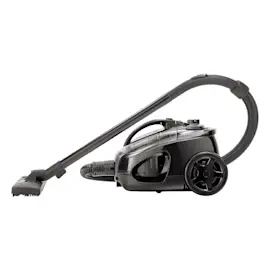
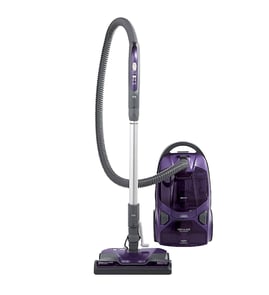
A canister vacuum (also called a cylinder vacuum) is a vacuum cleaner where the motor and dust collection sit in a separate wheeled “canister” that you pull behind you while cleaning with a hose and wand. Your Panasonic MC-V9638-00 is this style.
A canister vacuum separates the power unit from the cleaning head, which changes how it handles and what it cleans best.
- The canister rolls on wheels; you steer the floor nozzle with the wand
- The hose gives reach for stairs, upholstery, and tight spaces
- The powerhead or floor brush does the agitation at the floor
- The canister body usually stays on the floor while you clean above-floor areas
If performance drops, these are the most common wear items and checks for canister vacuums like the Panasonic MC-V9638-00.
| Symptom | Common cause | What to check first |
|---|---|---|
| Poor pickup | Airflow restriction | Hose, wand, floor nozzle for clogs |
| Brush not spinning | Worn or broken belt | Inspect and replace the Panasonic belt AMC742-024 |
| Intermittent power | Loose connection or switch issue | Cord/lead wire connections, power switch |
| Hard to push on carpet | Brush height or brush roll issue | Floor brush condition and settings |
Knowing you have a canister vacuum helps you troubleshoot correctly: most “no suction” problems are airflow related (clogs, seals, filters), while “no brush roll” problems usually point to the belt or floor brush drive.
Last updated: January 2026
What is the highest rated canister vacuum?
The highest rated canister vacuums are typically premium, bagged models known for strong suction, sealed filtration, and long service life. For shoppers comparing against Panasonic MC-V9638-00, we see top ratings most often tied to brands like Miele and SEBO, especially when HEPA filtration and durability matter.
When ratings are consistent across many reviews, they usually reflect performance in a few repeatable areas:
- Cleaning performance: strong airflow at the floor head and stable suction as the bag fills
- Filtration: sealed system plus HEPA (best for allergies and fine dust)
- Maneuverability: swivel hose, smooth casters, and a stable canister that does not tip
- Noise level: quieter motor design and better insulation
- Parts support: belts, floor brush components, and switches that are replaceable
| Feature | Bagged canister | Bagless canister |
|---|---|---|
| Allergy control | Best (less dust exposure) | More dust exposure when emptying |
| Suction consistency | Typically more consistent | Can drop as filters clog |
| Ongoing cost | Bags and filters | Filters (and more frequent cleaning) |
| Maintenance | Simple, cleaner | More hands-on |
If your current canister vacuum is losing pickup or the brush is not spinning, you can often restore performance for far less than replacing the whole unit. A worn belt is one of the most common causes of weak carpet agitation.
- Check for a stretched or broken belt (brush roll stops or slips)
- Clear hair and thread from the floor brush and end caps
- Inspect for clogs in the wand, hose, and floor nozzle
- Replace filters on schedule to protect the motor and airflow
- If the unit will not power on, inspect the cord path and switch components
For a common brush-drive fix, use the correct replacement belt such as the Panasonic belt AMC742-024.
- Sealed system with HEPA filtration
- Floor tool matched to your flooring (carpet power nozzle vs. hard-floor tool)
- Easy-to-find consumables (bags, filters, belts)
- Comfortable handle controls and wand reach
- Reasonable weight for carrying up stairs
Last updated: January 2026
How long do canister vacuums last?
Most canister vacuums last 7 to 10 years with normal home use and basic maintenance. A Panasonic canister vacuum like MC-V9638-00 often reaches the high end of that range when airflow is kept strong (no clogs) and wear items are replaced on time.
A vacuum’s motor life is closely tied to airflow, belt condition, and how often it runs.
- Light use (1 to 2 times/week): about 8 to 12 years
- Average use (2 to 4 times/week): about 7 to 10 years
- Heavy use (daily, pets, large home): about 5 to 8 years
- Well-maintained premium units: up to 15 years
| What you do | What it protects | Result |
|---|---|---|
| Keep filters and pathways clear | Motor cooling and suction | Longer motor life |
| Replace worn belts | Brush roll performance | Better pickup, less strain |
| Remove hair/thread from brush | Bearings and belt | Fewer breakdowns |
| Fix damaged wiring early | Switch and power delivery | Prevents intermittent power |
These steps prevent the most common “it still runs but doesn’t clean” problems.
- Empty the bag or bin before it is packed full
- Check the hose, wand, and floor nozzle for clogs
- Clean hair and string off the brush roll regularly
- Replace a stretched or slipping belt such as the Panasonic belt AMC742-024
- If the vacuum cuts in and out, inspect the cord and connections; use a guide like how to repair broken or damaged wires video
If you see several of these at once, repairs may become more frequent.
- Burning smell or unusually hot canister body
- Suction drops quickly even after clearing clogs
- Brush stops spinning or squeals repeatedly (often belt or bearing related)
- Power is intermittent (switch, cord, or internal lead wire issues)
A canister vacuum depends on steady airflow to cool the motor. Simple upkeep, especially keeping passages clear and replacing wear parts, prevents overheating and helps your Panasonic MC-V9638-00 deliver strong cleaning performance for years.
Last updated: January 2026
How to clean the inside of a canister vacuum?
To clean the inside of your Panasonic MC-V9638-00 canister vacuum, empty the bin, remove and clean any washable filters, and wipe the canister interior so airflow stays strong and odors do not build up. Let all parts dry completely before reassembling and vacuuming.
- Unplug the vacuum and let the motor cool.
- Remove the canister or dust container; empty debris into a trash bag.
- Tap out loose dust from filters (outside, if possible).
- Wipe the inside with a microfiber cloth lightly dampened with warm, soapy water.
- Use a soft brush to loosen packed dust in corners and seams.
- Air-dry parts fully before reinstalling (moisture can cause clogs and odors).
| Area | What to do | Typical frequency |
|---|---|---|
| Canister interior | Wipe out dust film; spot-clean sticky debris | Every 2 to 4 weeks |
| Filters | Tap out dust; rinse only if the filter is labeled washable | Every 1 to 3 months |
| Hose and wand | Check for clogs; remove hair and lint | Monthly |
| Floor nozzle | Cut away hair from brush area; clear intake path | Monthly |
- Check the hose and wand for a blockage (a sock or wad of hair is common).
- Inspect the floor nozzle for a jammed brush or packed debris.
- Replace worn drive parts if the brush is not spinning; a stretched or broken belt is a common cause. Use the Panasonic belt AMC742-024 if it matches your setup.
- If the vacuum will not power on reliably, inspect the cord and switch circuit; the Panasonic switch AC09ESTZ000 is a common electrical wear item.
A clean canister and filter path keeps airflow high, reduces motor strain, and helps prevent musty smells. It also makes it easier to spot developing issues like clogs, worn belts, or loose connections before they cause bigger performance problems.
Last updated: January 2026