Owner’s manual
 Error Codes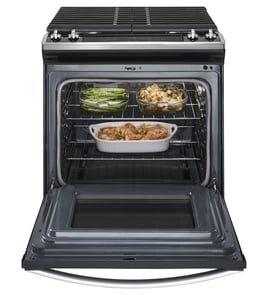


How long should a Kenmore gas stove last?
A Kenmore gas range like model 36275621302 typically lasts 15 years with normal household use. Keeping burners clean, using the correct flame size, and addressing ignition or flame-quality issues early helps you get the full service life; see the owner's manual for care and operating details.
Typical lifespan and what affects it
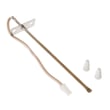
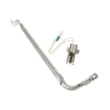
Most gas ranges reach the 15-year mark when these factors stay in good shape:
- Burner ignition system (spark module, electrodes, wiring)
- Burner heads and caps staying clean and seated correctly
- Gas flow components staying unobstructed (valves, orifices)
- Oven burner performance and proper cycling to temperature
- Routine cleaning that prevents grease and food buildup
Quick habits that extend range life
The Kenmore 36275621302 manual emphasizes safe burner operation and proper flame control. These habits reduce wear on grates, burners, and ignition parts:
- Light surface burners by pushing the knob in and turning to LITE, then adjust the flame after ignition.
- Match the flame to the cookware; never let flames extend up the sides of the pan.
- Avoid running a surface burner for long periods without cookware on the grate.
- Keep burner parts dry and clean so the igniter can spark reliably.
- Watch for changes in flame quality (lazy yellow flames, delayed ignition, uneven flame).
Flame color guide (what “normal” looks like)
Flame appearance is a fast way to spot problems that shorten lifespan.
| What you see | What it usually means | What to do |
|---|---|---|
| Soft blue flame | Normal for natural gas | Continue normal use and cleaning |
| Yellow tips on outer cones | Normal for LP gas | Continue normal use and cleaning |
| Large yellow flames or soot | Poor combustion | Stop using that burner and have the range serviced |
Why it matters
A range can still “work” while running with poor combustion, misaligned burner parts, or repeated delayed ignition. Fixing those issues early protects the cooktop finish, burner components, and oven performance, helping the appliance reach its expected 15-year lifespan.
Last updated: February 2026
Where to find Kenmore gas range model number?
On Kenmore gas range model 36275621302, the model and serial number label is on the front frame behind the storage drawer. Pull the storage drawer out and look for the plate or label fastened to the front frame; that is the quickest, most reliable location.
Where to check on this model
For this Kenmore range, we use these common label locations:
- Behind the storage drawer on the front frame (primary location)
- On the front frame lip that becomes visible once the drawer is removed
- Near the lower front area where the drawer rails mount
For diagrams and the exact wording used in the documentation, use the owner's manual.
Quick steps to find it safely
- Turn all burner knobs to OFF and let the range cool
- Pull the storage drawer straight out (some drawers lift slightly at the end of the rails)
- Use a flashlight to look at the front frame behind the drawer opening
- Write down both the model number and serial number exactly as shown
What the label typically looks like
| What you need | How it appears | Why you need it |
|---|---|---|
| Model number | A number string like 36275621302 | Ensures you get the correct Kenmore gas range parts |
| Serial number | Letters and numbers | Helps match production details for certain parts |
Why it matters
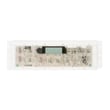
The model number is the key to ordering the right parts (for example, burner components, an oven control board, or an appliance light bulb) and to using the correct service and installation information for your exact Kenmore gas range.
Last updated: February 2026
What are the parts of a gas oven?
A Kenmore gas range like model 36275621302 is built around a gas burner system (bake and broil), an electronic ignition (glow bar style), and airflow/venting parts that keep heat and combustion stable. Your exact layout and access steps are shown in the owner's manual.
Main parts you will find in a gas oven
These are the most common oven-cavity and burner-system components:
- Bake burner (bottom heat source for baking)
- Broil burner (top heat source for broiling)
- Ignition system (electronic ignition; gas flows only when the igniter is hot)
- Oven bottom panel (covers the bake burner area; removable for service)
- Oven racks (support cookware)
- Oven vent/duct openings (exhaust hot air; typically at the rear of the cooktop area)
- Air adjustment shutters (help set proper flame air mix for bake and broil burners)
How these parts work together (quick overview)
On this model, when we select BAKE or BROIL, the electronic ignition heats and the burner should ignite in about 30 to 90 seconds. After preheat, the bake burner cycles off and on to maintain temperature.
What to expect from normal flames
Normal flames are steady with roughly 1-inch blue cones. With LP gas, small yellow tips can be normal.
Common symptoms and the parts to check
| Symptom | Most likely area | What we check first |
|---|---|---|
| Oven will not light | Ignition system | Power to range, igniter/glow bar operation |
| Weak heat or uneven baking | Bake burner and airflow | Burner ports, oven bottom position, air shutter setting |
| Yellow or very large flames | Air and gas mix | Air shutter adjustment, correct gas type setup |
| Top burners uneven | Surface burner parts | Burner head/cap cleanliness and drip pan fit |
If you are troubleshooting surface burners, parts like the burner WB16T10046 and range surface burner cap WB29K10009 are common wear or cleaning-related items.
Why it matters
Knowing the core parts helps you diagnose safely and avoid replacing the wrong component. For example, this model’s oven burners cannot be lit manually during a power outage because the electronic ignition system must be powered.
Last updated: February 2026
How to take the top off a Kenmore gas range?
On Kenmore gas range model 36275621302, we do not remove the entire cooktop top for routine service; the owner's manual specifically notes not to lift the cooktop. For access, we remove surface parts (grates, burner caps, and burner heads) and, when needed, remove internal panels like the oven bottom.
Before you start (safety first)
- Turn all burner knobs to OFF and let grates cool completely.
- If you smell gas: shut off the gas supply and contact a qualified service technician.
- Keep flammables away from the cooktop and oven area.
- Use gloves; sheet metal edges under the cooktop can be sharp.
- Work with good lighting so you can see burner alignment and fasteners.
What you can remove from the top side
These steps handle most cleaning and many common “access” needs without lifting the cooktop.
- Lift off the grates.
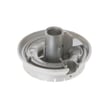
- Remove the burner caps (example replacement: range surface burner cap WB29K10009).
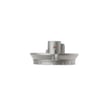
- Lift off the burner head if your burner style uses one (example: burner WB16T10046).
- If you are servicing the burner tube/orifice area, parts that may be involved include range surface burner orifice WB28K10023 or range surface burner tube and orifice WB28K10190.
If you need access inside the oven (common for burner checks)
The manual provides a specific procedure to remove the oven bottom so you can view the bake burner flame.
- Remove the knurled screws holding the rear of the oven bottom.
- Grasp the oven bottom at the finger slots.
- Lift the rear to clear the frame lip, push it back, then lift up and out.
Quick reference: “top access” vs “internal access”
| What you need to do | Typical access point | Parts you usually remove |
|---|---|---|
| Clean spills, remove grates/caps | Cooktop surface | Grates, caps, burner head |
| Check bake burner flame | Inside oven cavity | Oven bottom panel |
| Adjust air shutter (if needed) | Behind storage drawer | Storage drawer |
Why it matters
Lifting a cooktop that is not designed to be lifted can damage the porcelain enamel surface and lead to improper operation. Removing the correct components (grates, caps, burner head, oven bottom) gives safe access without stressing the cooktop.
Last updated: February 2026