Owner’s manual

What is the most common cause of air compressor failure?
The most common cause of air compressor failure is lack of preventive maintenance, which leads to overheating, restricted airflow, moisture corrosion in the tank, and premature wear of pump and valves. On the Craftsman 92116476, following the maintenance schedule in the owner's manual prevents most repeat breakdowns.
What “lack of maintenance” usually looks like
- Not draining the tank regularly, so water builds up and causes internal rust and leaks
- Running with a dirty or restricted air filter, which increases heat and reduces output
- Ignoring belt tension and loose fasteners, which accelerates wear and vibration
- Letting electrical supply issues persist (low voltage causes hard starting and overload trips)
- Skipping safety checks like operating the tank safety valve
Quick maintenance checklist for Craftsman 92116476
Use this as a practical baseline; our goal is to keep the pump cool, the tank dry, and the electrical load stable.
- Drain the tank after use to remove moisture
- Inspect the air filter; clean or replace when restricted
- Check pump oil level (if your unit is oil-lubricated)
- Change pump oil at the recommended interval using synthetic, non-detergent air compressor oil
- Check belt tension and adjust if too tight or loose
- Tighten bolts (snug, not over-tight)
Electrical and overheating issues that commonly “finish off” a compressor
The manual highlights that low voltage and inadequate wiring can cause difficult starting, overload, and breaker trips. A dedicated circuit and correct fuse or breaker protection help prevent repeated motor stress.
| Symptom | Common underlying cause | What to do first |
|---|---|---|
| Breaker trips or motor reset pops | Low voltage or motor overload | Verify dedicated circuit and correct supply voltage |
| Compressor stalls | Bad check valve or low voltage | Inspect check valve, confirm power supply |
| Low discharge pressure | Air leaks or restricted intake | Check fittings for leaks; clean/replace air filter |
Why it matters
Preventive maintenance is cheaper than major repairs because it protects the highest-wear components (pump, valves, motor) and reduces heat and moisture, which are the two biggest long-term enemies of air compressors.
Helpful DIY troubleshooting
If you are already seeing symptoms, use these step-by-step guides:
For model-specific parts lookup and diagrams, start with the parts list for Craftsman 92116476; you can also search by model on Sears PartsDirect.
Last updated: February 2026
Is it worth it to repair a compressor?
For a Craftsman 92116476 air compressor, repair is worth it when the problem is a normal wear item (leaks, pressure switch, check valve, clogged filter) and the tank is sound. If the air tank leaks or the pump has major internal damage, replacement is usually the better value.
Quick decision checklist
- Repair if the unit runs but has air leaks, won’t build pressure, won’t start due to a control issue, or has a bad gauge or regulator.
- Replace if the tank leaks or is damaged.
- Repair if troubleshooting points to a check valve or pressure switch issue.
- Replace if the pump has severe mechanical wear (knocking, seized, heavy metal debris in oil).
- Repair if the compressor is otherwise in good condition and you can complete the fix safely.
Safety and “do not repair” situations (tank-related)
Your manual is clear: do not weld, drill, or modify the air tank. If the tank develops a leak, replace the tank immediately with a new tank or replace the entire compressor. Follow the safety steps in the owner's manual before any service.
Why this matters
A leaking or altered tank is a high-risk failure point. Replacing the compressor (or tank, if available) protects performance and safety.
Common repairs that are usually worth it
These are typical, cost-effective fixes that restore normal cut-in and cut-out operation:
- Fixing hose/fitting leaks using a soapy-water bubble test
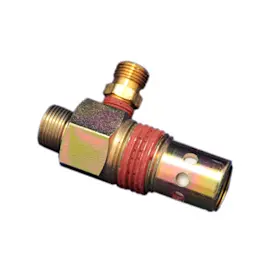
- Servicing or replacing a check valve (often tied to hard starting or back pressure)
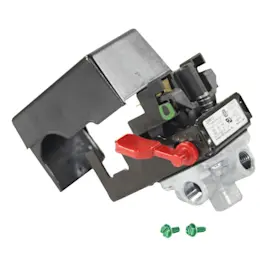
- Replacing a pressure switch (won’t start, won’t shut off, erratic cycling)
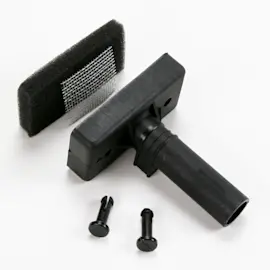
- Cleaning/replacing the air intake filter element
- Draining moisture daily to reduce internal corrosion
Helpful DIY guides:
Repair vs replace: simple comparison
| Situation | What we recommend | Why |
|---|---|---|
| Tank leaks | Replace compressor (or tank if available) | Manual directs replacement; safety-critical |
| Won’t start, tank has pressure | Repair (often check valve or pressure switch) | Common, targeted fix |
| Won’t build pressure | Repair (leaks, valves, pump service) | Often economical |
| Loud, worn pump but tank is good | Depends on parts/labor | Pump rebuild can be worthwhile |
Getting the right parts and instructions
We use the model-specific diagrams and procedures for Craftsman 92116476 in the owner's manual. If you need to search beyond the model parts list, use Sears PartsDirect and search by model number 92116476.
Last updated: February 2026
Are air compressor parts interchangeable?
Air compressor parts are only interchangeable when the replacement matches the same fit and function for your specific unit. For the Craftsman 92116476 air compressor, we recommend using parts that match the model’s design and pressure-control system (motor, pump, pressure switch, and tank) to keep performance and safety correct.
What usually is and is not interchangeable
Some items are “universal” in concept, but the details (thread size, pressure range, voltage, mounting, and flow) must still match.
- Sometimes interchangeable (if specs match): pressure gauges, quick-connect couplers, regulators, safety valves
- Often not interchangeable: pressure switches, check valves, pump components, motor parts, belt guards, tank fittings
- Rarely interchangeable without exact match: overload protector parts, reset components, and model-specific shrouds
Key specs to match before you swap parts
Use the identification label on the compressor and confirm specs in the owner's manual.
- Pressure range: cut-in and cut-out settings must match the compressor’s design
- Electrical: voltage, amperage, and grounding requirements must match your circuit
- Port and thread type: NPT size, orientation, and sealing method
- Mounting and clearance: bracket style, bolt pattern, and space under the shroud or belt guard
- Airflow capacity: regulator and fittings must not restrict flow for your tools
Quick compatibility checklist
| Part type | What must match | What can vary a little |
|---|---|---|
| Pressure switch | cut-in/cut-out range, port size, electrical rating | cover style, brand |
| Pressure gauge | pressure range, thread size | dial size |
| Regulator | inlet/outlet size, flow capacity | knob style |
| Check valve | port size, direction, pressure rating | body shape |
Why it matters
This unit starts automatically and builds tank pressure until the pressure switch shuts the motor off. If a substituted part changes pressure control, airflow, or electrical protection, you can get hard starting, poor pressure regulation, nuisance safety-valve popping, or premature motor overload trips.
Getting the right replacement
We recommend looking up parts by model number first, then matching the part’s specs to your existing component. If you need to search beyond the model parts list, use Sears PartsDirect and search by 92116476.
Last updated: February 2026
What company makes Craftsman air compressors?
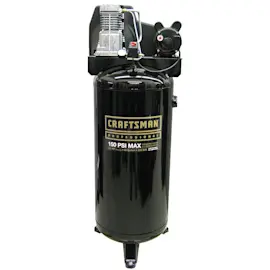
Craftsman air compressors are built by contract manufacturers, and the maker can vary by model and production run. For Craftsman model 92116476, the most reliable way to identify the actual manufacturer is to check the unit’s data plate and the documentation that matches your exact model in the 92116476 owner's manual.
How to identify the manufacturer on your specific unit
Use the compressor’s identification label first; it is the source that ties your unit to a specific factory.
- Find the data plate on the tank or frame (often near electrical ratings)
- Look for fields such as MFG, Manufactured for, Serial, or a company name and address
- Match the full model number exactly: 92116476 (not just “921”)
- Compare the label’s electrical and pressure ratings to the manual’s spec chart
- Use the manual’s parts drawings to confirm your configuration matches the documentation
Model-specific details that help you confirm you have the right manual
The 92116476 owner's manual lists model 921.16476 in its specification chart, which you can use to cross-check your data plate.
| Spec item (from the manual) | Value shown for 921.16476 |
|---|---|
| Cut-in pressure | 120 PSI |
| Cut-out pressure | 150 PSI |
| Tank capacity | Vertical 60 gallons (228 liters) |
| Electrical | 230V, 15A, single phase |
Why it matters
The manufacturer matters because parts, pump design, and control components (like the pressure switch and check valve) can differ between builds even when the tank says Craftsman. Using the data plate plus the manual prevents ordering the wrong parts and speeds up troubleshooting.
Parts and repair help
When you are ready to look up diagrams or repair steps:
- Search by the exact model number 92116476 for the correct parts breakdown
- Use symptom-based help for common issues like no-start or low pressure
- Follow safety basics: shut off power, unplug, and relieve tank pressure before service
For additional model lookups and ordering, use Sears PartsDirect.
Last updated: February 2026