Owner’s manual


Do I need a technician for a 4E error?
A 4E (often shown as 4C) error on your Samsung WA48J7770AP washer means the washer is not getting water. In most cases, you can fix it yourself by checking the faucets, hoses, and inlet screens; a technician is usually only needed if the code returns after these checks.
What to check first (no tools)
- Make sure both hot and cold water taps are fully open.
- Confirm the hot hose is on the hot inlet and the cold hose is on the cold inlet.
- Check household water pressure at the faucets; low pressure can trigger a no-fill code.
- Look for kinked, twisted, or crushed fill hoses behind the washer.
- Power the washer off, wait 1 minute, then restart the cycle.
Clean the inlet screens (common fix)
Sediment can clog the small mesh filters where the hoses connect to the washer.
- Unplug the washer.
- Turn off both water taps.
- Remove the hoses from the washer inlets.
- Rinse and gently clean the mesh screens.
- Reconnect hoses hand-tight, then snug with a wrench (do not overtighten).
For model-specific connection details and cautions, follow the owner's manual.
When a technician makes sense
If the faucets are open, hoses are correct, and screens are clean but the washer still shows 4E/4C, the issue is typically inside the fill system.
Common next suspects:
- Failed or sticking inlet valve
- Wiring connection issue to the valve
- Control not sending power to the valve
Parts that commonly relate to no-fill symptoms
| Symptom | Likely area | Example part for this model |
|---|---|---|
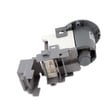
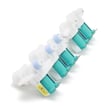
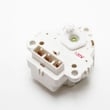
| No water enters at all | Water inlet valve | Samsung washer water inlet valve DC97-15459G |
| Slow fill or intermittent fill | Inlet screens or valve | Samsung washer water inlet valve DC97-15459G |
Why it matters
A no-fill condition stops the cycle and can force the washer to drain for several minutes. Fixing the water supply issue quickly prevents repeated cycle interruptions and helps protect the washer’s internal components from unnecessary stress.
Last updated: February 2026
What is the most common problem with Samsung washing machines?
The most common issue we see with Samsung washers like model WA48J7770AP is a spin or drain problem: clothes stay wet because the load goes out of balance, the drain path is restricted, or the washer cannot pump water out fast enough. Many “won’t spin” complaints start with basic loading, leveling, and drain-hose setup checks in the owner's manual.
What to check first (fast fixes)
- Redistribute the load; wash bulky items with similar-weight items to reduce out-of-balance spinning.
- Confirm the washer sits solidly on the floor; adjust feet if it rocks.
- Verify the drain hose is installed correctly and not shoved too far down the standpipe.
- Look for kinks or clogs in the drain hose.
- Reduce detergent if you see excessive suds; suds can interfere with draining and spinning.
Common symptoms and the most likely causes
| Symptom | Most likely cause | What usually fixes it |
|---|---|---|
| Won’t spin out, clothes wet | Unbalanced load, drain restriction | Rebalance load; correct drain hose position; clear restriction |
| Won’t drain or drains slowly | Pump issue or blockage | Inspect hoses; replace pump if needed |
| Loud banging or excessive shaking | Leveling or worn suspension | Level washer; replace dampers if weak |
| Odors | Suds buildup, moisture left inside | Run periodic cleaning cycles; dry interior after use |
Parts that commonly relate to spin and drain complaints
If your WA48J7770AP is consistently failing to drain or complete the spin, these model-matched parts are often involved:
- Washer drain pump assembly dc97-19289f (complete pump assembly)
- Washer drain pump DC97-16778A (pump)
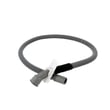
- Washer drain hose DC97-18682A (external drain hose)
- Washer damper DC97-05280S (helps control tub movement during spin)
Why it matters
A washer that cannot drain correctly often will not reach full spin speed. Fixing the drain path and stabilizing the tub helps prevent repeat “wet clothes” loads, reduces vibration, and lowers wear on drive and suspension components.
Last updated: February 2026
What is the lifespan of a Samsung front load washer?
Most Samsung front-load washers last 12 years. With consistent cleaning, correct detergent use, and avoiding overloads, it is normal to reach 15 years. For care routines and cleaning-cycle steps, use the washer’s instructions in the WA48J7770AP owner's manual.
Typical lifespan and what changes it
Front-load washer longevity is driven by mechanical wear and moisture control around the door boot and drain system.
- Loads per week: more cycles wear bearings, shocks, and the drain pump faster
- Overloading: strains the drive system and increases out-of-balance events
- Detergent amount/type: excess suds and residue shorten component life
- Moisture control: leaving the door ajar reduces odor and seal buildup
- Early repairs: fixing leaks or slow draining prevents secondary damage
Quick “how long should it last?” guide
| Usage pattern | Typical lifespan | Common wear areas |
|---|---|---|
| Light (1 to 3 loads/week) | 14 to 15 years | Hoses, inlet screens, door seal care |
| Average (4 to 7 loads/week) | 11 to 13 years | Drain pump, shocks, vibration |
| Heavy (8+ loads/week) | 9 to 11 years | Bearings, suspension, leaks |
Maintenance that helps you reach 15 years
- Run the tub-clean cycle on schedule
- Wipe the door gasket and keep the door slightly open between loads
- Measure HE detergent carefully; avoid “extra” soap
- Check hoses and connections for seepage and replace at the first sign of cracking
- Address slow draining early; a failing pump can lead to repeated standing water
Why it matters
A washer nearing end-of-life usually shows louder spin noise, repeated unbalanced loads, slow draining, or leaks. Staying ahead of those symptoms often turns a major breakdown into a manageable repair.
Last updated: February 2026