Installation guide
 Owner’s manual
 Error Codes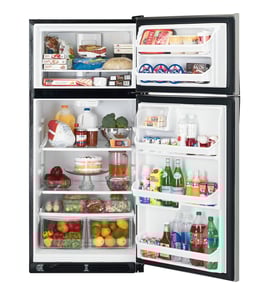



What is the most common problem with a Frigidaire refrigerator?
Cooling problems are the most common issue we see with Frigidaire refrigerators like model FFHT1817LWA. Typical symptoms include warm fresh food, a freezer that is not holding temperature, or uneven temperatures; these are often tied to airflow restrictions, dirty condenser coils, or a door that is not sealing tightly.
Most common symptoms customers notice
- Fresh food section is warm but freezer seems cold
- Freezer is warming up or thawing
- Frost buildup on the back wall of the freezer
- Refrigerator runs a lot or seems louder than normal
- Water leaking or puddles near the unit (often after defrost)
Quick checks that fix many “not cooling” complaints
Start with these basics before replacing parts:
- Confirm the controls are not set to “0/Off”; some controls disable cooling without unplugging power (see the FFHT1817LWA owner’s manual).
- Make sure the unit is plugged in firmly and the breaker is not tripped.
- Clean condenser coils and make sure there is airflow around the cabinet.
- Check door closing and gasket contact all the way around.
- Avoid overpacking; blocked vents reduce airflow between freezer and refrigerator.
Common causes and what they usually point to
| What you observe | Most likely area to check | Typical next step |
|---|---|---|
| Warm temps, little airflow | Evaporator fan area | Inspect fan blade and motor; clear ice buildup |
| Frost/ice on freezer back wall | Defrost system | Check defrost heater and defrost thermostat |
| Condensation, warm edges, or temp swings | Door seal | Inspect gasket for gaps, tears, or warping |
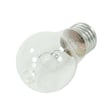
| No interior light plus other odd behavior | Power or light circuit | Unplug before bulb replacement per manual guidance |
Parts that commonly relate to cooling complaints on FFHT1817LWA
If troubleshooting points to a specific failure, these model-matched parts are often involved:
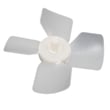
- Refrigerator evaporator fan motor 241854301 (moves cold air through the compartments)
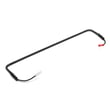
- Refrigerator defrost heater 242044008 (melts frost off the evaporator)
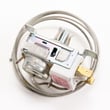
- Refrigerator defrost bi-metal thermostat 5303918634 (helps control defrost cycling)
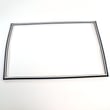
- Frigidaire refrigerator door gasket (white) 242193206 (prevents warm air leaks)
Why it matters
A refrigerator that cannot move air properly or cannot defrost correctly will slowly lose cooling performance. Addressing airflow, coil cleanliness, and door sealing early helps protect the compressor and keeps temperatures stable for food safety.
Last updated: January 2026
What are the advantages of a top mount fridge?
A top-mount refrigerator like the Frigidaire FFHT1817LWA puts the freezer on top and the fresh-food section below, which many households find practical and budget-friendly. You typically get straightforward storage, easy access to frozen foods, and simpler installation and leveling using the steps in the FFHT1817LWA installation guide.
Key advantages most owners notice
- Frozen foods at eye level: The top freezer makes it easier to see and reach frequently used frozen items.
- Simple, familiar layout: Shelves, door bins, and crispers are arranged in a traditional way that is easy to organize.
- Often more usable fresh-food space for the footprint: Many top-mount designs prioritize a roomy refrigerator compartment.
- Typically lower purchase and repair costs: Fewer complex features usually means fewer high-cost components.
- Easier placement in many kitchens: Standard clearances are straightforward to plan for.
Installation and day-to-day usability benefits (FFHT1817LWA)
The FFHT1817LWA installation guidance emphasizes clearances and leveling, which directly affects how well the doors close and how efficiently the refrigerator runs.
Typical clearance targets:
| Area | Typical clearance for this style | Why it helps |
|---|---|---|
| Sides and top | 3/8 inch | Air circulation and easier fit |
| Back | 1 inch | Airflow and room for connections |
| Front tilt | 1/4 inch (approx.) | Helps doors close on their own |
Why it matters
When a refrigerator is level and has proper airflow, the doors seal better, temperatures stay steadier, and the compressor does not have to work as hard. That can reduce frost issues and help food stay fresh longer.
Quick tips to get the most from a top-mount design
- Keep the toe grille area clear for airflow.
- Set controls, then wait about 24 hours before making more adjustments.
- Store everyday frozen items in the top freezer baskets/shelves for faster access.
- Use the crisper humidity controls to match what you store (produce vs. packaged items).
- If your model has an ice maker but no water hookup, keep the ice maker turned off.
Last updated: January 2026
What is the upper part of a fridge called?
On the Frigidaire FFHT1817LWA top-mount refrigerator, the upper section is the freezer compartment. It’s the coldest area of the appliance and is designed to keep foods frozen; on some setups it can also support an ice maker when a water supply is connected.
What the freezer compartment does
- Keeps food at freezing temperatures for long-term storage
- Helps maintain safe storage for frozen meats, vegetables, and prepared foods
- Provides space for ice trays; some models can use an automatic ice maker
- Works with the refrigerator’s temperature controls (changes can take about 24 hours to stabilize)
Freezer vs. fresh food compartment (quick comparison)
| Compartment | Location on FFHT1817LWA | Primary purpose | Typical temperature target |
|---|---|---|---|
| Freezer compartment | Upper section | Freeze and store food long-term | About 0°F |
| Fresh food compartment | Lower section | Keep food cold (not frozen) | About 37°F |
If you mean the “top front” area
Sometimes people say “upper part” when they mean the top grille area or toe grille (the vented panel near the bottom front). On this model, airflow through the grille area matters for cooling performance, so we recommend keeping vents clear and following spacing guidance in the FFHT1817LWA owner's manual.
Why it matters
Using the right name helps when ordering parts, reading diagrams, or troubleshooting issues like warm temperatures, frost buildup, or door sealing problems. For example, freezer door sealing and cabinet leveling can affect how well the freezer stays cold.
Last updated: January 2026
Why is my Frigidaire top mount freezer not freezing?
If your Frigidaire FFHT1817LWA top-mount freezer is not freezing, the most common causes are incorrect temperature control settings, restricted airflow from a failed evaporator fan, or poor heat removal from dirty condenser coils. Use the checks in the FFHT1817LWA owner's manual to confirm control positions and basic operating conditions.
Quick checks that fix many “not freezing” complaints
- Make sure the refrigerator/freezer control is not set to “0”; that setting turns off the compressor (cooling stops).
- Give temperatures time to stabilize after any adjustment; allow about 24 hours for a meaningful change.
- Confirm the freezer is not overpacked; blocked vents prevent cold air circulation.
- Verify the doors close fully and are not held open by bins or food packages.
- Clean dust from the condenser area; dirty coils reduce cooling performance.
Airflow and fan problems (very common)
Cold air movement is critical in a top-mount design. If you do not hear the evaporator fan running when the compressor is running, cooling in the freezer can drop quickly.
What you may notice
- Freezer is warm but the refrigerator section may also be warming
- Frost buildup on the back freezer panel
- Unusual fan noise (rubbing, buzzing)
If you suspect a damaged fan blade, the refrigerator evaporator fan blade 5308000010 is a common service part for this model.
Defrost system issues (frost blocks airflow)
A failed defrost component can allow heavy frost to build up on the evaporator, which blocks airflow and stops proper freezing.
| Symptom | What it usually points to | What to check next |
|---|---|---|
| Heavy frost on back freezer wall | Defrost system problem | Defrost heater, defrost thermostat |
| No frost but warm temps | Sealed system or airflow issue | Fan operation, condenser cleanliness |
For this model, common defrost-related parts include the refrigerator defrost heater 242044008 and the refrigerator defrost bi-metal thermostat 5303918634.
Why it matters
A freezer that is not freezing can lead to food spoilage and can also force the compressor to run longer than normal. Catching airflow, control-setting, or defrost problems early helps restore stable temperatures faster.
Last updated: January 2026