Owner’s manual
 Error Codes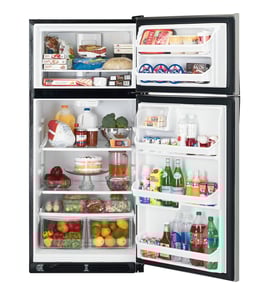



Is GE Cafe considered high end?
Yes. GE Café is considered a high-end (premium) appliance line within the GE family, positioned above standard GE models with upgraded design, finishes, and feature sets. It is separate from your GE GTS16DTHCRBB top-mount refrigerator line, which is a more traditional, value-focused platform. See the GTS16DTHCRBB owner's manual for model-specific features and options.
GE generally groups products into tiers based on styling, features, and price point.
- GE (standard line): core features and straightforward styling
- GE Profile: premium features and more advanced controls
- GE Café: premium styling and feature packages aimed at the “affordable luxury” segment
- GE Monogram: true luxury line with higher-end build and design focus
High-end appliances typically emphasize a mix of performance, appearance, and ownership experience.
- More distinctive finishes and design details
- More feature options (controls, lighting, storage, convenience)
- Higher typical price point than standard lines
- More model variations and customization choices
- More accessory and trim options depending on the product
| GE line | Typical market position | Common buyer priority |
|---|---|---|
| GE (standard) | mainstream | value and reliability |
| GE Profile | premium | features and performance |
| GE Café | high-end premium | design plus features |
| GE Monogram | luxury | design, build, exclusivity |
Knowing the product tier helps set expectations for features, parts pricing, and repair decisions. For example, a top-mount refrigerator like the GE GTS16DTHCRBB often uses simpler controls and fewer premium add-ons than GE Café models, which can affect troubleshooting steps and accessory compatibility.
Last updated: January 2026
What are the advantages of a top mount fridge?
A top-mount refrigerator like the GE GTS16DTHCRBB puts the freezer on top, which many households prefer for easy access to frozen foods and a familiar layout. It also tends to be a simpler design, which can mean straightforward maintenance and fewer built-in features to troubleshoot.
- Easy freezer access: Frozen foods are higher up, so you bend less to reach them.
- Traditional, familiar layout: Many kitchens are designed around this style.
- Often more usable fresh-food space: The refrigerator compartment can feel more open and straightforward to organize.
- Typically simpler controls and components: Fewer complex dispenser features compared with some other styles.
- Usually easier to move and level: Many top-mount models use front leveling legs and rollers for positioning.
The GTS16DTHCRBB uses a simple temperature control dial (warmest to coldest) and adjustable shelving support positions, so you can quickly tune temperatures and reconfigure storage for tall items.
| Feature area | What you gain with top-mount design | Practical example |
|---|---|---|
| Freezer access | Items are closer to eye level | Easier to grab frozen meals quickly |
| Fresh-food organization | Straightforward shelf layout | Easier to rearrange shelves for pitchers |
| Installation/placement | Clearances and leveling are simple | Easier door closing when leveled correctly |
Choosing a refrigerator style affects daily comfort (how often you bend), food organization, and how easy it is to keep the unit running efficiently with proper airflow clearances and correct leveling.
- Use the GTS16DTHCRBB owner's manual for temperature control guidance, shelf adjustment tips, and installation clearances.
Last updated: January 2026
What is the most common problem with GE profile refrigerators?
The most common issue we see across GE Profile refrigerators is not cooling properly, usually tied to airflow restrictions, a failed evaporator fan, or a defrost problem. On your GE GTS16DTHCRBB top-mount refrigerator, start with temperature and airflow checks from the GTS16DTHCRBB owner's manual.
- Confirm the freezer is cold enough; ice makers typically need 15°F or colder to operate.
- Make sure air vents in the freezer and fresh food section are not blocked by food packages.
- Keep food covered; uncovered containers add moisture and can increase frost buildup.
- Listen for the evaporator fan running when the compressor is on (a steady fan sound from the freezer area).
- Check door closure and gasket sealing all the way around.
| Symptom | Most common cause | What to check first |
|---|---|---|
| Refrigerator warm, freezer cold | Airflow problem from freezer to fresh food | Blocked vents, frost buildup, evaporator fan operation |
| Both sections warm | Cooling system not running efficiently | Condenser airflow, condenser fan area, temperature control settings |
| Loud buzzing or clicking | Fan blade hitting ice or failing motor | Ice buildup near fan, fan blade condition |
| Ice maker not making ice | No water supply or ice maker off | Water line connected and on; freezer at 15°F or colder |
If your checks point to airflow or defrost trouble, these model-matched parts are often involved:
- Refrigerator evaporator fan WR60X31522 (moves cold air through the freezer and into the fresh food section)
- Refrigerator defrost heater WR09X21107 (melts frost off the evaporator so air can pass)
- Refrigerator temperature control WR09X26872 (regulates cooling cycles and temperatures)
A GE refrigerator that is not cooling usually gets worse over time. Poor airflow and frost buildup can make the compressor run longer, warm up food, and prevent the ice maker from producing ice consistently.
Last updated: January 2026