Installation guide
 Owner’s manual
 Error Codes


Is there a filter that needs to be cleaned in a Whirlpool dishwasher?
Yes. Whirlpool dishwashers such as model GU2475XTVY1 use a filter system in the bottom of the tub to help trap food soil and keep wash water circulating properly; cleaning it regularly helps prevent odors, poor cleaning, and draining issues. Use the steps in the GU2475XTVY1 owner’s manual.
Where the filter is and what it does
On most Whirlpool undercounter dishwashers, the filter area is at the bottom of the tub, under the lower rack and near the lower spray arm.
- Catches food particles so they do not redeposit on dishes
- Helps protect the pump and sump from debris
- Supports better wash performance and clearer rinse water
- Reduces the chance of standing water and odors
How we recommend cleaning it
- Turn the dishwasher off.
- Pull out the lower rack.
- Remove the filter assembly (typically twists or lifts out).
- Rinse under warm running water; use a soft brush for stuck-on debris.
- Reinstall the filter fully seated and locked.
Cleaning frequency (typical)
| Household use | Cleaning interval | Notes |
|---|---|---|
| Light use, well-scraped dishes | Every 2 to 3 months | Check sooner if you notice odor |
| Normal daily use | Monthly | Best for consistent performance |
| Heavy soil or hard water | Every 2 to 4 weeks | Prevents buildup and cloudy results |
If you still have draining or odor problems
A dirty filter is common, but it is not the only cause. We also recommend these quick checks:
- Clean the drain air gap (if your setup has one)
- Run a vinegar rinse occasionally (do not overdo it)
- Check for kinks or clogs in the drain hose
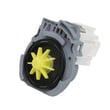
- If the dishwasher will not drain, inspect the dishwasher drain pump WPW10348269
Why it matters
A clean filter helps the wash system move water correctly through the sump and pump, which improves cleaning results and helps the dishwasher drain normally.
Last updated: February 2026
What are the commonly replaced parts in a dishwasher?
On the Whirlpool GU2475XTVY1 undercounter dishwasher, the most commonly replaced parts are the components that heat, fill, drain, seal, and control the wash. When you see poor drying, leaks, or draining problems, these parts are the first places we check using the troubleshooting steps in the GU2475XTVY1 owner's manual.
Most commonly replaced dishwasher parts (and what they affect)
- Heating and drying: heater circuit and related safety devices
- Draining: drain pump, drain hose, air gap (if installed)
- Filling: water inlet valve
- Leaks at the door: door seal, latch alignment
- Cleaning performance: sensors and wash system components
- Racks and hardware: rack stops, rack assemblies (breakage and wear)
Model-relevant examples for GU2475XTVY1
These are common replacements we see for this model family:
| Symptom | Likely part type | Example part for this model |
|---|---|---|
| Dishes not drying, water not heating | Heating element | Dishwasher heating element W10518394 |
| Dishwasher will not drain or drains slowly | Drain pump | Dishwasher drain pump WPW10348269 |
| Water on floor at the front | Door seal | Dishwasher door seal W10542314 |
| No fill or weak fill | Water inlet valve | Dishwasher water inlet valve W10648041 |
| Upper rack slides off track | Upper rail stop | Dishwasher dishrack slide rail stop, upper WP8565925 |
Quick checks before you replace anything
- Confirm the cycle fully completed; some water in the tub can be normal between steps.
- Check for a blocked detergent dispenser door (dishes can prevent it from opening).
- If the dishwasher is not draining well, check and clean the drain air gap (if your installation uses one).
- Reduce excess suds by switching detergents if you see foaming or white residue.
- Run a vinegar rinse occasionally for film and odor control (follow the care steps in the manual).
Why it matters
Replacing the right part first saves time and prevents repeat failures. For example, a “won’t drain” complaint can be a clogged hose or air gap, but it can also be a failing drain pump. Using the model’s troubleshooting flow helps you avoid replacing good parts.
Last updated: February 2026
Can I replace dishwasher parts myself?
Yes, many Whirlpool GU2475XTVY1 dishwasher repairs are DIY-friendly if you shut off power and water first and follow the correct steps. Simple mechanical parts (seals, caps, rack stops, hoses) are usually straightforward; electrical diagnostics and control repairs take more skill and careful testing.
What you can usually replace yourself
These jobs are typically manageable with basic hand tools and careful reassembly:
- Door sealing parts such as the dishwasher door seal W10542314 (common for leaks at the front)
- Rack hardware such as the dishwasher dishrack slide rail stop, upper WP8565925 (common for a rack that pulls off the track)
- Drain line parts such as the dishwasher drain hose 8269144A (common for leaks under the sink or poor draining)
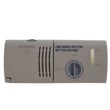
- Rinse-aid items such as the dishwasher rinse-aid dispenser cap WP8558307
Repairs that are DIY, but require testing and extra caution
If the dishwasher will not run, stops mid-cycle, or will not drain, you can still DIY, but plan to use a multimeter and follow the wiring and safety guidance in the installation guide.
- No power or dead unit: check house breaker/fuse, then test the dishwasher’s fuse W10258275
- Not draining: inspect for clogs first; if the pump is bad, replace the dishwasher drain pump WPW10348269
- Not heating or poor drying: test and replace the dishwasher heating element W10518394
Quick DIY decision guide
| Symptom | Most likely DIY level | Common parts involved |
|---|---|---|
| Water leaking at the door | Easy | Door seal, alignment checks |
| Upper rack comes off track | Easy | Rack stop/track hardware |
| Won’t drain, water left in tub | Medium | Drain hose, drain pump |
| Dead/no lights | Medium | Fuse, wiring checks |
| Poor drying/cold water | Medium | Heating element |
Why it matters
Dishwashers combine electricity and water. The installation instructions call out using a grounded 3-prong outlet and disconnecting power before checks or repairs; following that guidance prevents shock hazards and protects components during troubleshooting.
Last updated: February 2026
What does E1 and F6 mean on a Whirlpool dishwasher?
On a Whirlpool GU2475XTVY1 dishwasher, the F6 E1 (often shown as “F6” and “E1”) points to a water level detection problem. The control is not seeing the expected fill level signal, so the dishwasher may stop, drain, or refuse to run to prevent poor washing or overflow.
What to check first (fast, no tools)
- Make sure the water shutoff valve under the sink is fully open.
- Confirm the door is closed tightly and latched; a loose latch can interrupt a cycle.
- Verify the correct cycle is selected and restart the cycle.
- Check household power: a tripped breaker or blown fuse can cause odd stops.
- If the dishwasher is not draining well, check and clean the drain air gap (if your setup has one).
Likely causes and what they affect
| What’s happening | Common cause | What you’ll notice |
|---|---|---|
| Underfilling | Water supply valve not fully open, restricted inlet, or inlet valve issue | Poor cleaning, short fill sounds |
| Overfilling or “confused” level reading | Water level sensing circuit issue | Stops mid-cycle, drains unexpectedly |
| Drain issue that mimics a fill problem | Clog in drain path or air gap | Standing water, slow drain |
Parts that commonly relate to F6 E1 symptoms
If the basics check out, these model-matched parts are often involved in fill and water-sensing complaints:
- Dishwasher water inlet valve W10648041 (controls water entering the tub)
- Dishwasher turbidity sensor WPW10705575 (helps the control interpret water conditions)
- Dishwasher electronic control board WPW10285179 (processes sensor and fill inputs)
Why it matters
Water level detection protects the pump motor, heating element, and your kitchen from leaks. Fixing the root cause restores normal fill, wash pressure, and drying performance.
Where to confirm the exact reset and checks for your model
Use the GU2475XTVY1 owner’s manual for the model-specific troubleshooting flow and any control reset steps.
Last updated: February 2026