Owner’s manual
 Error Codes


Is it better to have a freezer on top or bottom of the refrigerator?
A bottom-freezer design (like your Whirlpool GX2FHDXVQ03) is usually the better everyday layout because the fresh-food section sits at eye and waist level, so you access the items you use most without bending. A top-freezer can be slightly more energy-efficient, but convenience typically favors bottom-mount.
Quick comparison: top vs bottom freezer
| Feature | Top freezer | Bottom freezer (bottom-mount) |
|---|---|---|
| Fresh-food access | More bending | Easier access at eye level |
| Freezer access | Easier access | More bending (drawer/door) |
| Organization | Simple shelves | Often better freezer organization (baskets/drawer) |
| Energy use (typical) | Often slightly lower | Often slightly higher |
What matters most for your GX2FHDXVQ03
- Daily convenience: Most people open the refrigerator compartment far more than the freezer; bottom-mount keeps the refrigerator section more accessible.
- Door sealing and alignment: Proper door alignment and a good seal help either style perform well. Your model’s owner's manual covers door alignment guidance (for example, aligning the refrigerator door with the freezer drawer/door).
- Humidity and condensation control: This model family can include a humidity control that reduces moisture on the door hinge seal; using it can increase energy use.
How to decide for your kitchen
- Choose bottom freezer if you want easier access to fresh foods and better day-to-day ergonomics.
- Choose top freezer if you prioritize simple design and potentially lower operating cost.
- If you use the freezer constantly (meal prep, bulk storage), consider which layout makes your most-used items easiest to reach.
- Make sure the refrigerator sits level and doors seal well; poor sealing wastes energy in any configuration.
Why it matters
Freezer location is mostly about how you live with the refrigerator. The best choice is the one that reduces bending, improves organization, and keeps doors closing and sealing consistently in your space.
Last updated: February 2026
What are the disadvantages of a bottom freezer refrigerator?
Bottom-freezer refrigerators like the Whirlpool GX2FHDXVQ03 keep fresh food at eye level, but the tradeoffs are real: you bend more for frozen items, the freezer drawer can feel heavy when loaded, and drawer/door sealing and alignment issues can show up sooner if the unit is not leveled and maintained (see the GX2FHDXVQ03 owner's manual).
Common disadvantages (what you will notice day to day)
- More bending for frozen food: everything in the freezer is down low.
- Heavier access: a fully loaded freezer drawer takes more effort to pull out and push in.
- Organization can be harder: deep drawers can hide items under baskets and packages.
- More floor space needed to open the drawer: tight kitchens can make full extension awkward.
- Door and drawer alignment matters more: if the cabinet is not level, the drawer can feel “off” and seals can leak air.
What tends to wear faster on bottom-freezer designs
Bottom-freezer models put a lot of daily use on the drawer system and seals. These are the areas we see customers address most often:
| Area | What can happen | What to check first |
|---|---|---|
| Freezer drawer and rails | Drawer feels heavy, crooked, or drags | Leveling and roller adjustment; drawer mounting screws |
| Door gaskets | Frost, moisture, warm spots, higher run time | Look for gaps, tears, or a dirty sealing surface |
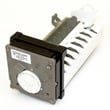
| Ice maker and water system (if equipped) | Slow ice, no ice, leaks | Water supply, filter condition, inlet valve function |
Quick steps that reduce the downsides
These steps help the freezer drawer glide better and help the refrigerator run more efficiently:
- Level the refrigerator so it does not roll forward when the freezer drawer is pulled open; the manual describes adjusting rollers and setting the brake foot.
- Keep vents clear before turning temperatures colder; blocked vents cause uneven cooling.
- Clean and inspect gaskets so the doors and drawer seal tightly.
- Do not overload the freezer drawer; distribute weight front to back.
- If you have water or ice issues, use our guide: how to prevent water dispenser and ice maker problems.
Why it matters
A bottom-freezer refrigerator depends on good leveling and strong seals. When the drawer is heavy or the cabinet is slightly out of level, you can get more frost, temperature swings, and longer compressor run times, which increases energy use and wear.
Last updated: February 2026
Do you remove cardboard from the bottom of a Whirlpool refrigerator?
No. On Whirlpool model GX2FHDXVQ03, the cardboard-like panel at the bottom area is a protective cover for the condenser and other components; it should stay in place during normal use. Only remove panels when a service procedure specifically calls for it in the owner's manual.
What cardboard should be removed vs. left in place
Remove only packaging materials used for shipping; leave protective covers installed.
- Remove: tape, foam blocks, plastic wrap, and any shipping spacers
- Remove: loose cardboard used to protect shelves or doors in the box
- Leave installed: any fitted bottom or rear cover that’s screwed or clipped on
- Leave installed: any panel that directs airflow across the condenser area
- Leave installed: any cover protecting wiring, the compressor area, or the drain pan
Quick check: is it packaging or a protective panel?
| What you see | Typical signs | What to do |
|---|---|---|
| Loose cardboard/foam inside or around doors | Not attached; comes out by hand | Remove and recycle/dispose |
| Fitted panel underneath or at the lower rear | Attached with screws/clips; shaped to the cabinet | Leave it installed |
| Cardboard used under the fridge while moving it | On the floor, not attached to the unit | Use it to protect flooring, then remove |
Why it matters
That lower cover helps protect components and supports proper airflow. Removing it can increase dust buildup on the condenser area, reduce cooling efficiency, and make the refrigerator work harder.
If you need access for cleaning or service
We recommend following the disassembly and safety steps in the owner's manual, including disconnecting power before servicing.
Last updated: February 2026