Owner’s manual
 Error Codes



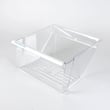
What size is Kenmore refrigerator model 10652212104?
Kenmore refrigerator model 10652212104 is a side-by-side refrigerator; the exact exterior dimensions and total capacity depend on the specific configuration listed for your unit. For the most accurate size details (including required clearances), use the measurements and installation spacing guidance in the 10652212104 owner's manual.
How to get the right “size” measurement
When customers ask for “size,” it usually means one of these:
- Overall exterior dimensions (width, depth, height)
- Depth type (standard depth vs. counter-depth)
- Capacity (cubic feet)
- Door swing and clearance needs (space to open doors fully)
- Fit through doorways (delivery path)
We recommend measuring your refrigerator directly and then matching those numbers to the specs in the manual.
Typical side-by-side refrigerator size ranges (helpful for planning)
Most side-by-side refrigerators are commonly in these ranges:
- Width: about 32 to 36 inches
- Height: about 65 to 71 inches
- Depth (cabinet): about 29 to 34 inches
- Capacity: often about 20 to 26 cu. ft.
Installation clearance guidance (from the manual)
Your Kenmore 10652212104 needs airflow space around it. The manual calls out these common clearances:
| Location | Typical minimum clearance |
|---|---|
| Each side and top | 1/2 inch (1.25 cm) |
| Next to a fixed wall (door swing) | 2 inches (5.08 cm) |
| Back (if ice maker/water line) | Allow extra space |
Why it matters
Getting the correct size prevents poor airflow (warm temps, longer run times), door swing problems, and installation headaches with the water line for the ice maker and dispenser.
Last updated: February 2026
Where is the model number on a Kenmore side by side refrigerator?
On Kenmore side-by-side refrigerator model 10652212104, the model number is printed on the model and serial number label inside the fresh food (refrigerator) compartment; you will typically find it on an inside wall. Use the same label to record the serial number and purchase date (as shown in the 10652212104 owner's manual).
Where to look first
Check these common label locations in this order:
- Inside the refrigerator compartment on a side wall (most common)
- Inside the refrigerator compartment near the top front frame
- Behind or beside the crisper/meat pan area (still inside the fresh food section)
- If you do not see it right away, look for a white or silver sticker with “Model” and “Serial” fields
What the label looks like
The model and serial label is usually a small sticker or plate that includes multiple fields.
| Field on the label | What it’s used for |
|---|---|
| Model number | Matching the correct parts list and diagrams |
| Serial number | Identifying the production run for service and parts compatibility |
| Purchase date (you write this in) | Keeping a record for your household files |
Why it matters
We use the full model number to match your exact Kenmore configuration (doors, dispenser, ice maker, and internal components) so you get the right replacement parts the first time.
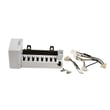
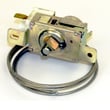
If you are ordering parts after you find the model number, common model-matched items for this refrigerator include the ice maker assembly 4317943 and the refrigerator thermostat WP2198202.
Last updated: February 2026
What is the code Sy Ef on a Kenmore refrigerator?
On Kenmore model 10652212104 refrigerators, the SY EF code points to a problem in the evaporator fan circuit (the fan that moves cold air through the freezer and into the fresh food section). When that fan cannot run correctly, cooling performance drops and temperatures can rise; check the troubleshooting steps in the 10652212104 owner's manual.
What to check first (quick, safe steps)
- Power reset: unplug the refrigerator (or switch off the breaker) for 5 minutes, then restore power.
- Make sure the freezer vents are not blocked by packages or ice buildup.
- Listen for the evaporator fan: with the freezer door switch held in, you should typically hear the fan running.
- Look for frost or ice on the freezer back wall; heavy frost often indicates a defrost problem.
- Confirm doors are sealing and closing fully; warm air leaks can trigger icing and airflow issues.
Common causes and likely fixes
SY EF is most often tied to airflow or fan operation. These are the most common repair paths:
| Symptom you notice | Most likely area | What usually fixes it |
|---|---|---|
| Freezer cold but fridge warm | Airflow from freezer | Clear blocked vents, fix evaporator fan issue |
| No fan sound, warmer temps | Evaporator fan motor or blade | Replace failed motor or damaged blade |
| Fan runs but airflow is weak | Frosted evaporator cover | Address defrost system issue |
| Intermittent cooling | Loose connection or failing motor | Inspect wiring, replace motor if noisy or stopping |
Parts that can be involved on this model
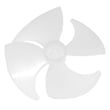
- If the fan blade is broken, replace the refrigerator evaporator fan blade WP2169142.
- If the fan motor is not running or is noisy, the evaporator motor assembly may be the issue.
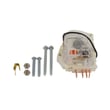
- If you see heavy frost, defrost components such as the refrigerator defrost bi-metal WPW10225581 or the refrigerator defrost timer W10822278 are common suspects.
Why it matters
The evaporator fan is what distributes cold air. When it fails or airflow is restricted, the refrigerator section often warms first, food spoils faster, and the freezer can develop excessive frost.
Last updated: February 2026
How to clean the coils on a Kenmore side by side refrigerator?
Cleaning the condenser coils on your Kenmore side-by-side refrigerator model 10652212104 means removing dust and pet hair so the refrigerator can release heat properly. Dirty coils reduce airflow, make the compressor run longer, and can lead to warmer temperatures and higher energy use (your manual specifically calls out cleaning dirty condenser coils). See the 10652212104 owner's manual for model-specific cleaning guidance.
Before you start (safety and access)
- Unplug the refrigerator (or switch off power at the breaker).
- Pull the refrigerator straight out to avoid damaging the floor.
- Remove the base grille at the bottom front (many coil areas are accessed from here).
- Have a coil brush and a vacuum with a crevice tool ready.
- Keep water away from electrical parts and wiring.
How we clean the condenser coils
- Remove loose dust first: Use the vacuum crevice tool to pull out lint and pet hair from the grille area.
- Brush the coils: Gently scrub the coil surfaces with a coil brush to loosen packed dust.
- Vacuum again: Vacuum what the brush loosens, including the floor area under the unit.
- Clean the condenser fan area (if accessible): Carefully vacuum around the fan and nearby vents.
- Reinstall the base grille: Make sure it snaps back securely.
- Restore power and confirm operation: Plug back in and listen for normal airflow.
What “clean enough” looks like
| Coil condition | What you’ll see | What to do |
|---|---|---|
| Light dust | Thin gray film | Vacuum and light brushing |
| Heavy buildup | Matted lint, pet hair clumps | Brush thoroughly, then vacuum twice |
| Greasy dust | Sticky grime on coils | Brush longer; vacuum carefully (no water) |
Why it matters
Condenser coils dump heat from the sealed system. When they are dirty, heat transfer drops and the refrigerator works harder, which can cause longer run times, temperature complaints, and extra wear on the compressor.
When coil cleaning is not the whole fix
If temperatures are still off after cleaning, common next checks include:
- Door gaskets sealing and doors closing fully
- Airflow blocked by food packages inside
- Evaporator fan issues (freezer-side airflow)
- Defrost system problems (frost buildup)
Last updated: February 2026
What are the most common problems with Kenmore refrigerators?
The most common problems we see on Kenmore refrigerators like model 10652212104 are no cooling or weak cooling, ice maker and dispenser issues, water leaks, frost buildup from defrost problems, and unusual noises. Many start with airflow, power, or water-supply checks outlined in the owner's manual.
Common symptoms and what they usually point to
- Not cooling or warm temperatures: controls set incorrectly, unit in a defrost cycle, dirty condenser area, or an evaporator fan problem
- Ice maker not making ice: clogged or misinstalled water filter, water supply issue, or ice maker failure
- Water leaking at dispenser: air in water lines, ice stuck holding the chute door open, or user timing (glass removed too soon)
- Frost buildup: defrost system trouble (timer, defrost thermostat, heater circuit) or door not sealing
- Noisy operation: fan motor, fan blade interference, or normal longer run time in hot rooms
Quick checks we recommend first (safe DIY)
- Confirm the refrigerator is plugged into a grounded outlet and the breaker is not tripped.
- Verify the refrigerator and freezer controls are not set to OFF; for digital controls, cycle OFF then ON to reset.
- Give the unit 30 minutes if it is in an automatic defrost cycle.
- If ice or water issues are present, confirm the water source is on and the supply line is not kinked.
- If the dispenser drips, flush a few glasses of water to help purge air from the lines.
Parts that commonly solve these problems on 10652212104
| Problem area | Common related part | What it affects |
|---|---|---|
| No ice | Ice maker assembly - refrigerator ice maker by whirlpool 4317943 | Ice production and harvest cycle |
| Frost/defrost issues | Refrigerator defrost timer W10822278 | Defrost cycle timing |
| Frost/defrost issues | Refrigerator defrost bi-metal WPW10225581 | Defrost temperature sensing/safety |
| Warm fridge, noise | Evaporator motor 4389144 | Airflow across the evaporator |
Why it matters
Cooling, ice, and leak complaints often share the same root causes: restricted airflow, a defrost system that is not clearing frost, or a water supply or filtration issue. Catching these early helps prevent food spoilage and reduces strain on the sealed refrigeration system.
Last updated: February 2026