Error Codes



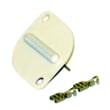
How do I know if my Kenmore dryer thermal fuse is blown?
On Kenmore electric dryer model 11076433820, a blown thermal fuse usually shows up as a dryer that won’t start at all or runs but won’t heat. The sure way to confirm is a continuity test on the fuse; if it reads open (no continuity), replace the fuse and correct the airflow problem that caused it.
Common symptoms of a blown thermal fuse
- Dryer will not start (no motor run)
- Dryer tumbles but produces no heat
- Timer advances but there’s no drying progress
- Burning smell or unusually hot cabinet before the failure
- Repeatedly tripping the fuse after replacement (points to restricted venting)
How we test the thermal fuse (quick, accurate method)
- Unplug the dryer (electric shock hazard).
- Access the fuse (commonly on the blower housing or exhaust duct area).
- Pull at least one wire off the fuse terminal.
- Set a multimeter to continuity or ohms.
- Touch probes to the fuse terminals.
What the meter reading means
| Meter result | What it means | What to do next |
|---|---|---|
| Beep or ~0 ohms | Fuse is good | Keep troubleshooting heat or start circuit |
| No beep or OL/open | Fuse is blown | Replace the fuse and fix airflow restriction |
If you need the correct replacement for this model, use the exact part listed for 11076433820: fuse WP3390719.
Why it matters (and what to fix so it doesn’t happen again)
A thermal fuse is a one-time safety device that opens when the dryer overheats. Overheating is most often caused by poor airflow, so replacing the fuse without cleaning the venting can lead to another failure.
Airflow checks we recommend after a blown fuse
- Clean the lint screen and confirm it seats correctly (a damaged screen can leak lint)
- Inspect and clean the lint duct and blower area
- Check the vent hose for kinks, crushing, or long runs
- Clear the outside vent hood and confirm the damper opens fully
- Run a timed dry test and verify strong airflow at the exterior vent
For a broader overview of dryer components and how airflow and heating work together, see what are the main parts of a clothes dryer.
Last updated: February 2026
How do I tell what model my Kenmore dryer is?
Your Kenmore dryer’s model number is printed on the appliance’s ID label; once you find it, match the full number exactly (letters and digits) so you get the right parts and diagrams. For this page, the model is 11076433820.
Where to find the model number label
Most Kenmore electric dryers (including many 110-prefix models) place the ID label in one of these spots:
- Inside the door opening on the front panel (most common)
- On the door itself (along the edge)
- On the back panel of the dryer cabinet
- Near the lint screen housing (check the rim or nearby frame)
What the model number looks like (and what to write down)
Copy the model number exactly as shown on the label.
- Include all digits (and any letters)
- Keep leading zeros if you see them
- Don’t use the serial number in place of the model number
- If you see a prefix like 110, that’s part of the model number
Quick ID checklist
| Label item | What it’s used for | Example |
|---|---|---|
| Model number | Finding correct parts and diagrams | 11076433820 |
| Serial number | Production tracking and service history | Varies |
Why it matters for parts and troubleshooting
Kenmore dryers can look similar across different series, but internal parts can differ by model. Using the exact model number helps us match the correct drum belt, thermal fuse, door switch, and motor components.
If you’re diagnosing a symptom after you confirm the model, our error-code and troubleshooting resources can help narrow it down, such as Kenmore 110 series electronic control model dryer error codes.
Last updated: February 2026
What is the average lifespan of 11076433820?
A Kenmore electric dryer like model 11076433820 typically lasts 13 years with normal household use and proper airflow. Keeping the venting clear and replacing wear items on time (like a belt or thermal fuse) helps you reach that expected service life.
Typical lifespan and what affects it
Most electric dryers fall into a consistent lifespan range; the biggest difference is maintenance and heat management.
- Vent restriction (long runs, crushed hose, lint buildup) shortens life by overheating parts
- Overloading strains the drum support system and belt
- High-heat cycles used constantly increase wear on thermostats and fuses
- Poor leveling increases vibration and accelerates pulley and belt wear
- Delayed repairs (squeal, thump, burning smell) often lead to bigger failures
Parts that commonly determine “end of life”
These are the wear or safety parts that often fail first; replacing them can extend the life of your 11076433820.
| Symptom | Common wear item | Example part on this model page |
|---|---|---|
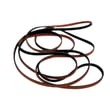
| Drum will not turn, motor runs | Drum belt | Whirlpool dryer drum belt 341241 |
| Dryer stops mid-cycle, no heat, or will not run | Thermal fuse | Fuse WP3390719 |
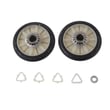
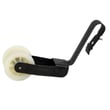
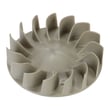
| Loud rumble or squeal | Idler pulley or blower wheel | Pulley WP691366 or dryer blower wheel WP694089 |
Why it matters
A dryer that is overheating or struggling to move air can fail early and also dry poorly. Good airflow protects the heating circuit, motor, and drum components, so you get faster drying and a longer-lasting Kenmore dryer.
Quick maintenance checklist (5 minutes)
- Clean the lint screen every load
- Check airflow at the outside vent; it should be strong and steady
- Inspect the vent hose for kinks or crushing
- Keep the dryer level so the drum rides correctly
- If drying times increase, clean the lint duct and venting before replacing parts
Last updated: March 2026