Owner’s manual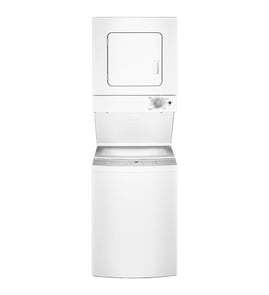


How many cubic feet is a Kenmore washer?
Kenmore washer capacity depends on the exact model; for the Kenmore 2661532413 laundry center, the most reliable way to confirm the washer tub size (in cubic feet) is to check the capacity/specifications section in the 2661532413 owner's manual.
Typical Kenmore washer capacities (what most owners see)
If you are comparing models, most Kenmore top-load washers commonly fall into these ranges:
- Compact: about 2.0 to 3.4 cu. ft.
- Standard: about 3.5 to 4.4 cu. ft.
- Large capacity: about 4.5 to 5.2 cu. ft.
How to confirm capacity for model 2661532413
Use these quick checks to get the right number for your exact laundry center:
- Look in the Specifications or Features section of the 2661532413 owner's manual.
- Check the model/serial tag on the unit (often inside the washer lid area or on the cabinet frame).
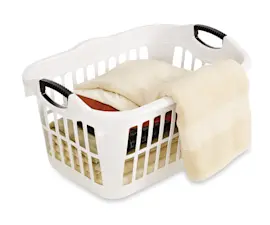
- If you are measuring for load size, use the basket fill guideline: do not pack tightly; leave space for items to tumble.
- If the washer is not performing well with larger loads, inspect wear items that affect agitation and spin.
Capacity vs. real-world load size
Even with the same cubic-foot rating, performance changes based on fabric type and cycle selection.
| Load type | What it usually includes | Best practice |
|---|---|---|
| Light | a few shirts, small towels | Use normal cycle, avoid overfilling |
| Medium | mixed clothing, several towels | Fill loosely to the top of the basket |
| Bulky | bedding, jackets | Use bulky cycle; wash 1 large item set at a time |
Why it matters
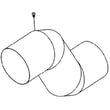
Knowing cubic feet helps you choose the right load size, prevent out-of-balance spinning, and reduce strain on drive components like the washer drive belt WH01X20436.
Last updated: February 2026
How to read Kenmore model numbers?
Kenmore model numbers are designed to identify the product type and the original manufacturer behind the Kenmore badge. For Kenmore model 2661532413 (a stacked laundry center), the most important pieces to read are the 3-digit prefix and the remaining digits that narrow down the exact design and variation; confirm the full number on the unit’s data tag and in the 2661532413 owner's manual.
What each section of a Kenmore model number tells you
Most Kenmore model numbers follow this pattern:
- Prefix (first 3 digits): identifies the original manufacturer (who built it for Kenmore)
- Core digits (middle group): identifies the base platform or series
- Suffix digits (ending digits): identifies feature sets, revisions, or production variations
Example format (typical)
| Section | Example position | What it’s used for |
|---|---|---|
| Manufacturer prefix | 1 to 3 | Matching the correct parts diagrams and service info |
| Base model/platform | 4 to 8 (varies) | Identifying the main design family |
| Variation/suffix | last digits | Getting the exact compatible part version |
Where to find the model number on a laundry center
For a Kenmore stacked laundry center like 2661532413, the model number is usually on a data tag located in one of these spots:
- Inside the washer lid area or under the lid
- Around the dryer door opening
- On the back panel
- Behind the lower front access panel (varies by design)
Why it matters for ordering parts
A single digit difference can change which parts fit. When you use the full model number, we can match the correct components such as:
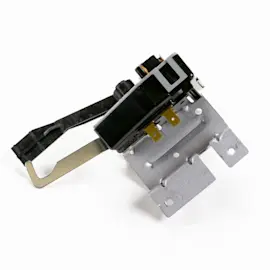
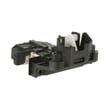
- Washer lid lock WH44X10288 (common when the washer will not start or won’t spin)
- Drive components like a washer drive belt
- Dryer wear items like a drum belt or door switch
Quick tips to avoid a parts mismatch
- Copy the model number exactly, including all digits
- Use the full model number when searching parts: 2661532413
- If a part has multiple versions, match by model number first, then compare photos and descriptions
Last updated: February 2026
What is the average lifespan of a Kenmore washer?
Most Kenmore washers last 10 to 15 years with normal household use and basic maintenance; that typical range applies to the washer section of your Kenmore laundry center model 2661532413 as well. For model-specific care and operating guidance, follow the 2661532413 owner's manual.
What affects washer lifespan the most
A washer’s life is usually determined by wear on moving parts, water quality, and how heavily it’s used.
- Load size and frequency (daily heavy loads shorten life)
- Overloading and unbalanced loads (extra stress on the drive system)
- Detergent type and amount (too much can cause buildup and drainage issues)
- Water quality (hard water speeds up mineral buildup)
- Ventilation and moisture control around the laundry center (reduces corrosion)
Signs it’s nearing end of life
If you see these symptoms repeatedly, repairs can become more frequent.
- Won’t spin or spins inconsistently
- Loud squealing, grinding, or thumping during agitation or spin
- Lid won’t lock or cycles won’t start (common safety-interlock symptom)
- Leaks from the tub area or recurring drain problems
- Burning rubber smell (often belt-related)
Quick symptom-to-part examples (for this model)
| Symptom | Common area to check | Example part for model 2661532413 |
|---|---|---|
| Won’t start or stops mid-cycle | Lid safety system | Washer lid lock WH44X10288 |
| Agitates/spins poorly | Drive system | Washer drive belt WH01X20436 |
| Intermittent operation | Controls/electrical | Wiring connections and harness routing per the manual |
How to extend the life of your Kenmore washer
These steps reduce strain on the motor, belts, and tub components.
- Keep loads at a comfortable fill level; avoid packing items tightly
- Level the unit to reduce vibration and out-of-balance spinning
- Use the correct amount of HE detergent and run an occasional cleaning cycle
- Check pockets and remove coins, screws, and small items before washing
- Address small issues early (a slipping belt or failing lid lock can cascade into bigger problems)
Why it matters
A laundry center like Kenmore 2661532413 combines washer and dryer components in one frame; preventing excess vibration, moisture, and overload stress helps protect the washer drive system and reduces the chance of repeat breakdowns.
Last updated: February 2026