Installation guide
 Owner’s manual
 Error Codes



What is the bottom part of a refrigerator called?
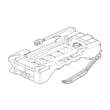
On a Kenmore bottom-mount refrigerator like model 25370312211, the “bottom part” is most often the toe grille (kick plate) at the lower front, plus the machine compartment underneath/behind it where key cooling parts (compressor, condenser fan, condenser area) are located. See the 25370312211 installation guide for toe grille and leveling references.
- Toe grille / kick plate: the vented cover at the lower front (do not block it)
- Machine compartment: the area that houses cooling-system components
- Base grille: another term for the toe grille
- Drain pan: a pan underneath that catches defrost water for evaporation
- Condenser area: where heat is released from the sealed system
| Area at the bottom | What it includes | Why it’s there |
|---|---|---|
| Lower front | Toe grille, leveling access | Airflow and access to front roller/leveling adjustments |
| Lower rear/bottom | Compressor, condenser fan, condenser area | Moves refrigerant and removes heat so the refrigerator can cool |
| Underneath | Drain pan (varies by design) | Collects defrost water so it can evaporate |
The bottom section is where airflow and heat removal happen. If the toe grille is blocked or the cabinet is not leveled correctly, doors may not seal well and cooling performance can suffer.
- Keep the toe grille unobstructed for proper air circulation.
- Confirm the cabinet is level side-to-side and slightly tilted back so doors close and seal.
- If you see water near the front, check for a full/shifted drain pan and verify the refrigerator is sitting solidly on all corners.
- If you are working near electrical components, unplug the refrigerator first.
Last updated: January 2026
How many cubic feet is a Kenmore model 25370312211 freezer?
The freezer capacity (cubic feet) for Kenmore refrigerator model 25370312211 is not listed in the installation excerpts we have for this model. For a quick estimate, most Kenmore bottom-mount freezer compartments in this style typically fall in the 5 to 8 cu. ft. range; the exact number is shown in the 25370312211 owner's manual.
Look for a “Specifications”, “Product dimensions”, or “Capacity” section in the manual. Capacity is often shown as:
- Total capacity (refrigerator + freezer)
- Freezer capacity (cu. ft.)
- Fresh food capacity (cu. ft.)
- Sometimes “usable” vs “total” capacity
If you want a rough, DIY estimate, measure the usable interior of the freezer (ignoring door bins and unusable curves) and convert to cubic feet.
- Measure width, depth, height in inches
- Multiply: width × depth × height = cubic inches
- Divide by 1,728 to get cubic feet
| What you’re checking | What it tells you | Best for |
|---|---|---|
| Freezer interior volume | Approx. usable freezer space | Comparing storage space |
| Manual “freezer capacity” | Official rated freezer cu. ft. | Accurate specs |
| Total capacity | Whole refrigerator size | Shopping comparisons |
Freezer cubic feet helps you set expectations for storage (pizza boxes, bulk meat, ice bin space) and makes it easier to compare similar bottom-mount refrigerators without guessing.
Last updated: January 2026
What are the common problems with Kenmore Elite refrigerators?
Kenmore Elite refrigerators, including Kenmore model 25370312211, most often have cooling problems, frost buildup, water or ice maker issues, and unusual noises. Many fixes start with airflow and sealing checks, proper leveling, and basic water-supply inspection; then you troubleshoot fans, controls, and defrost components using the 25370312211 installation guide.
- Not cooling or warm temperatures: dirty condenser area, failed evaporator fan, blocked vents, control or sensor issues
- Frost or ice buildup: door not sealing, door alignment/leveling off, defrost system problem
- Water leaks or puddles: loose water connections, clogged defrost drain, cracked water line
- Ice maker not working: ice maker switched off, water supply not connected, inlet valve problem, frozen fill path
- Buzzing, clicking, or rattling: fan blade hitting ice, condenser fan motor noise, compressor start components, cabinet not level
- Confirm the refrigerator is on a grounded, non-GFCI outlet and avoid extension cords.
- Verify toe grille airflow is not blocked (restricted airflow can cause poor cooling).
- Make sure the cabinet is level front-to-back and doors close fully; the sides should tilt about 1/4 inch (6 mm) from front to back for good sealing.
- If you are not using a water supply, keep the ice maker power switch OFF.
- Recheck door sealing and water connections; the installation checklist recommends checking for leaks and door sealing again after 24 hours.
| Symptom | Part to consider | What it affects |
|---|---|---|
| Ice maker not filling or slow fill | Refrigerator water inlet valve 242253002 | Water flow to ice maker and dispenser |
| No ice production (with good water supply) | Refrigerator ice maker assembly 243297613 | Ice harvest and cycling |
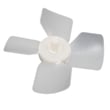
| Warm temps, fan noise, weak airflow | Refrigerator evaporator fan blade 5308000010 | Air movement across evaporator |
| Frost, moisture, or warm spots near door | Refrigerator door gasket 5304537408 | Door seal and humidity control |
Most “big” refrigerator complaints trace back to basics: airflow, door sealing, leveling, and water supply. Getting those right prevents temperature swings, frost, and repeat ice maker problems, and it helps the compressor run less.
For display messages or beeping, use the Kenmore 253 series french door refrigerator error codes reference to match the code to the most likely system.
Last updated: January 2026