Owner’s manual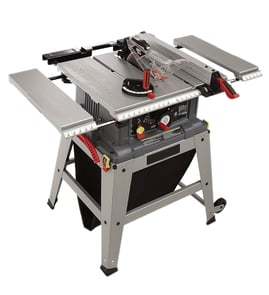

Can you use an 8 inch blade on a 10 inch table saw?
Yes, you can use an 8-inch blade on a 10-inch table saw like the Craftsman 141142580 as long as the blade’s arbor hole matches your saw and the blade type is appropriate for the cut. An 8-inch dado set is commonly used on 10-inch saws because it is not intended for deep through-cuts.
What must match for it to work safely
- Arbor size: The blade or dado set must have the correct arbor hole diameter for your saw.
- Blade speed rating: The blade must be rated at or above the saw’s maximum RPM.
- Kerf and thickness: Make sure the blade clears the throat opening and aligns with the riving knife or splitter setup.
- Guarding compatibility: Standard blade guards typically do not work with dado sets.
- Fence and miter gauge setup: Re-check alignment after changing blade diameter.
8-inch blade vs 10-inch blade: what changes
| Item | 10-inch blade | 8-inch blade |
|---|---|---|
| Max cutting depth | Deeper | Shallower |
| Motor load | Typical | Often slightly lower |
| Common use | General ripping/crosscut | Dados, grooves, some fine cuts |
| Guard/riving knife fit | Usually designed for this | May require adjustment |
Dado note (common reason people ask)
Most 8-inch stacked dado sets are designed for 10-inch table saws because they provide plenty of width options for grooves and rabbets while keeping the cutting diameter smaller. For exact dado and guard guidance for your Craftsman 141142580, follow the setup and safety sections in the owner's manual.
Why it matters
Using a smaller blade changes cutting depth and can affect how the riving knife, anti-kickback pawls, and throat plate fit. Correct fit and guarding reduce kickback risk and help you get cleaner, more accurate cuts.
Last updated: February 2026
Are all table saw arbor nuts the same size?
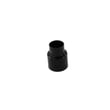
No. Table saw arbor nuts are not universal; the nut’s thread size and direction must match the arbor shaft on your specific saw. On the Craftsman 141142580 10-inch table saw, the correct arbor nut is the one specified for that model in the owner's manual.
What actually has to match
Arbor nuts vary because manufacturers use different arbor shaft threads and designs. When you replace an arbor nut, match these details:
- Thread diameter and pitch (for example, 5/8-inch arbor systems are common on 10-inch saws, but the nut threads still vary)
- Thread direction (right-hand vs left-hand thread)
- Flange/washer style (some nuts have an integrated flange; others rely on a separate washer)
- Wrench size (hex size can differ even when threads are similar)
- Blade stack-up (standard blade vs dado stack can require different engagement length)
Typical arbor sizes vs arbor nut compatibility
Arbor size (the blade bore) is often more standardized than the arbor nut threads.
| Saw/blade category | Common blade bore (arbor) | Does that mean the arbor nut is universal? |
|---|---|---|
| Most 10-inch table saws | 5/8 in. | No; thread pitch and direction still vary |
| Many 12-inch table saws | 1 in. | No; nut design and threads still vary |
How to confirm the right arbor nut for Craftsman 141142580
Use the model-specific documentation and a quick inspection so you do not damage the arbor threads.
- Check the exploded view/parts identification in the owner's manual
- Verify whether the nut loosens with or against blade rotation (this hints at thread direction)
- Compare the old nut’s flange and thickness to the replacement
- Make sure the nut fully engages the arbor threads without bottoming out
Why it matters
Using the wrong arbor nut can strip the arbor threads, prevent the blade from clamping correctly, or allow the blade to loosen during operation. Correct fit protects the arbor, the blade, and your cut quality.
Last updated: February 2026
What size blade is a craftsman 141142580 table saw?
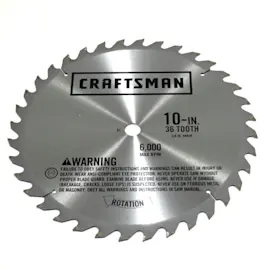
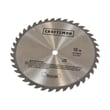
The Craftsman 141142580 is a 10-inch table saw, so it uses a 10-inch blade. For the exact blade type details for your saw (arbor size, kerf guidance, and blade guard/riving knife compatibility), follow the specifications and safety notes in the owner's manual.
What to match when buying a replacement blade
A 10-inch blade is only the starting point. For best fit and safe operation, match these common specs:
- Arbor (center hole) size: many 10-inch saw blades are 5/8 inch, but confirm for your saw
- Blade thickness (kerf): use a blade thickness that works with the riving knife/splitter
- Max RPM rating: the blade’s rated RPM should meet or exceed the saw’s no-load speed
- Tooth count: choose based on cut quality vs. speed (rip vs. crosscut)
- Blade type: carbide-tipped is typical for general woodworking
Quick blade selection guide
| Task | Typical tooth count (10-inch blade) | What you get |
|---|---|---|
| Ripping lumber | 24 to 30T | Faster cuts, rougher finish |
| General purpose | 40 to 50T | Balanced speed and finish |
| Crosscutting/plywood | 60 to 80T | Cleaner cuts, slower feed |
Why it matters
Using the correct 10-inch blade and matching the arbor size and kerf helps the blade mount securely, keeps the riving knife aligned, and reduces binding and kickback risk during cuts.
Last updated: February 2026
Are craftsman table saws any good?
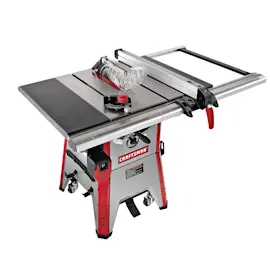
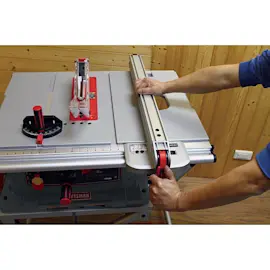
Yes. Craftsman table saws, including the Craftsman 141142580 10" table saw, are a solid choice for DIYers who want good cutting capability at a reasonable price; they are best for light to medium home projects rather than daily, high-precision production work.
What Craftsman table saws do well
- Value for the money: You typically get a capable motor and a usable rip capacity without paying pro-grade pricing.
- Portability: Many Craftsman saws are designed to move and store easily (helpful for garages and small shops).
- Beginner-friendly learning curve: Great for learning safe setup, blade changes, and basic ripping and crosscutting.
- Parts support: Having a model-specific parts page helps when you need common wear items.
Common tradeoffs to expect
Most complaints we see with value-focused table saws are about setup and repeatability, not basic cutting power.
- Fence alignment and repeat accuracy: You may need to spend time tuning the fence and checking it often.
- Stand and vibration: Lighter stands can flex; vibration can affect cut quality if the saw is not well supported.
- Dust collection: Portable saws often need extra attention to keep the cabinet and blade area clear.
- Long-term durability under heavy use: Weekend projects are a better fit than constant jobsite or shop production.
Quick “good fit” checklist
| If you mostly do this… | Craftsman table saw is usually… |
|---|---|
| DIY shelving, trim, plywood breakdown | A good fit |
| Occasional hardwood ripping | A good fit with careful setup |
| Furniture joinery needing repeatable precision | A mixed fit (tuning required) |
| Daily professional use | Not the best match |
How to get the best results from your 141142580
- Set the saw on a flat, rigid surface and re-check fasteners after moving it.
- Verify the blade is parallel to the miter slot; then align the fence to match.
- Use a sharp, correct blade for the material (rip blade for ripping, combo for general work).
- Use push sticks, blade guard, and riving knife whenever the cut allows.
- Follow the adjustment and safety procedures in the owner's manual.
Why it matters
A table saw can feel “bad” when it is simply out of alignment. A careful initial setup and periodic checks usually make the biggest difference in cut quality, safety, and frustration level.
Last updated: February 2026