Owner’s manual


How do you reset the PF code on a Kenmore Elite dryer?
PF on a Kenmore dryer means a power failure interrupted the cycle. On model 11087571602, clear it by ending the current cycle (press STOP twice), then restore power and press and hold START to restart the dryer. See the owner's manual for the exact button sequence on your control panel.
What PF means and what to check first
PF is not a “bad part” code by itself; it is the dryer telling you it lost power mid-cycle. Before you restart, we recommend these quick checks:
- Make sure the dryer is plugged in firmly and the outlet is not loose
- Reset the house breaker (or replace a blown fuse) for the laundry circuit
- Confirm the dryer door is fully closed and latching
- Avoid using an extension cord or power strip
- If PF returns repeatedly, check for a flickering outlet or intermittent power at the receptacle
Reset steps for Kenmore 11087571602
Use this sequence to clear the display and restart safely:
- Press STOP twice to end/cancel the cycle.
- Select your cycle again.
- Press and hold START (about 1 second) to begin.
If the dryer shut off after sitting idle, select the cycle again before pressing START.
If PF keeps coming back
Repeated PF usually points to an unstable power supply or a connection issue. Here is a quick guide to what to do next.
| What you notice | Most likely cause | What we do next |
|---|---|---|
| PF after a storm or outage | Utility interruption | Restart cycle and monitor |
| PF when other appliances start | Overloaded circuit | Move loads off the circuit, reset breaker |
| PF when the cord is bumped | Loose outlet/plug | Tighten/replace outlet, inspect cord |
| PF plus dryer stops mid-load often | Intermittent power | Have the outlet and breaker checked |
Why it matters
A dryer needs steady voltage to run the motor, heater, and controls. Frequent power interruptions can cause incomplete drying, repeated cycle restarts, and unnecessary wear on components like the drive motor and heating system.
Last updated: February 2026
How much does it cost to replace a heating element in a Kenmore dryer?
For Kenmore dryer model 11087571602, replacing the heating element typically costs $95 to $110 for the part plus $0 to $250+ for labor, so most total repairs land around $100 to $350 depending on whether you DIY and whether any wiring or airflow issues also need attention.
Typical cost breakdown
- Heating element part: about $96 for this model
- Optional wiring/terminal repair (if connectors are heat-damaged): about $10
- DIY labor: $0 (your time)
- Professional labor: commonly $100 to $250+ (varies by area and access)
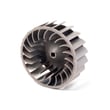
- Extra parts sometimes needed: thermal cut-off kit, blower wheel, drum support parts
| Cost item | What you pay for | Typical range |
|---|---|---|
| Heating element | Restores heat | $95 to $110 |
| Wire/terminal kit | Fixes overheated connectors | $10 to $25 |
| Labor (if hired) | Diagnosis + installation | $100 to $250+ |
| Total | Part + labor | $100 to $350 |
Parts that commonly go with a heating-element repair
If the dryer overheated or had restricted airflow, we often see additional heat-related parts fail. These are common companions for model 11087571602:
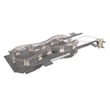
- Dryer heating element WP8544771
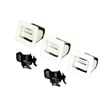
- Dryer heating element wire kit 279457
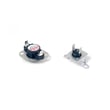
- Dryer thermal cut-off fuse kit 279973
Why the total price varies
A heating element can burn out on its own, but the root cause is often heat buildup from lint or poor venting. The owner's manual includes dryer care and troubleshooting sections that cover cleaning and lint removal, which helps prevent repeat failures.
How to keep the new element from failing early
- Clean the lint screen before every load
- Clear lint from the lint screen housing periodically
- Inspect and clean the vent duct to the outside
- Avoid crushing or kinking the exhaust pipe behind the dryer
- Stop using the dryer if you smell overheating or see scorching at wire terminals
Last updated: February 2026
How much does it cost to fix a start button on a dryer?
For a Kenmore dryer model 11087571602, fixing a start button usually costs $10 to $50 for the part, plus labor if you hire service. If the issue is actually power, door switch, or control lock, the fix can cost $0 after basic checks in the owner's manual.
What you typically pay (parts vs. labor)
Start-button problems are often a switch or console issue, but many “won’t start” calls end up being power or door-latch related.
| What’s being fixed | Typical parts cost | Typical total with labor |
|---|---|---|
| Start switch or push-to-start button | $10 to $50 | $150 to $300 |
| Timer/control board or console (less common) | $150 to $350+ | $300 to $600+ |
| No parts needed (setup or power issue) | $0 | $0 to $150 (diagnostic) |
Before you buy parts: quick checks that often solve it
The manual for this model calls out several no-start basics that can look like a bad start button.
- Make sure the controls are set to a running or “On” position.
- Press and hold START firmly (some cycles require a brief hold).
- Confirm the dryer door is fully closed and latched.
- Check the home electrical supply; many electric dryers use two fuses or breakers.
- If you selected a cycle but waited too long, reselect the cycle and press START again.
When it’s not the start button
If the button feels normal but the dryer still will not run, we usually focus on these common causes:
- Door latch or door switch not engaging (door not “seen” as closed)
- Blown thermal cut-off or overheating event (often tied to restricted venting)
- Failed drive motor or a seized drum support/roller causing a no-start or hum
- Control lock enabled (if your console has that feature)
Parts that are commonly involved in “won’t start” repairs
If troubleshooting points to a mechanical bind or an overheat protection issue, these model-compatible parts are commonly used:
- Dryer thermal cut-off fuse kit 279973 (overheat protection components)
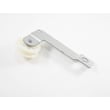
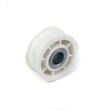
- Dryer idler pulley 279640 (belt tensioner that can seize or squeal)
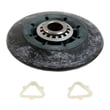
- Support WPW10314173 (drum support roller)
Why it matters
Replacing the wrong part can cost more than the original problem. A few minutes checking power, door closure, and proper START operation can prevent unnecessary parts purchases and get your Kenmore 11087571602 running again faster.
Last updated: February 2026
How do I tell if my dryer heating element is bad?
If your Kenmore dryer model 11087571602 tumbles but produces little or no heat on heated cycles, the heating element is a top suspect. First, follow the heat check in the 11087571602 owner's manual and confirm your home power and venting are correct.
Quick checks first (fastest wins)
- Run a Timed Dry heated cycle for 5 minutes, then open the door and feel for heat.
- Make sure you did not select Air Only.
- Check the vent is not crushed or kinked and that airflow is strong at the outside hood.
- Clean the lint screen and lint buildup in the ducting.
- Verify the dryer is getting full power; electric dryers often use two fuses or two breakers.
Symptoms that point to a bad heating element
- Clothes stay damp; cycles run much longer than normal
- Dryer tumbles normally but there is no heat on heated settings
- Heat is intermittent (dries sometimes, not others)
- You see a broken coil or burnt spot on the element
Multimeter test (most reliable)
- Disconnect power (unplug or switch off both breakers).
- Access the heater terminals.
- Test the element:
- Across the terminals: you should read continuity; many dryer elements measure about 10 to 50 ohms.
- Terminal to metal housing (ground): you should read no continuity.
What the results usually mean
| Test or symptom | What it indicates | What to do next |
|---|---|---|
| No heat, tumbles | Power issue (one breaker/fuse tripped) | Reset/replace both; re-test heat |
| No continuity across element | Element is open | Replace the element |
| Continuity to housing | Element is shorted | Replace the element |
| Repeated no-heat after overheating | Safety device opened | Check thermal cut-off and venting |
Parts that commonly fix no-heat
If the element tests open or shorted, replace the dryer heating element WP8544771. If overheating caused the failure, also check the dryer thermal cut-off fuse kit 279973.
Why it matters
A restricted vent or partial power loss can mimic a bad heater. Confirming power and airflow first prevents replacing the heating element when the real issue is a breaker, fuse, or blocked exhaust.
Last updated: February 2026