Owner’s manual
 View engine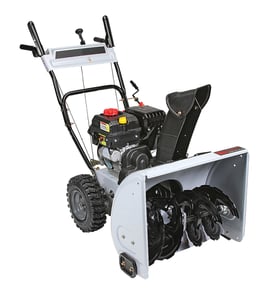



What is the typical lifespan of a gas snowblower?
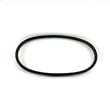
A typical gas snowblower lasts about 7 to 15 years, depending on hours of use and maintenance. For Craftsman model 247884330, the operator guidance cites an average useful life of 7 years or about 60 hours; after that, we recommend annual inspections and strict seasonal maintenance using the 247884330 operator’s manual.
What “lifespan” means for a snowblower
Snowblower life is usually limited by total run time, storage conditions, and wear items (belts, friction disc, cables, shear pins), not just calendar age.
- Light residential use (short storms, proper storage): often 10 to 15 years
- Heavy use (large driveway, wet snow, frequent storms): often 7 to 10 years
- Poor storage or stale fuel issues: can shorten life to 5 to 7 years
Maintenance that extends service life
These steps match what we see most often on long-lasting Craftsman and MTD-built snow throwers.
- Run the machine briefly after clearing snow to help prevent freeze-up of the auger and impeller
- Drain fuel for storage by running the engine until it stops (for 30+ days off-season)
- Change engine oil at the end of the season
- Lubricate the hex (gear) shaft at least once a season or every 25 hours; keep oil off the drive plate and friction wheel
- Inspect fuel lines, tank, cap, and fittings for cracks or leaks
- Rustproof and clean before storage; store in a dry, ventilated area away from ignition sources
Quick reference: typical life by usage
| Usage pattern | Typical years | Typical hours | What usually fails first |
|---|---|---|---|
| Light residential | 10 to 15 | 30 to 80 | Belts, cables, shear pins |
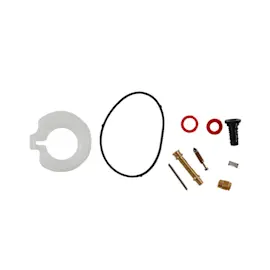
| Average residential | 7 to 12 | 60 to 120 | Friction disc, belts, carburetor issues |
| Heavy / frequent | 7 to 10 | 100+ | Friction wheel system, bearings, auger/impeller wear |
Why it matters
Planning around lifespan helps you decide when to do preventive service (oil, lubrication, fuel system care) versus when to budget for bigger repairs like the friction wheel system or drive components.
Last updated: January 2026
How to find Craftsman snowblower model number?
For your Craftsman gas snow thrower model 247884330, the model number is typically printed on the snowblower’s model and serial tag; once you find it, record it so you can match the correct parts list and specifications in the 247884330 owner's manual.
Where to look on the snowblower
On most Craftsman two-stage snow throwers, the model and serial tag is on the rear of the unit or near the handle frame, on a sticker or metal plate.
- Check the rear housing behind the engine
- Check the handle support/frame area
- Look near the axle frame or lower rear panel
- Wipe off snow, salt, and grime so the label is readable
- Photograph the tag for future parts ordering
Model number vs. engine model number (important)
Your snowblower has a snowblower model number and the engine may have its own model/type code. Use the snowblower model number for chassis parts (auger, belts, cables, skid shoes); use the engine number for engine-specific parts.
| You need parts for | Use this number | Examples |
|---|---|---|
| Auger, drive system, chute, controls | Snowblower model number | shear pins, belts, cables |
| Carburetor, ignition, recoil starter | Engine model/type | spark plug, air filter |
What to write down (and why)
The operator’s manual calls out recording these details so you have them ready for maintenance and parts lookup.
- Model number
- Serial number
- Date of purchase
Why it matters
Craftsman manuals often cover multiple similar models, and the last digit can vary by version; using the exact model number helps ensure you get the right diagrams, hardware, and replacement parts.
Last updated: January 2026
Is a 2 stage or 3 stage snowblower better?
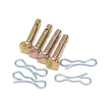
A 3-stage snowblower is better for extreme conditions because it adds an accelerator that helps chew through deep, heavy, or plowed-in snow faster; a 2-stage is the better value for most driveways and typical storms. Your Craftsman 247884330 is a 2-stage design that uses shear pins like OEM 738-04124A.
Quick comparison (what changes in real use)
| Feature | 2-stage snowblower | 3-stage snowblower |
|---|---|---|
| Snow-moving system | Auger feeds an impeller | Accelerator plus auger plus impeller |
| Best for | Most residential storms, packed snow | Deep, heavy, icy, plow berms |
| Clearing speed | Strong | Typically faster in extreme snow |
| Cost and complexity | Lower | Higher |
How to choose for your driveway
- Choose 2-stage if you clear a standard driveway and want strong performance with simpler maintenance.
- Choose 3-stage if you regularly deal with deep drifts, wet heavy snow, or plowed-in end-of-driveway piles.
- If your snowblower “plows” instead of throwing, check basics first: full throttle, appropriate ground speed, and intact shear pins.
- For any stage, keep spare shear pins on hand; they are designed to break to protect the auger and gearbox.
Model-specific note for Craftsman 247884330
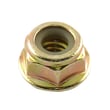
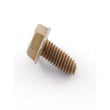
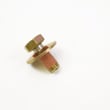
Your Craftsman 247884330 is covered in the Craftsman 247884330 owner’s manual, and it uses gold-colored shear pins for 2-stage units. If an auger stops turning after hitting ice or a foreign object, a sheared pin is a common cause.
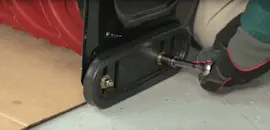
- Always shut the engine off and remove the safety key before servicing the auger.
- Replace only with the correct OEM shear pin type for this 2-stage setup.
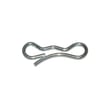
- Keep the bow-tie clip with the shear pin so the auger stays secured.
Helpful part reference: snowblower shear pin 738-04124A.
Why it matters
Picking the right stage affects clearing time, how well you handle end-of-driveway berms, and how often you’ll stress wear items like belts, cables, and shear pins.
Last updated: January 2026
How many HP is a 243cc snow blower?
A 243cc snowblower engine is typically in the 7 to 9 HP range in real-world output. On Craftsman model 247884330, the operator documentation focuses on maintenance specs (oil type and capacity) rather than listing horsepower; use the 247884330 operator’s manual for the exact engine identification details.
Why “HP” can be confusing on snow blowers
Many snow throwers are marketed by clearing width or series names, and some older labels used “peak” or “gross” style numbers. Engine cc (243cc) is a displacement size; horsepower depends on engine design, governed RPM, and torque curve.
Quick reference: what 243cc usually means for performance
- Strong power class for many 2-stage snow throwers
- Handles moderate to heavy snowfall when the auger and impeller are in good condition
- Performance drops quickly if belts slip, shear pins break, or cables are out of adjustment
| Spec type | What you’ll see | What it tells you |
|---|---|---|
| Engine displacement | 243cc | Engine size (not HP) |
| Horsepower (HP) | Often not listed | Varies by engine and rating method |
| Maintenance spec | Oil capacity and viscosity | Helps keep power consistent |
Keep power and throwing distance where it should be
From the Craftsman snow thrower manual family that includes 243cc engines, typical maintenance items that affect “power feel” include:
- Use 5W-30 engine oil (common spec for this platform)
- Fill to the correct oil level; 243cc uses about 600 ml (approx. 20 oz.)
- Replace broken shear pins promptly; a sheared pin can make the unit “plow” snow instead of throwing it
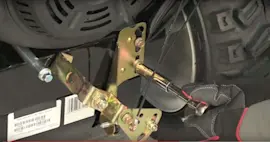
- Keep the auger control cable properly adjusted so the auger fully engages
Parts that commonly affect snow-throwing performance
If the machine runs but does not throw well, these model-listed parts are often involved:
- Craftsman snowblower shear pin 738-04124A (restores auger drive after a jam)
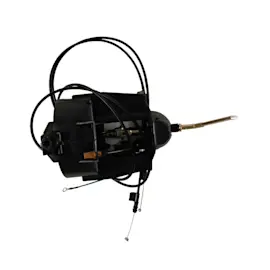
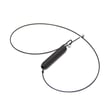
- Mtd snowblower auger clutch cable 946-04230B (helps the auger engage fully)
Why it matters
Using the correct expectations for a 243cc engine helps you diagnose problems faster: if your 247884330 suddenly feels weak, it is usually a drive, belt, shear pin, or adjustment issue rather than “lost horsepower.”
Last updated: January 2026