 Installation guide
 Owner’s manual
 Error Codes




What is the average lifespan of a GE dishwasher?
Most GE dishwashers, including model GDT655SBL5TS, typically last 10 to 12 years with normal household use and routine care. Consistent cleaning, correct detergent use, and fixing small issues early are the biggest factors that help you reach (or beat) that average.
What affects dishwasher lifespan the most
- Maintenance habits: cleaning the filter area, wiping door seals, and running periodic cleaning cycles
- Water quality: hard water can cause mineral buildup on the heating system and internal parts
- Loading and detergent use: overloading and excess detergent can reduce cleaning performance and strain components
- Heat and drying demands: frequent heated dry cycles add wear to heating components
- Early symptom response: addressing leaks, poor draining, or weak wash action prevents bigger failures
Typical lifespan by usage pattern
| Usage pattern | Typical lifespan | Notes |
|---|---|---|
| Light use (a few loads/week) | 12 to 15 years | Best-case with good care |
| Average use (once daily) | 10 to 12 years | Most common household range |
| Heavy use (multiple loads/day) | 8 to 10 years | More wear on pumps, heater, and seals |
Parts that commonly impact longevity
If performance drops, these are common wear items that can shorten lifespan if ignored:
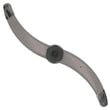
- Wash performance issues: dishwasher spray arm, lower WD22X33499
- No heat or poor drying: dishwasher heating element WD05X30818
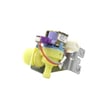
- Won’t drain or drains slowly: drain path and pump system (check for clogs first)
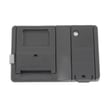
- Door won’t latch or stops mid-cycle: GE dishwasher door latch lock WD21X10490
Why it matters
A dishwasher near the 10 to 12 year mark can still be a great candidate for repair if the tub is in good shape and the issue is limited to a serviceable part (like a latch, spray arm, or heating element). Using the care and cleaning steps in the GDT655SBL5TS owner’s manual helps prevent the most common performance problems that lead to early replacement.
Last updated: January 2026
What is the most common problem with a GE dishwasher?
The most common issues we see with the GE GDT655SBL5TS dishwasher are “won’t drain” and “won’t start.” Drain problems usually trace to a clogged filter or drain path; start problems commonly involve power supply, a door that is not fully latched, or a locked control panel (see the GDT655SBL5TS owner’s manual).
Most common symptoms and what they usually mean
- Dishwasher won’t drain: food debris in the filter area, a kinked/blocked drain hose, or a drain pump issue
- Dishwasher won’t start: tripped breaker, wall switch off (if installed), door not latched, control lock enabled
- Poor cleaning: spray arms blocked by debris, loading that blocks wash jets, low water temperature, or detergent issues
- Suds in the tub: wrong detergent (hand dish soap) or rinse aid spill
- Hard water film or odors: mineral buildup and residue inside the tub
Quick checks you can do first (in order)
- Confirm power: reset the breaker or replace the fuse; check any wall switch that feeds the dishwasher.
- Close and latch the door firmly: a weak latch can prevent the cycle from starting.
- Check the drain path: inspect for kinks and clogs; verify the sink/disposer connection is clear.
- Use the right detergent: only automatic dishwasher detergent; tablets or packets are commonly recommended.
- Clean and deodorize the interior: use citric acid or a dishwasher cleaner to break up mineral deposits.
Parts that commonly relate to these problems on model GDT655SBL5TS
| Symptom | Likely area | Example part on this model |
|---|---|---|
| Won’t start or stops mid-cycle | Door not latching | GE dishwasher door latch lock WD21X10490 |
| Not cleaning well | Spray not reaching dishes | Dishwasher spray arm, lower WD22X33499 |
| Not drying or water not heating | Heating circuit | Dishwasher heating element WD05X30818 |
| Not draining | Drain system | Dishwasher drain hose WD24X10062 |
Why it matters
Drain and start issues are the most common because they are often caused by normal buildup (filters, hoses) or simple interlocks (door latch, control lock). Catching these early helps prevent standing water, odors, and repeat cycle failures.
For fault displays or beeping patterns, use the GE electronic dishwasher error codes guide to match the code to the most likely cause.
Last updated: January 2026
Which dishwasher to stay away from?
If you’re shopping for a dishwasher, we stay away from any model line with a consistent pattern of expensive electronic failures (control board or user interface), chronic leaking, or poor parts availability. For your GE GDT655SBL5TS, the best approach is to compare reliability signals and serviceability, then choose a model with readily available parts and straightforward repairs; see the GDT655SBL5TS owner’s manual for safe-use and operating guidance.
What to avoid (practical red flags)
- Models with frequent reports of control panel or control board failures (often higher repair cost).
- Units with recurring leak complaints (door seal, tub gasket, or venting issues).
- Dishwashers that are hard to service (limited access, proprietary assemblies, scarce parts).
- Very low-priced models with minimal warranty support or limited replacement parts.
- Designs that rely heavily on complex electronics for basic functions.
How to screen a dishwasher before you buy
Use this quick checklist when comparing brands and models:
| What you check | What “good” looks like | What to avoid |
|---|---|---|
| Parts availability | Common parts are easy to source | Key parts are discontinued or backordered often |
| Repair cost drivers | Mechanical issues are affordable | Electronics are frequent and pricey |
| Leak prevention | Solid door sealing and tub design | Repeated leak patterns |
| Service access | Standard fasteners, clear diagnostics | Hard-to-access components |
Why it matters
Dishwashers are repairable, but the wrong model can turn a simple issue into a high-cost repair. Electronics (like a user interface or control board) and water leaks tend to be the most disruptive because they can stop cycles, cause error codes, or lead to repeat service calls.
If you already own a dishwasher and want to reduce problems
- Use only automatic dishwasher detergent (hand dish soap causes suds and overflow).
- Load lightweight plastics so they cannot drop onto the heating element.
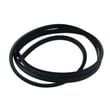
- Keep sharp items positioned to protect the door seal.
- Disconnect power before maintenance; turning the dishwasher off does not remove power.
- Use diagnostics when problems appear; start with GE dishwasher error codes.
Last updated: January 2026





