Installation guide
 Owner’s manual
 Error Codes



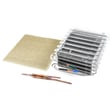
What is the H code on a Frigidaire side by side?
On a Frigidaire FRS23H5ASB8 side-by-side refrigerator, an H or HI code means a high temperature alarm. It indicates the refrigerator or freezer temperature has been too warm for an extended period, most often from a door left ajar or a door seal that is not closing tightly.
- Make sure both doors fully close and nothing inside is blocking them.
- Check the door gaskets for gaps, tears, or sticky spots; clean and dry the sealing surfaces.
- Confirm the temperature controls were not accidentally set warmer.
- Give the refrigerator 24 hours to stabilize after any control change or after loading a lot of warm food.
- If the alarm returns, listen for normal airflow sounds (fans running) and check for heavy frost buildup that can restrict cooling.
| Likely cause | What you will notice | Quick check |
|---|---|---|
| Door left open or not sealing | Warm temps, alarm after an hour or more | Inspect gasket contact all the way around |
| Frequent door openings | Temps rise during busy use | Reduce openings for a few hours |
| Warm food load | Alarm after grocery load | Allow 24 hours for recovery |
| Airflow restriction (frost/blocked vents) | Uneven temps, weak airflow | Clear vents; check for excessive frost |
High temperatures can lead to food spoilage and can also cause the ice maker to slow down or stop until the freezer temperature recovers. A good door seal and steady airflow help the compressor and fans maintain safe temperatures.
- Use the FRS23H5ASB8 owner's manual for alarm behavior, temperature control guidance, and operating tips.
- If you suspect a sealing issue, the how to fix a fridge door seal guide walks through common gasket and alignment fixes.
Last updated: February 2026
Why is my Frigidaire side by side freezing food in the fridge compartment?
Food freezes in the fresh food section of your Frigidaire FRS23H5ASB8 when the refrigerator temperature is set too cold or when airflow from the freezer is blowing directly onto items. We fix this by adjusting the fresh food control gradually and keeping the air vents clear (per the owner's manual).
- Set the fresh food control slightly toward Cold (warmer), then wait 24 hours before adjusting again.
- Make sure packages are not blocking the cold air vents; blocked vents cause uneven temperatures.
- Avoid overpacking shelves; overcrowding reduces air circulation and creates cold spots.
- Keep liquids and produce away from the back wall and vent areas where air is coldest.
- Confirm doors close tightly so the control system can regulate temperatures normally.
The manual’s food storage guidance for this style of refrigerator is:
| Compartment | Target temperature | What happens if too cold |
|---|---|---|
| Fresh food (refrigerator) | 34°F to 40°F (optimum 37°F) | Produce and drinks freeze, items near vents freeze first |
| Freezer | 0°F or lower | Ice cream gets rock hard, frost can increase |
If the controls are set correctly and food still freezes, the most common causes are airflow problems between compartments.
Symptoms and likely causes
- Freezing is worst on the top shelf or near the vent: damper stuck too open or airflow path blocked.
- Freezing happens after loading groceries: items placed in front of vents create a cold blast zone.
- Temperatures swing a lot: control or sensor issues (less common than airflow/packing).
A damper that is stuck open can overfeed freezer air into the refrigerator side; for this model, the related part is the refrigerator damper 241600902.
Freezing in the fresh food compartment is usually an airflow and temperature control problem, not a “more cooling is better” situation. Correct settings and clear vents protect food quality and help the refrigerator run efficiently.
Last updated: February 2026
Where is the defrost timer located on a Frigidaire side by side?
On the Frigidaire FRS23H5ASB8, defrost operation is handled by an automatic defrost control system, not a stand-alone “timer” you adjust regularly. The defrost control is typically accessed from the temperature control area in the fresh food section or the control box area; use the FRS23H5ASB8 owner's manual for the exact access points and panel removal steps.
Most side-by-side Frigidaire designs in this series use an automatic defrost control with defrost components in the freezer section.
- Defrost control: located in the control housing/control box area (not in the freezer behind the evaporator cover)
- Defrost heater and wiring: located at the evaporator area behind the freezer rear panel
- Defrost thermostat: clipped to the evaporator tubing; it opens and closes based on temperature
If you are diagnosing a defrost problem, the refrigerator defrost bi-metal thermostat 5303918214 is one of the key parts in the defrost circuit.
Before removing any covers:
- Unplug the refrigerator to prevent shock
- Move food away from the control housing area to avoid damage
- Remove the control housing cover screws (commonly Phillips-head)
- Support the housing as you lower it; do not pull on wires
- Label or photograph wire connections before disconnecting anything
| What you find | What it is | What it means for location |
|---|---|---|
| Dial/advance slot you can turn with a screwdriver | Mechanical defrost timer | Usually mounted in a control housing or behind a small access cover |
| Small electronic module/board with wiring harness | Automatic defrost control | Usually in the control box/control housing area |
Knowing whether you have a mechanical timer or an automatic defrost control prevents unnecessary disassembly and helps you test the right components first (defrost thermostat, heater circuit, airflow). For cooling complaints, also inspect evaporator airflow and frost buildup patterns.
Last updated: February 2026