Owner’s manual
 Error Codes



How do I find my fridge model number?
For your Kenmore refrigerator, the model number is printed on the appliance’s rating label; on model 10651139214, it’s most often inside the fresh food compartment around the door opening or on an interior side wall near the crisper area. Use the exact model number to match the right parts and diagrams.
Where to look first (fastest checks)
- Open the refrigerator door and check the door frame (vertical wall where the gasket seals)
- Look on the left or right interior wall of the fresh food section
- Check near or behind the crisper drawers (sometimes you need to slide a drawer out)
- Look at the ceiling/upper interior liner of the fresh food compartment
- If you still do not see it, check the kick plate/toe grille area at the bottom front
What the label looks like and what to write down
The label is usually a white or silver sticker/plate with small print.
| What to capture | Example | Why it matters |
|---|---|---|
| Model number | 10651139214 | Ensures parts fit your exact Kenmore refrigerator |
| Serial number | (varies) | Helps confirm production run for some part variations |
| Electrical info | Volts/amps | Useful for diagnosing control, light, or fan issues |
Tips to avoid ordering the wrong part
- Copy the model number exactly as printed (include all digits)
- Take a clear photo of the label before you close the door
- If the label is smudged, use a flashlight and view it from an angle
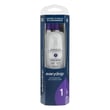
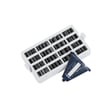
- Use the model number when selecting common maintenance items like the Kenmore refrigerator water filter 9081
Why it matters
Kenmore model numbers narrow your refrigerator down to the correct parts list, wiring diagrams, and troubleshooting steps. That saves time when replacing items like a water filter, air filter, ice maker, or control board.
For model-specific label location notes and diagrams, use the 10651139214 manual.
Last updated: February 2026
How many cubic feet is my Kenmore refrigerator by model number?
For Kenmore refrigerator model 10651139214, the cubic-foot capacity is the manufacturer’s listed storage volume for the fresh food and freezer sections combined. The most accurate way to get the exact cubic feet for your specific model is to check the model’s specifications in the 10651139214 owner's manual.
How to find the exact cubic feet for model 10651139214
- Look for a section labeled Specifications, Product data, or Capacity.
- Use the model number 10651139214 to match the correct spec table.
- If the manual lists separate capacities, add refrigerator + freezer for total cubic feet.
- Use the listed capacity rather than measuring the cabinet; shelves, insulation, and liners change usable volume.
If you want to estimate it by measuring (quick check)
Measuring can give a rough estimate, but it rarely matches the rated capacity.
- Measure the inside of the refrigerator compartment (not the exterior):
- Width (inches)
- Height (inches)
- Depth (inches)
- Multiply:
width × height × depth = cubic inches - Convert to cubic feet:
cubic inches ÷ 1728 = cubic feet
| What you measure | What it tells you | Accuracy vs. rated capacity |
|---|---|---|
| Interior compartment space | Approximate usable space | Medium |
| Exterior cabinet dimensions | Not capacity | Low |
| Manual specification | Official capacity | Best |
Why the “multiply dimensions” method often looks wrong
Rated cubic feet is based on standardized internal volume, not simple exterior measurements. Door thickness, insulation, air channels, and built-in features (like an ice maker or air ducts) reduce usable space.
Related help for Kenmore refrigerators
If you are checking capacity because of water or ice performance, we recommend reviewing how to replace the water filter in a Kenmore refrigerator and confirming you are using the correct filter for your setup (for this model, see refrigerator water filter 9081).
Last updated: February 2026
How to tell if a Kenmore refrigerator compressor is bad?
If your Kenmore refrigerator model 10651139214 has a failing compressor, you’ll usually see poor cooling with the unit running almost constantly, unusual buzzing or clicking near the back, and a very hot compressor shell. Confirm basic airflow and condenser cleanliness first, then move to electrical checks.
Quick signs a compressor problem is likely
- Refrigerator and freezer temperatures keep rising even though the fans run
- Compressor runs nearly all the time with little or no cooling improvement
- Loud humming, buzzing, repeated clicking, or a start attempt that stops quickly
- Compressor is extremely hot to the touch (use caution)
- House breaker trips when the compressor tries to start
Rule out common look-alikes first
Many “bad compressor” symptoms are caused by airflow, defrost, or sealed-system restrictions.
- Clean condenser coils and confirm the condenser fan (if equipped) runs
- Make sure the evaporator fan is running and air vents are not blocked
- Check for heavy frost on the evaporator cover (points to a defrost issue)
- Verify door gaskets seal and doors close fully
- Confirm controls are set correctly and the unit is not in a special mode
Helpful parts that relate to these symptoms
| Symptom | Common non-compressor cause | Example part for model 10651139214 |
|---|---|---|
| Warm fridge, freezer OK-ish | Weak evaporator airflow | Refrigerator evaporator fan motor WP2315549 |
| Ice maker or dispenser issues plus warm temps | Water system issue (separate from cooling) | Refrigerator water inlet valve WPW10341320 |
| Poor water taste/flow | Clogged filter | Kenmore refrigerator water filter 9081 |
Basic checks that point more directly to the compressor
- Listen at the back: a steady hum is normal; repeated click-then-silence often indicates a start problem.
- Check condenser airflow: hot air should blow out near the compressor area when running.
- Look for sealed-system clues: one section warm, one section cold, or only a small patch of frost on the evaporator can indicate a restriction or low refrigerant (sealed-system service).
Why it matters
A compressor diagnosis affects cost and repair approach. If airflow or defrost is the real issue, replacing the compressor wastes time and money. If it is sealed-system related, the repair typically requires specialized tools and a qualified technician.
For model-specific component locations and access panels, use the 10651139214 owner’s manual.
Last updated: February 2026
Is there a reset button on a Kenmore refrigerator?
Most Kenmore refrigerators, including model 10651139214, do not use a single dedicated reset button for the whole unit. The reliable “reset” is a power reset: turn the refrigerator off by unplugging it (or switching off the breaker) for about 5 minutes, then restore power to reboot the electronic control.
How to reset your Kenmore 10651139214 (safe, standard method)
- Unplug the refrigerator or switch the circuit breaker off.
- Wait 5 minutes (this lets the control board fully power down).
- Restore power.
- Set temperatures back to normal if they changed.
- Allow 24 hours for temperatures to stabilize after any reset or adjustment.
What a “reset” fixes (and what it does not)
A power reset clears minor control glitches, display oddities, and some intermittent dispenser or ice maker behavior. It will not fix a failed component (fan motor, inlet valve, ice maker, control board) or a sealed-system cooling problem.
| Symptom | Try a power reset? | Next most common check |
|---|---|---|
| Display or controls acting weird | Yes | Check for stuck keys, moisture on panel |
| Not making ice | Yes | Water supply, filter, ice maker fill |
| Not cooling well | Sometimes | Airflow, condenser cleaning, fan operation |
| Lights not working | Sometimes | Door switch, light board |
If the issue is ice or water related
A “no reset button” situation often points to flow restrictions or a weak fill.
- Replace the water filter on schedule; a clogged filter can reduce dispenser flow and ice production.
- Confirm the shutoff valve is fully open and the supply line is not kinked.
- If the ice maker is not filling, the inlet valve can be the cause.
Helpful parts for this model include the Kenmore refrigerator water filter 9081 and the refrigerator water inlet valve WPW10341320.
Why it matters
Resetting by power cycling is the fastest way to rule out a temporary control-board glitch before you spend time diagnosing parts like the ice maker, evaporator fan, or inlet valve.
For model-specific control and temperature guidance, use the 10651139214 manual.
Last updated: February 2026
What are common fridge part failures?
On Kenmore refrigerator model 10651139214, the most common failures we see are airflow, defrost, and water/ice related parts, plus door sealing and lighting issues. These problems typically show up as warm temperatures, frost buildup, leaks, noisy operation, or weak ice and water dispensing.
Most common parts that fail (and what you notice)
- Evaporator fan issues: warm fresh food section, poor airflow, or a loud buzzing; check the refrigerator evaporator fan motor WP2315549.
- Defrost system problems: heavy frost on the back wall, reduced cooling, or fan noise from ice; the refrigerator defrost bi-metal WPW10225581 is a common suspect.
- Water filter restrictions: slow water flow, small hollow ice, or bad taste; replace the Kenmore refrigerator water filter 9081.
- Water inlet valve failures: no ice, no water, or intermittent filling; the refrigerator water inlet valve WPW10341320 is often involved.
- Ice maker wear: no ice production, overfilling, or jammed cubes; consider the refrigerator ice maker W10873791.
- Door sealing problems: moisture, frost, or longer run times; inspect the gasket and door alignment.
Quick triage checklist (fast, no tools)
- Confirm temps: 0°F freezer, 37°F fresh food.
- Listen for the evaporator fan when the door switch is pressed.
- Look for frost buildup on the freezer rear panel.
- Check dispenser flow; if it is weak, replace the water filter first.
- Inspect door gaskets for gaps, tears, or sticky spots.
Symptom-to-part guide
| Symptom | Most likely area | Common next step |
|---|---|---|
| Warm fridge, freezer OK | Airflow/evaporator fan | Check fan motor and air passages |
| Frost on freezer back wall | Defrost system | Check defrost bi-metal and defrost components |
| No ice and no water | Water supply/valve | Check inlet valve and supply line |
| Lights out or flicker | Lighting electronics | Check light board and door switch |
Why it matters
Catching a failing fan, defrost component, or inlet valve early helps protect food, reduces compressor run time, and prevents secondary issues like ice buildup, leaks, and temperature swings.
Model-specific help
For control locations, diagnostic steps, and part access points on 10651139214, use the 10651139214 owner’s manual.
Last updated: February 2026
What's the average lifespan of a Kenmore refrigerator?
Most Kenmore refrigerators typically last 12 to 15 years with normal household use. For Kenmore model 10651139214, consistent maintenance (clean condenser coils, good door sealing, and steady temperatures) is what most often determines whether it reaches the high end of that range.
Typical lifespan and what affects it
A refrigerator’s life is usually limited by wear on the sealed system, compressor start components, fans, and defrost system.
- Maintenance frequency (coil cleaning, filter changes)
- Room conditions (heat, dust, tight cabinetry airflow)
- Door seal condition (warm air leaks increase run time)
- Ice maker and dispenser use (more water system wear)
- Power quality (outages and surges stress electronics)
Maintenance schedule we recommend
Use your 10651139214 owner's manual for the exact locations and procedures.
| Task | How often | Why it matters |
|---|---|---|
| Clean condenser coils | Every 6 to 12 months | Reduces compressor run time and heat stress |
| Replace water filter | About every 6 months | Protects water flow and taste; helps valve and ice maker performance |
| Replace air filter (if equipped) | Every 6 months | Helps control odors and airflow |
| Check/clean door gaskets | Every 3 to 6 months | Prevents frost, sweating, and warm spots |
Parts that commonly drive “end of life” decisions
If cooling is weak, ice production drops, or the unit runs constantly, these are common suspects on this model family:
- Refrigerator water filter 9081 if water flow is slow or ice is hollow
- Refrigerator evaporator fan motor WP2315549 if the freezer is cold but the fresh food section warms
- Refrigerator defrost bi-metal WPW10225581 if frost builds up on the evaporator cover
- Refrigerator electronic control board W11035841 if temperatures swing or the unit behaves erratically
Why it matters
Once a refrigerator is past the 12 to 15 year mark, small issues (restricted airflow, weak door seals, dirty coils) can push the compressor and control system harder, which shortens remaining life and increases energy use.
Last updated: February 2026