Installation guide
 Owner’s manual
 Error Codes


Where is the model number on a Kenmore side by side refrigerator?
On Kenmore side-by-side refrigerator model 10653252202, the model number is printed on the model and serial number label located on the inside wall of the refrigerator (fresh food) compartment. Open the refrigerator door and look along the interior side walls for the label. See the owner's manual for the exact label location and what the full model and serial number format looks like.
Quick ways to find the label
- Check the inside wall near the top front, just behind the door gasket area.
- Look along the side wall near the crisper drawers.
- Scan the interior walls with a flashlight; the label can be easy to miss.
- Wipe condensation or smudges off the label so the numbers are readable.
- Write down both the model number and serial number before ordering parts.
What to record (and why)
We recommend recording these details exactly as shown on the label:
| Item to record | Example for this unit | Why it matters |
|---|---|---|
| Model number | 10653252202 | Ensures parts diagrams and replacement parts match your exact build |
| Serial number | Varies by unit | Helps confirm production details when there are multiple versions |
| Purchase date | Your date | Useful for service history and maintenance tracking |
Why it matters
Kenmore refrigerators often have multiple versions that look similar. Using the exact model number from the inside-compartment label helps us match the correct parts (for example, a door bin, water inlet valve, or defrost component) and avoid fit or wiring differences.
Tip for ordering the right replacement part
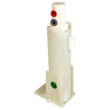
If you are ordering common items for this model, match the part name and ID carefully. For example, the refrigerator water filter housing WP2186443 is a model-specific component, so confirming the model number first prevents ordering the wrong housing.
Last updated: February 2026
What are the most common problems with Kenmore refrigerators?
The most common problems we see on Kenmore refrigerators like model 10653252202 are cooling issues (poor airflow, frost buildup from defrost trouble), water leaks (clogged defrost drain or water line issues), ice maker and dispenser problems (filter or valve restrictions), and unusual noises (fan or compressor-area components). For model-specific checks and settings, use the owner's manual.
Most common symptoms and what usually causes them
- Not cooling or warm temperatures: dirty condenser coils, blocked vents, evaporator fan problems, or a defrost failure causing heavy frost on the evaporator
- Frost buildup in freezer: defrost system issue (often the defrost thermostat/bi-metal or related wiring)
- Water leaking or puddles: clogged/iced defrost drain, loose water tube connections, or a seeping inlet valve
- Ice maker not making ice: clogged or incorrectly installed water filter, low water pressure, or inlet valve trouble
- Bad-tasting or gray ice: new plumbing, old ice, or a filter restriction (discard first batches after changes)
- Doors hard to open: dirty or sticky door gaskets that need cleaning
Quick checks we recommend before replacing parts
- Confirm the temperature controls are set correctly (refrigerator and freezer).
- Check for blocked air vents (packages against the back wall can stop airflow).
- Look for heavy frost on the freezer back panel (points to a defrost problem).
- If water or ice is slow, inspect the filter installation and replace if clogged.
- Clean door gaskets if they feel sticky or the doors are difficult to open.
Parts that commonly relate to these problems (for this model)
| Symptom | Common area | Example part on this model |
|---|---|---|
| Frost buildup, warm freezer | Defrost system | Refrigerator defrost bi-metal WPW10225581 |
| No water or slow water, ice issues | Water supply | Refrigerator inlet valve W10822681 |
| Poor airflow, warm sections | Air distribution | Refrigerator air diffuser WP2216112 |
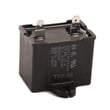
| Noisy operation, weak cooling start | Compressor start circuit | Refrigerator run capacitor WPW10662129 |
Why it matters
Most “big” refrigerator complaints trace back to airflow and water flow. Restoring proper airflow (fans, diffuser, defrost) protects food temperatures, and restoring proper water flow (filter, valve, tubing) prevents dispenser and ice maker failures.
Last updated: February 2026
How to clean the coils on a Kenmore side by side refrigerator?
On your Kenmore 10653252202 side-by-side refrigerator, we clean the condenser coils by unplugging the refrigerator, removing the base grille (if equipped), then brushing and vacuuming dust from the coils so the unit can release heat efficiently and run less.
Step-by-step: cleaning the condenser coils
- Unplug the refrigerator (or disconnect power at the breaker).
- Pull the refrigerator straight out far enough to work safely.
- Remove the base grille if your model has one (many Kenmore side-by-side models do).
- Use a coil brush to loosen dust and pet hair from the coils.
- Vacuum the loosened debris (use a crevice tool along the coil fins and underneath).
- Reinstall the base grille and push the refrigerator back carefully.
- Restore power and confirm the refrigerator is running normally.
What to use (and what to avoid)
Use nonflammable, non-abrasive cleaning methods. The refrigerator care section in the 10653252202 owner's manual also emphasizes using nonflammable cleaner and avoiding harsh or abrasive cleaners on refrigerator surfaces.
| Item | Good choice | Avoid |
|---|---|---|
| Dust removal | Coil brush + vacuum | Compressed air (blows dust into the machine area) |
| Wiping nearby surfaces | Mild detergent in warm water | Abrasives, harsh solvents, flammable fluids |
| Access | Base grille removal | Forcing panels or bending coil fins |
How often we recommend cleaning
- Every 6 months for most homes
- Every 3 months if you have pets, heavy dust, or the refrigerator is in a tight alcove
- Any time you notice longer run times or warmer-than-normal temperatures
Why it matters
Dirty condenser coils reduce heat transfer, which makes the compressor run longer and work harder. Your manual’s troubleshooting guidance notes that dirty condenser coils can increase run time and that cleaning the coils helps restore normal operation.
Last updated: February 2026
How many cubic feet is my Kenmore refrigerator by model number?
Your Kenmore side-by-side refrigerator model 10653252202 has a specific factory-rated capacity (cubic feet) listed on the model’s specification information; use the owner's manual to confirm the exact total capacity for your unit. Measuring outside cabinet dimensions does not give an accurate cubic-feet rating.
Why outside measurements do not work
Cubic feet is based on usable interior volume, not the exterior box size. Exterior measurements include insulation, liners, door thickness, and non-storage spaces, so the math can be off by several cubic feet.
Common reasons the “depth x height x width” method is wrong:
- Doors and handles add depth but do not add storage volume
- Insulation thickness reduces interior space
- The freezer and fresh-food sections have different usable shapes
- Shelves, bins, and the ice maker reduce usable volume
- Published capacity is measured using standardized methods
How to find the correct cubic feet for model 10653252202
Use these reliable options (in order):
- Check the specifications/capacity section in the owner's manual
- Look for the model and serial label inside the refrigerator compartment (often on an inside wall) and match it to the specs listed in the manual
- If you are comparing sizes for replacement or fit, use the installation clearances in the installation guide rather than cubic feet
Quick reference: what each number tells you
| What you need | Best source | Why it matters |
|---|---|---|
| Total capacity (cu. ft.) | Owner’s manual specs | Accurate factory rating for comparisons |
| Fit in the opening | Installation guide clearances | Prevents door swing and ventilation issues |
| Storage usability | Shelves, bins, drawers setup | Determines how much you can actually store |
Why it matters
Knowing the correct cubic feet helps when you are comparing refrigerator sizes, planning kitchen space, or deciding whether storage issues are caused by organization (bins, shelves, drawers) versus cooling performance.
Last updated: February 2026
What causes a side-by-side refrigerator to stop cooling?
On Kenmore model 10653252202, a “stopped cooling” complaint is usually caused by lost airflow (blocked vents), a control that needs resetting, or a failed cooling-system component such as the evaporator fan or defrost system. Start with airflow and control checks from the owner's manual.
Quick checks we recommend first
- Confirm the refrigerator has power and the interior lights come on.
- Make sure the temperature controls were not accidentally changed.
- Clear packages away from the air vents in both compartments (blocked vents prevent proper cooling).
- Limit door openings; frequent openings quickly warm the compartments.
- If your model has digital controls, turn the unit OFF then ON to reset (per the manual).
Most common causes (and what they look like)
| What’s wrong | What you’ll notice | What to check next |
|---|---|---|
| Air vents blocked | Freezer may be cold but fresh food side warms | Remove items blocking vents; restore airflow paths |
| Doors not sealing | Frost, moisture, or warm temps; longer run times | Inspect gaskets and door alignment |
| Evaporator fan issue | Little to no airflow; temps rise even if compressor runs | Listen for fan; inspect fan area; consider refrigerator evaporator fan blade WP2169142 |
| Defrost problem (frosted evaporator) | Gradual warming; heavy frost behind rear freezer panel | Check defrost components; consider refrigerator defrost bi-metal WPW10225581 |
| Water/ice system related freeze-up or restriction | Intermittent cooling symptoms near vents or reservoir area | Inspect for ice blockage; verify airflow and temps |
Why it matters
This refrigerator depends on steady air circulation from the freezer to the refrigerator section. When vents are blocked or the evaporator fan cannot move air, the temperature controls cannot regulate properly, so both compartments can warm even though the unit still sounds like it is running.
When a part is likely involved
If vents are clear and a control reset does not help, focus on the systems that move and manage cold air:
- Evaporator fan airflow (fan motor area and fan blade)
- Defrost system (frost buildup can choke airflow)
- Compressor start components (if the compressor is not running consistently)
For step-by-step checks and control reset instructions specific to model 10653252202, follow the troubleshooting guidance in the owner's manual.
Last updated: February 2026