Installation guide
 Owner’s manual
 Error Codes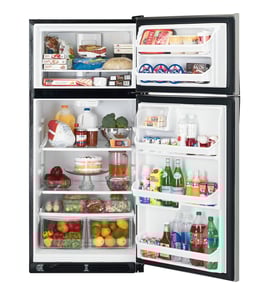



How to read a Frigidaire model number?
To read a Frigidaire model number, start by finding the model and serial tag on your refrigerator and copying the full model number exactly as printed (for example, FFHT1831QQ2). Then use the model number to match the correct parts list, manual, and installation details for your exact unit in the owner's manual.
On Frigidaire top-mount models like FFHT1831QQ2, the tag is typically inside the fresh food (refrigerator) compartment.
- Check the side wall near the crisper drawers
- Check the ceiling area inside the refrigerator section
- Check the door frame around the gasket area
- If you do not see it, remove bins and shelves and look along the liner edges
For parts and troubleshooting, the most important rule is to use the entire model number, including all letters and numbers.
- Write it down exactly (letters matter)
- Do not drop the last digits (they often identify a revision)
- Use the model number to select the correct diagrams and parts
- Use the model number to confirm which instructions apply (door reversal, handle installation, water line connection)
| What you need | Why the model number matters | Example for FFHT1831QQ2 |
|---|---|---|
| Replacement parts | Ensures correct fit and wiring/connector style | Door gasket, fan motor, light bulb |
| Documentation | Matches the right procedures and safety notes | Door removal/reversal, water supply connection |
| Feature set | Confirms options like ice maker readiness | Ice service and water supply steps |
Even small model-number differences can change door gasket size, handle style, or electrical components. Using the full FFHT1831QQ2 model number prevents ordering the wrong Frigidaire refrigerator parts and avoids repeat repairs.
Last updated: February 2026
Is the Frigidaire low-end?
Frigidaire is not a “low-end” brand; it is generally positioned as a value-focused, mainstream appliance brand. For a Frigidaire top-mount refrigerator like model FFHT1831QQ2, you typically get solid everyday performance and practical features rather than premium finishes or high-end customization.
When shoppers say “low-end,” they often mean one or more of these:
- Fewer premium features (smart connectivity, dual compressors, specialty drawers)
- More basic controls and interior lighting
- Simpler fit-and-finish compared with luxury lines
- Lower purchase price and lower cost of common replacement parts
Frigidaire typically fits the mainstream/value tier: dependable core cooling, straightforward design, and widely available service parts.
Top-mount refrigerators are built for efficiency and simplicity. With FFHT1831QQ2, you can expect:
- Standard freezer-on-top layout with mechanical or basic electronic controls
- Normal operating sounds during compressor and fan cycles
- Routine maintenance like cleaning and occasional light bulb replacement (follow the safety notes in the manual)
- Optional ice maker and water supply connection steps outlined in the documentation
For model-specific operation, features, and care instructions, use the FFHT1831QQ2 owner's manual.
| Category | Value/mainstream (typical Frigidaire positioning) | Premium/luxury tier |
|---|---|---|
| Features | Practical essentials | Advanced features and customization |
| Controls | Basic, easy to use | More sensors, displays, smart features |
| Repair parts | Common, widely stocked | Often more specialized |
| Cost | Lower upfront | Higher upfront |
Brand tier affects what you should prioritize: if you want straightforward reliability and easier-to-source parts (like a door gasket or fan motor), a mainstream brand is often a good fit. If you want premium features, you usually pay more and may have more complex components.
Last updated: February 2026
What is the most common problem with a Frigidaire refrigerator?
For the Frigidaire FFHT1831QQ2 top-mount refrigerator, the most common problem we see is a cooling complaint: the freezer stays cold but the fresh food section warms up. This is usually tied to airflow (evaporator fan), heat removal (dirty condenser area), or defrost-related ice buildup that blocks circulation; see the owner's manual for control settings and basic checks.
- Freezer temperature seems normal, but refrigerator section is too warm
- Food in the refrigerator section freezes (controls set too cold or cold ambient conditions)
- Frost or ice buildup in the freezer that reduces airflow
- Compressor and/or fans run a lot, or the unit seems to cycle oddly
- Temperature swings after loading groceries or frequent door openings
- Confirm the cool down period: run with doors closed for at least 8 hours before loading food.
- Set controls to the recommended initial setting (often “Normal”), then wait 24 hours before fine-tuning.
- Make sure vents between freezer and refrigerator are not blocked by packages.
- Clean dust from the condenser area (restricted airflow causes poor cooling and long run times).
- If the refrigerator is in a cold garage, avoid sustained ambient temperatures below about 45 °F because fresh food can freeze.
If basic checks point to a fan or airflow problem, these model-compatible parts are common suspects:
| What you notice | Likely area | Example part on this model |
|---|---|---|
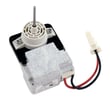
| Warm refrigerator, freezer OK | Evaporator airflow | Refrigerator motor 242077705 |
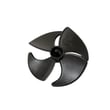
| Fan noise, weak airflow | Fan blade damage/ice contact | Refrigerator evaporator fan blade 242219302 |
| Poor heat removal, hot cabinet sides | Condenser airflow | Refrigerator condenser fan motor 242018301 |
A top-mount refrigerator like the FFHT1831QQ2 relies on steady airflow from the freezer to cool the fresh food section. When airflow is restricted (ice buildup, blocked vents, weak fan) or heat cannot leave the condenser area, the refrigerator section is usually the first place temperatures rise.
Last updated: February 2026
What is the average lifespan of a Frigidaire refrigerator?
Most Frigidaire refrigerators average 10 to 15 years of service life. For your Frigidaire FFHT1831QQ2 top-mount refrigerator, consistent basics like correct temperature settings, good door sealing, and clean airflow help you reach the high end of that range; heavy use and poor ventilation shorten it.
A refrigerator’s life is mostly driven by compressor run time, heat removal, and how well the doors seal.
- 10 to 15 years is the typical average for a Frigidaire refrigerator
- 15+ years is common when the condenser area stays clean and doors seal tightly
- Frequent door openings and warm kitchens increase run time and wear
- Poor door sealing causes long run cycles and moisture issues
- Fan noise or weak cooling often points to airflow parts (evaporator or condenser fan)
Use these habits to reduce strain on the sealed system and fans.
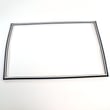
- Keep the refrigerator and freezer doors closing squarely; replace worn gaskets when they leak (for example, Frigidaire refrigerator door gasket (white) 242193206)
- Avoid overpacking; leave space for air circulation in both compartments
- Set controls to the recommended starting point and adjust gradually (give changes about 24 hours to stabilize)
- If you have an ice maker connected, make sure the water line is installed correctly and does not leak (see installation guide)
- If cooling is uneven or you hear a squeal or grinding, inspect the evaporator fan area; a common replacement is the refrigerator motor 242077705
| Symptom | Often fixable? | Common area to check |
|---|---|---|
| Doors sweating, frost near door | Yes | Door gasket, door alignment |
| Warm refrigerator, freezer OK | Yes | Airflow (evaporator fan), vents |
| Both sections warm, compressor runs a lot | Sometimes | Condenser airflow, sealed system |
| Loud chattering when ice maker is ON but no water supply | Yes | Water supply connection and valve setup |
A refrigerator that runs longer than necessary uses more electricity and wears out the compressor and fan motors faster. Simple maintenance and sealing issues are the difference between a 10-year refrigerator and a 15-year refrigerator.
For model-specific operating guidance (cool-down period, control settings, and ice maker expectations), follow the owner's manual.
Last updated: February 2026