Error Codes




What is the life expectancy of a KitchenAid oven?
A KitchenAid electric wall oven like model KODC304ESS01 typically lasts 15 years with normal household use. Consistent cleaning, avoiding heavy slamming of the door, and fixing heating or fan issues early helps the oven reach its full service life.
Most built-in electric wall ovens fall into a fairly consistent lifespan range.
- Typical lifespan: 15 years
- Common real-world range: 10 to 20 years
- Most likely early failures: heating circuits, cooling fan, electronic controls
- Most likely wear items: door bumpers, light bulbs, door hardware
| Appliance type | Typical life expectancy | Notes |
|---|---|---|
| Electric wall oven (built-in) | 15 years | Electronics and heat-related parts drive most repairs |
| Electric double wall oven | 15 years | More components means more potential wear points |
These are the biggest factors we see affecting longevity on electric double wall ovens.
- High-heat cooking and frequent self-clean cycles increase heat stress on wiring and controls
- Poor airflow around the cabinet can overheat the cooling system
- A weak door seal can cause longer heat-up times and extra strain on components
- Power surges can damage control boards and display electronics
- Promptly replacing failed wear parts prevents secondary damage
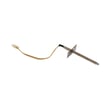
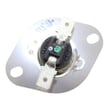
If the oven struggles to heat, cooks unevenly, or runs hot around the control area, these parts are common checkpoints.
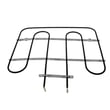
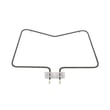
- Range bake element WPW10207398 (lower-oven heating performance issues)
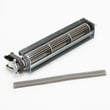
- Oven blower assembly WPW10176670 (cooling fan noise, overheating, shutdowns)
- Wall oven light bulb WPW10169757 (interior light out)
- Range oven door bumper W10105790 (door closing harshly, vibration, alignment feel)
Knowing the typical lifespan helps you decide whether a repair is a smart investment. On a 15-year appliance, replacing a single failed part (like a bake element or blower) often restores reliable performance for years.
Last updated: January 2026
How do I reset my KitchenAid wall oven?
To reset your KitchenAid KODC304ESS01 electric double wall oven, we recommend doing a hard power reset: turn the oven off, switch the circuit breaker OFF for 1 minute, then turn it back ON and set the clock. This clears many control glitches.
- Press Cancel/Off to stop any active cooking cycle.
- Turn both oven breakers OFF (double wall ovens are typically on a 240V, 2-pole breaker).
- Wait 60 seconds.
- Turn the breaker(s) back ON.
- Set the clock, then test Bake for a few minutes.
These checks help confirm whether the issue is power, the user interface, or a control problem.
- Confirm the breaker is fully ON (flip OFF then ON again).
- Check for a tripped GFCI outlet if your installation uses one.
- If the oven is in Control Lock, hold the lock key (or follow the control panel prompt) to unlock.
- If the oven was in Self-Clean, allow it to cool; the door can stay locked until temperatures drop.
- If the cooling fan runs but the display stays dead, inspect wiring connections and harness plugs.
If the oven powers up but behaves erratically (random beeps, keys not responding, stuck in a mode), these model-listed parts are often involved.
| Symptom after reset | Common area to check | Example part for KODC304ESS01 |
|---|---|---|
| Keys do not respond or act “stuck” | Touch panel / membrane | Membrane assembly (black) W10694995 |
| Display issues or odd characters | Display board / UI electronics | Maxwell 24bi WPW10752316 |
| Oven seems dead or intermittent | Main wiring connections | Main harness W11157777 |
A proper breaker reset restores the electronic control to a known good startup state. If the oven immediately fails again, the pattern of symptoms helps pinpoint whether the problem is power supply, the user interface, or a control and wiring issue.
Last updated: January 2026
Are KitchenAid wall ovens good?
KitchenAid wall ovens, including the KitchenAid KODC304ESS01 electric double wall oven, are a strong choice for most kitchens because they typically deliver even baking, solid convection performance, and a premium fit and finish. Like many built-in ovens, performance depends heavily on correct installation, calibration, and keeping key heating and airflow parts in good condition.
When customers say a wall oven is “good,” they usually mean it checks these boxes:
- Even cooking across racks (especially in convection bake)
- Stable temperatures after preheat
- Reasonable preheat time for the cavity size
- Quiet, reliable cooling airflow to protect controls and cabinetry
- Durable door seal and hinges for consistent heat retention
KitchenAid wall ovens are generally well-regarded, but a few themes come up across many models.
| Area | What’s typically good | What can frustrate owners |
|---|---|---|
| Baking results | Even browning, consistent roasting | Hot spots if racks/pans block airflow |
| Convection | Faster, more even cooking | Fan noise or fan-related service needs |
| Preheat | Strong heat output once running | Preheat can feel slow on larger cavities |
| Temperature accuracy | Good after calibration | May need calibration if it seems off |
Many “bad oven” complaints trace back to a few fixable issues.
- Verify you are using the correct mode (Bake vs Convection bake) and rack position
- Avoid covering racks with foil (it disrupts airflow and heat distribution)
- If preheat is slow or temps swing, inspect the lower bake element for blisters, cracks, or burn marks
- If the oven runs hot on the outside or shuts down, the cooling fan system may be struggling
- If the door does not close firmly, heat loss can mimic temperature problems
For the KODC304ESS01, these parts are commonly involved in heating and airflow symptoms:
A wall oven is built into cabinetry, so stable temperatures and proper cooling are critical for cooking results and for protecting the control area. Keeping the bake element, door seal contact points, and blower system working correctly is what makes a “good” oven stay good over time.
Last updated: January 2026