Installation guide
 Owner’s manual
 Error Codes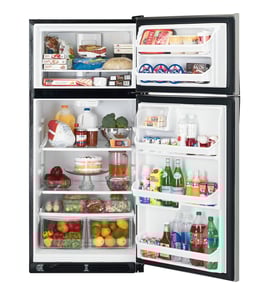



What is the top part of a refrigerator called?
In a top-mount refrigerator like the White-Westinghouse WWTR1821QW4A, the top section is the freezer compartment. It’s the area designed to keep foods frozen, and it often contains the ice tray or optional ice maker components.
What the freezer compartment does
The freezer’s job is to maintain temperatures cold enough for long-term frozen storage and to support ice production (manual ice trays or an ice maker, if equipped).
Common freezer functions include:
- Freezing and storing meats, vegetables, and prepared foods
- Keeping ice cream and frozen desserts firm
- Making ice (tray or ice maker, depending on configuration)
- Providing cold air that helps cool the fresh food section (through internal airflow)
Quick refrigerator section names (top-mount style)
| Location | Common name | What it’s for |
|---|---|---|
| Top | Freezer compartment | Frozen food storage, ice |
| Bottom | Fresh food compartment (refrigerator section) | Chilled food storage |
| Inside doors | Door bins/racks | Condiments, bottles, small items |
Why it matters
Knowing the correct section name helps when you’re adjusting temperature controls, describing a cooling problem, or ordering the right replacement parts for shelves, gaskets, or drawers.
For model-specific layout and control details, we recommend checking the owner's manual.
Last updated: February 2026
How to reset Westinghouse fridge?
For the White-Westinghouse WWTR1821QW4A top-mount refrigerator, a “reset” usually means power-cycling the control to clear a temporary glitch or silencing an alarm. Unplug the refrigerator (or switch off the breaker) for 5 minutes, restore power, then allow 24 hours for temperatures to fully stabilize; use the WWTR1821QW4A owner's manual for any model-specific button sequences.
Quick reset options (most common)
- Control reset (power cycle): Unplug for 5 minutes, then plug back in.
- Alarm reset: Press the alarm reset button (if your unit has one) until the alarm stops.
- Cooling performance reset: After power is restored, set controls to the recommended mid-range setting and wait 24 hours.
- Door-related alarms: Make sure both doors close fully and gaskets seal all the way around.
Step-by-step: power-cycle reset
- Move perishable food to a cooler if the doors will be open for long.
- Turn the temperature controls to a normal setting (not “off”).
- Unplug the refrigerator or turn off the circuit breaker.
- Wait 5 minutes (this lets the control board fully discharge).
- Restore power and listen for the compressor and fans to restart.
If the “reset” is for a beeping alarm
Use this checklist to stop repeat alarms:
- Confirm the doors are closing and not blocked by bins or shelves.
- Check for frost buildup in the freezer that can hold the door open slightly.
- Inspect the door seal for gaps, tears, or hardened sections.
- If the seal is damaged, replacing the gasket often fixes recurring door-ajar alarms.
| Symptom | Most likely cause | What to do next |
|---|---|---|
| Beeping after a power outage | Power interruption alarm | Power-cycle, then wait for temps to recover |
| Beeping when doors look closed | Door not sealing | Clean gasket, check alignment, inspect gasket |
| Warm fridge, freezer OK | Airflow issue | Check vents, avoid overpacking, verify fan operation |
Why it matters
Resetting clears minor control glitches, but it does not fix underlying airflow, sealing, or cooling problems. If alarms return or temperatures stay unsafe after 24 hours, use the troubleshooting steps in the WWTR1821QW4A owner's manual and inspect common wear items like door gaskets.
Last updated: February 2026
Why is my Westinghouse fridge not cold?
If your White-Westinghouse WWTR1821QW4A refrigerator is not cold, the most common causes are poor airflow (evaporator fan not running), heavy frost blocking the evaporator (defrost problem), dirty condenser, or a door seal leak. Start by confirming the freezer is cold and that air is moving into the fresh-food section.
Quick checks we recommend first
- Make sure the temperature controls are not set to “warm” or “off” (check the control location in the WWTR1821QW4A owner's manual).
- Listen for the evaporator fan in the freezer; it should run when the compressor is running and the door switch is closed.
- Look for heavy frost on the freezer back wall (a sign of a defrost system issue).
- Clean dust from the condenser area and confirm the condenser fan (if equipped) is running.
- Check that vents between freezer and refrigerator are not blocked by food packages.
- Inspect door gaskets for gaps, tears, or areas that do not seal.
What the symptoms usually mean
| What you notice | Most likely issue | What to do next |
|---|---|---|
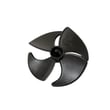
| Freezer cold, fridge warm | No airflow to fresh-food section | Check evaporator fan and air passages; consider replacing the refrigerator evaporator fan motor 242077705 if it is not running. |
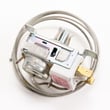
| Frost/ice sheet on freezer back wall | Defrost system problem | Test defrost heater and defrost thermostat; common replacements include refrigerator defrost heater 242044008 and refrigerator defrost bi-metal thermostat 5303918634. |
| Both sections warm, compressor runs a lot | Dirty condenser or sealed system issue | Clean condenser; if no improvement, service may be needed. |
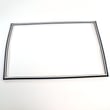
| Moisture, warm spots near door, or frequent cycling | Door not sealing | Inspect and reshape gasket; replace if torn (example: frigidaire refrigerator door gasket (white) 242193206). |
Why airflow and defrost problems matter
In a top-mount refrigerator like the WWTR1821QW4A, the freezer makes the cold air and the evaporator fan pushes that air into the refrigerator compartment. If the fan stops or frost builds up on the evaporator, cold air cannot circulate, so the fridge warms up even if the freezer still feels somewhat cold.
Helpful DIY guidance
If you suspect a fan issue, we recommend following a step-by-step troubleshooting guide such as how to fix your evaporator cooling fan.
Last updated: February 2026
What is the common fault in the Westinghouse fridge?
In the White-Westinghouse WWTR1821QW4A top-mount refrigerator, the most common “faults” we see are cooling problems (warm fridge or freezer), frost or ice buildup from defrost issues, and water leaks from a clogged defrost drain or a poor door seal. Use the owner's manual to match symptoms to the correct checks.
Most common problems and what they usually point to
- Not cooling or weak cooling: airflow problem (blocked vents), dirty condenser area, or a failed fan motor
- Frost or ice buildup (especially on the back wall): defrost system issue (heater, thermostat) or door not sealing
- Water leaking inside or onto the floor: clogged/iced defrost drain, cracked drain pan, or door gasket not sealing
- Noisy operation: fan blade rubbing ice, worn fan motor, or items vibrating against the cabinet
- Lights out but cooling OK: failed bulb or door switch issue
Quick checks you can do first (no tools)
- Set temps to typical targets: 37°F fresh food and 0°F freezer.
- Make sure vents are not blocked by food packages.
- Confirm both doors close easily and stay closed; do the paper-strip test around the gasket.
- Listen for the evaporator fan: it should run when the compressor runs (door switch held closed).
- Look for frost patterns: heavy frost behind the freezer panel usually means a defrost problem.
Parts that commonly solve these symptoms on this model
| Symptom | Common suspect part | Example part on this page |
|---|---|---|
| Warm fridge/freezer, poor airflow | Evaporator fan motor | Refrigerator evaporator fan motor 242077705 |
| Frost buildup, warm temps after a few days | Defrost heater or defrost thermostat | Refrigerator defrost heater 242044008, refrigerator defrost bi-metal thermostat 5303918634 |
| Water on floor or under crisper | Drain issue (often clog/ice) | Check drain path per installation guide |
| Door not sealing, moisture/frost | Door gasket | Frigidaire refrigerator door gasket (white) 242193206 |
Why it matters
Cooling, frost, and leaks are usually connected: restricted airflow or a failed defrost system can cause ice buildup, which then blocks the drain and leads to puddles. Fixing the root cause prevents repeat failures and food spoilage.
Last updated: February 2026