Owner’s manual
 Error Codes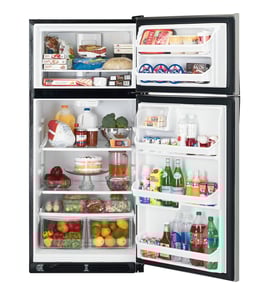



What are the most common issues with 25368973801?
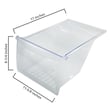
For Kenmore top-mount refrigerator model 25368973801, the most common problems we see are warm temperatures (fresh food or freezer), frost buildup on the evaporator cover, door sealing issues that cause sweating or icing, and interior light or airflow complaints. Use the owner's manual for model-specific operating and care checks.
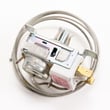
- Refrigerator warm, freezer OK: restricted airflow or a stuck/blocked damper; check the refrigerator air damper 241542001.
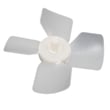
- Freezer warm, refrigerator warm: evaporator fan not moving air, dirty condenser area, or sealed-system trouble; the refrigerator evaporator fan motor 241854301 and refrigerator evaporator fan blade 5308000010 are common airflow-related suspects.
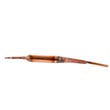
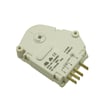
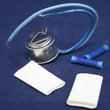
- Heavy frost on back freezer panel: defrost system issue; the refrigerator defrost bi-metal thermostat 5303918202 is a common part in that circuit.
- Moisture, sweating, or ice around doors: torn, loose, or hardened door gasket; see refrigerator gasket 242193213 (and color-specific gaskets may also apply).
- Door not closing or sagging: hinge wear; inspect bushings like refrigerator door hinge bushing 5304507146.
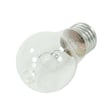
- Light out: bulb failure; replace with the refrigerator light bulb 316538904.
- Set temps to typical targets: 0°F freezer, 37°F fresh food.
- Confirm vents are not blocked by food packages.
- Listen for the evaporator fan when the freezer door switch is held closed.
- Inspect door gaskets for gaps; do the paper-strip pull test around the perimeter.
- Clean dust from the condenser area (unplug first).
| Symptom | Most likely area | Example part on this model page |
|---|---|---|
| Fresh food warm, freezer cold | Airflow/damper | Refrigerator air damper 241542001 |
| Both sections warm | Fan airflow | Refrigerator evaporator fan motor 241854301 |
| Frost blanket on freezer panel | Defrost control | Refrigerator defrost bi-metal thermostat 5303918202 |
| Condensation or icing at door | Door seal | Refrigerator gasket 242193213 |
| Door sag/misalignment | Hinges/bushings | Refrigerator door hinge bushing 5304507146 |
Temperature and frost issues usually start as airflow or sealing problems; fixing them early helps protect food, reduce compressor run time, and prevent ice buildup that can block vents and fans.
Last updated: March 2026
What is the ER if code on a Kenmore Elite?
On Kenmore model 25368973801, an ER IF code indicates an airflow problem in the freezer, most often tied to the evaporator fan not moving enough cold air. This can lead to warm freezer temperatures, poor refrigerator cooling, and frost buildup that blocks vents.
- Unplug the refrigerator for 5 minutes, then restore power to clear a temporary control glitch.
- Make sure packages are not blocking the freezer air vents or the return vents.
- Listen for the evaporator fan running when the compressor is on (a stalled fan is a common trigger).
- Check the back freezer panel for heavy frost, which points to a defrost airflow restriction.
- Confirm temperature controls are set correctly; allow 8 to 12 hours for temperatures to stabilize after changes.
These are model-matched parts that affect freezer airflow and icing:
- Refrigerator evaporator fan motor 241854301 (drives airflow across the evaporator)
- Refrigerator evaporator fan blade 5308000010 (moves air; can crack or slip)
- Refrigerator defrost bi-metal thermostat 5303918202 (helps control defrost to prevent ice blockage)
- Door gasket issues can also cause frost from warm air leaks (this model has gasket options in the parts list).
| What you notice | Most likely cause | What to do next |
|---|---|---|
| Freezer warm and no fan sound | Evaporator fan motor not running | Inspect fan area for ice, test motor |
| Fan noisy or rubbing | Fan blade damaged or ice contact | Clear ice, replace blade if warped |
| Heavy frost on back freezer panel | Defrost problem restricting airflow | Check defrost components |
| Temps drift after loading food | Vents blocked, doors opened often | Improve airflow, allow cooldown |
This refrigerator relies on steady airflow to keep both compartments at the right temperature. When airflow drops, the freezer warms first and the refrigerator section often follows.
For temperature control guidance and airflow tips for Kenmore 25368973801, use the 25368973801 owner’s manual.
Last updated: January 2026
What is the upper part of a fridge called?
On the Kenmore 25368973801 top-mount refrigerator, the upper section is the freezer compartment. It’s the coldest area of the appliance and is designed to keep foods frozen solid and store frozen items safely long-term; some models also support an ice maker.
- Maintains temperatures cold enough to keep food frozen
- Circulates cold air (you may hear the evaporator fan moving air)
- Supports freezing new items faster when airflow is not blocked
- On some models, provides space for an automatic ice maker
The freezer works best when air can move around packages.
- Avoid adding too much warm food at once (it slows freezing)
- Leave space between packages for airflow
- Keep vents clear so cold air can circulate
- Store hard-to-freeze items (like ice cream) deeper inside, not on the door
| Where you store it | Best for | Why |
|---|---|---|
| Freezer interior | Ice cream, juice concentrates, long-term storage | Most stable temperature |
| Freezer door shelves | Items that tolerate temperature swings | Door warms slightly when opened |
When the freezer is overloaded or vents are blocked, the freezer temperature rises and the refrigerator section can also warm up. Good airflow helps the evaporator fan and defrost system keep both compartments at the right temperatures.
For model-specific features and compartment details, use the 25368973801 owner's manual.
Last updated: January 2026