Owner’s manual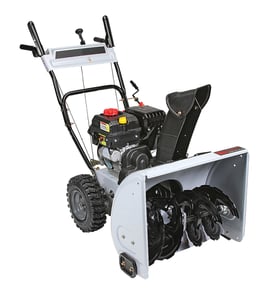


Is a 2 stage or 3 stage snowblower better?
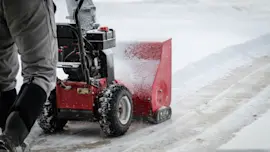
A 2-stage snowblower is the better choice for most homeowners because it handles typical driveway snow efficiently with fewer moving parts. A 3-stage snowblower is better when you regularly face deep, heavy, wet, or icy snow and want faster intake and throwing performance.
Both types are designed for heavier snow than a single-stage machine.
- 2-stage: an auger pulls snow in, then an impeller throws it out the chute.
- 3-stage: adds an accelerator (a fast-spinning intake) ahead of the auger to break up and feed snow faster.
- Bottom line: 3-stage increases throughput in tough conditions; 2-stage is the practical all-around pick.
For operating and safety basics (including safe unclogging and visibility guidance), follow the owner's manual.
Use this quick guide:
- 2-stage is best for most paved driveways, moderate to heavy snowfall, and typical residential use.
- 3-stage is best for frequent deep drifts, wet end-of-driveway plow berms, and icy or compacted snow.
- Choose 2-stage if you value easier maintenance, lower cost, and simpler service.
- Choose 3-stage if you value speed and maximum snow-moving capacity.
| Feature | 2-stage | 3-stage |
|---|---|---|
| Snow intake speed | High | Very high |
| Best for icy, dense snow | Good | Excellent |
| Complexity and service | Lower | Higher |
| Typical weight | Lighter | Heavier |
The “better” machine is the one that matches your snow type and workload. Oversizing can mean extra weight and upkeep; undersizing can mean clogging, slower clearing, and more strain on belts, cables, and the drive system.
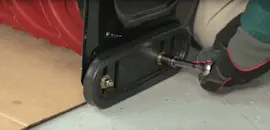
If you are maintaining an MTD E660G, common wear items that affect performance include skid shoes, shave plates, and drive/auger belts. Keeping those adjusted and in good shape helps any 2-stage style machine throw snow consistently.
Last updated: February 2026
What are common gas snow blower problems?
Common problems on the MTD E660G gas snowthrower include a no-start condition (often fuel or ignition related), rough or erratic running, loss of power, excessive vibration, the unit not propelling, and the auger or chute not discharging snow due to a clog, jam, or drive issue. For model-specific troubleshooting steps and safety warnings, use the owner's manual.
- Engine fails to start: empty or stale fuel, blocked fuel line, choke not set, spark plug issue, primer not used, shut-off valve closed (if equipped)
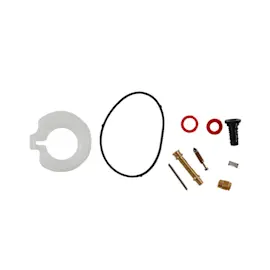
- Engine runs erratic: stale fuel, carburetor adjustment, spark plug wire loose, running on choke too long
- Loss of power/overheating: plugged exhaust, incorrect fuel mixture, carburetor not adjusted properly
- Excessive vibration: loose fasteners, damaged auger, foreign object impact
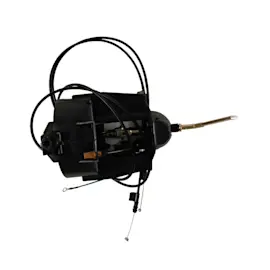
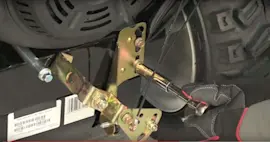
- Won’t propel: drive cable out of adjustment, drive belt loose or damaged
- Won’t discharge snow: discharge chute clogged, foreign object lodged in auger, drive cable out of adjustment, drive belt loose or damaged
Before you inspect anything, disengage the clutch levers, stop the engine, wait for all moving parts to stop, then disconnect and ground the spark plug wire (this is the safety procedure called out in the manual).
- Confirm fresh fuel and the fuel shut-off is open (if equipped)
- Set choke correctly for a cold start; do not keep running on choke once warm
- Check the spark plug wire is firmly connected
- Clear packed snow from the intake and chute (engine off)
- Inspect for loose bolts and screws; tighten as needed
| Problem you see | Most likely cause | Typical fix |
|---|---|---|
| Auger won’t turn | Shear bolts sheared after hitting ice/object | Replace shear bolts and lock nuts per the manual |
| Poor scraping, leaves snow behind | Worn shave plate or skid shoes | Replace and adjust height for your surface |
| Won’t throw snow far | Chute clog or belt/cable issue | Clear chute; check belt tension and cable adjustment |
| Shaking/vibration | Loose hardware or damaged auger | Tighten hardware; inspect auger/impeller for damage |
These issues are usually tied to safety and performance. A clogged chute or jammed auger can overload belts and cables, and loose hardware can lead to excessive vibration. The manual also calls out that shave plates and skid shoes are wear items and should be checked and replaced as needed.
Last updated: February 2026
What is code 660?
On an MTD E660G gas snowthrower, “660” is the model number, not an error code. We use E660G to identify the correct parts list, diagrams, and service information for your specific snowblower; see the owner's manual for model coverage and parts breakdowns.
E660G is the model identifier used across the parts list for multiple related models (for example, E600E, E610E, E640F, E660F, E6COF, and E660G). That matters because parts like belts, skid shoes, and gearbox components can vary by model and housing width.
Most MTD snowblowers of this type do not display numeric “error codes” like a furnace or washer. If your machine is not working correctly, use these quick checks first:
- Confirm the engine starts and runs smoothly (fresh fuel, choke use, throttle setting)
- Inspect the auger and drive belts for glazing, cracking, or slack
- Check the auger engagement cable for proper tension and free movement
- Look for broken shear pins or jammed auger/impeller from ice buildup
- Verify skid shoes and shave plate are not worn down into the housing
Here is how the numbers are typically used:
| What you see | What it usually means | Example on E660G |
|---|---|---|
| Model number | Identifies the machine | E660G |
| Part number | Identifies a replacement part | 754-0430A (belt) |
| Part ID | Sears PartsDirect identifier on some listings | 33329H (starter kit) |
Using the correct model number prevents ordering the wrong belt, shave plate, or gearbox parts. For example, the manual notes belts are designed to engage and disengage safely; using the correct, model-matched belt helps the auger and drive systems operate as intended.
Last updated: February 2026
What is the typical lifespan of a gas snowblower?
A gas snowblower like the MTD E660G typically lasts 10 to 15 years with normal residential use and routine maintenance; heavy use, poor storage, and skipped service can shorten that. Consistent off-season storage and periodic checks called out in the owner's manual help you reach the full life of the engine and drive system.
- Fuel care: fresh gasoline, avoid stale fuel, and use stabilizer for storage periods.
- Storage habits: clear snow from the machine before storing to prevent freeze-up.
- Wear parts condition: belts, skid shoes, and shave plate wear faster with gravel, uneven pavement, and frequent use.
- Cable and clutch adjustment: improper engagement can accelerate belt and drive wear.
- Rust prevention: keeping springs, cables, and moving parts clean and protected reduces corrosion-related failures.
Use this as a simple annual plan for your E660G:
| When | What to do | Why it matters |
|---|---|---|
| Each season | Inspect clutch controls and cable operation | Prevents slipping, overheating, and premature belt wear |
| Each use | Clear packed snow; check for abnormal vibration | Reduces freeze-up and catches damage early |
| Before storage | Run the unit briefly to clear snow; store away from ignition sources | Prevents frozen auger/impeller and improves safety |
| As needed | Replace worn wear items | Restores scraping height and protects the housing |
These issues often mean a part replacement or adjustment, not end-of-life:
- Snowblower does not propel well (often drive cable adjustment or a worn friction disc).
- Auger/impeller does not move snow well (belt wear, clog, or shear bolt issue).
- Excessive vibration (loose hardware or auger damage; stop and inspect immediately).
If you are seeing poor snow pickup or scraping, check wear items like the shave plate 790-00120-0637 and skid shoe 784-5580-0637 first.
A snowblower’s “lifespan” is usually limited by preventable wear: stale fuel problems, corrosion during storage, and running with loose or misadjusted drive components. Staying on top of those items keeps the engine, auger/impeller, and drive system working reliably for years.
Last updated: February 2026