Owner’s manual
 Error Codes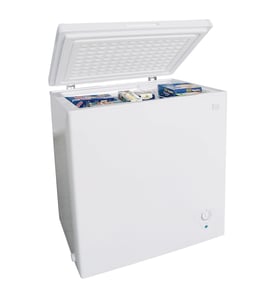




Can you reset a chest freezer?
Yes. On the Kenmore 25312502410 chest freezer, the practical “reset” is a power reset: unplug the freezer (or switch off the breaker) for about 30 seconds, then restore power and allow the control to restart. If indicator lights keep blinking afterward, a repair is likely needed.
How to do a safe reset (power reset)
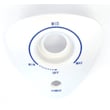
- Turn the temperature control to OFF (if your model has an OFF position).
- Unplug the freezer from the wall outlet (preferred) or turn off the circuit breaker.
- Wait 30 seconds.
- Restore power, then set the control back to your normal setting.
- Allow several hours for temperatures to stabilize after any adjustment.
For control location and normal operation details, use the 25312502410 use & care manual.
If lights blink or the freezer still will not run
A power reset helps clear minor control glitches, but it will not fix a failed component. Check these common causes first:
- Loose plug, tripped breaker, or blown house fuse
- Temperature control accidentally set to OFF
- Outlet issue (especially if on a GFCI circuit)
- Lid not sealing well, causing long run times and temperature issues
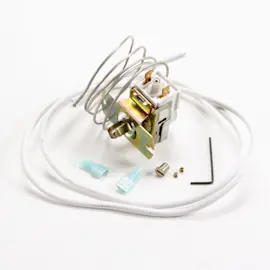
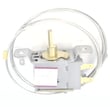
If you suspect the temperature control is not cycling the compressor correctly, the frigidaire freezer temperature control thermostat 5304476700 is the model-matched part to check.
Quick reference: reset vs. normal cool-down
| Situation | What to expect | What to do |
|---|---|---|
| After a reset or power outage | Compressor may restart after a short delay | Keep lid closed; wait and monitor |
| After plugging in from warm | Unit may run continuously at first | Allow about 4 hours to cool down |
| Lights keep blinking | Likely a fault condition | Proceed to troubleshooting or service |
Why it matters
Resetting correctly prevents unnecessary part replacement and helps you tell the difference between a temporary control issue and a real failure (thermostat, indicator light, wiring, or power supply).
Last updated: January 2026
How big is a 7 ft chest freezer?
A “7 ft” chest freezer usually means about 7.0 cubic feet of storage, not a 7-foot-long cabinet. For Kenmore model 25312502410, the exact exterior dimensions are not identified in the model-specific information we have; use the capacity and required clearances in the 25312502410 use & care manual to plan placement.
What “7 ft” typically means
Most shoppers and listings use “7 ft” as shorthand for 7 cubic feet (cu. ft.) of capacity.
- Capacity is the inside storage volume.
- Exterior size varies by brand and design (hinges, insulation thickness, lid overhang).
- Two 7.0 cu. ft. chest freezers can have different width and depth.
- Plan for airflow space around the cabinet, not just the footprint.
Planning space for Kenmore 25312502410
Our manual guidance for this model family calls for air circulation clearance around the freezer.
- Leave about 4 inches of space on all sides for circulation.
- Place it near a grounded outlet; avoid extension cords.
- Keep it where ambient temperature stays within normal operating range.
- Level the freezer so the lid seals correctly.
Quick sizing guide (what to measure)
Use this checklist when you are comparing a “7 cu. ft.” chest freezer to your available space:
| What to measure | Why it matters |
|---|---|
| Width (left to right) | Determines if it fits between walls/cabinets |
| Depth (front to back) | Affects walkway clearance and lid overhang |
| Height (floor to lid top) | Impacts under-shelf placement |
| Lid swing clearance | Ensures the lid opens fully |
Why it matters
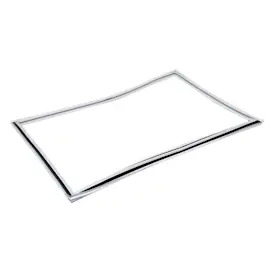
Capacity tells you how much food you can store; dimensions and clearances determine whether the freezer will run efficiently and whether the lid gasket can seal properly. If you are troubleshooting frost or warm temps caused by a poor seal, inspecting the freezer lid gasket 5304489972 is a smart next step.
Last updated: January 2026
How to clean condenser coils in chest freezer?
For Kenmore chest freezer model 25312502410, we recommend unplugging the freezer, then gently removing dust from the condenser area with a vacuum brush or coil brush. Keeping this area clean helps the compressor shed heat efficiently and can improve cooling performance.
Where the coils are (and what to expect)
On many chest freezers, the condenser tubing is underneath or along the outer cabinet rather than a large, exposed “radiator-style” coil. Your model’s exact coil layout can vary by production design, so use the safety and care guidance in the 25312502410 use & care guide when accessing the condenser area.
Step-by-step: cleaning the condenser area
- Unplug the freezer (do not use an extension cord when restoring power).
- Pull the freezer away from the wall to get working room.
- Vacuum the lower rear and bottom area (use a soft brush attachment).
- If you can see coil tubing or a grille, brush lightly, then vacuum again.
- Wipe the exterior cabinet surfaces and let everything dry.
- Restore the 4-inch clearance on all sides for airflow.
Tools and supplies
| Item | Why we use it | What to avoid |
|---|---|---|
| Vacuum with brush tool | Removes dust without bending components | High-pressure air that drives dust deeper |
| Coil/soft bristle brush | Loosens packed lint | Stiff wire brushes |
| Mild detergent + cloth | Cleans cabinet surfaces | Harsh cleaners or abrasives |
How often to clean
- Normal homes: every 6 to 12 months
- Pets or dusty areas: every 3 to 6 months
- After moving the freezer or remodeling
Why it matters
A dusty condenser area traps heat, which can make the compressor run longer, raise energy use, and contribute to warmer internal temperatures.
Last updated: January 2026
How to diagnose chest freezer not working?
If your Kenmore chest freezer model 25312502410 is not working, start by confirming it has steady power, the temperature control is not set to OFF, and the lid is sealing. Then listen for compressor sounds and check for conditions that force long run times. See the 25312502410 use & care manual for model-specific troubleshooting steps.
Quick checks first (no tools)
- Confirm the outlet works by plugging in a lamp or small appliance.
- Make sure the freezer plug is fully seated; avoid extension cords.
- Check the house breaker or fuse; reset or replace if needed.
- Verify the temperature control is not set to OFF (allow several hours after changes).
- Keep the lid closed as much as possible; frequent openings quickly warm the cabinet.
What you hear and see can narrow it down
- No sound at all: likely power issue, control set to OFF, or an electrical/control problem.
- Runs constantly but not cold enough: warm room, recent loading of warm food, lid not sealing, or airflow/heat transfer issues.
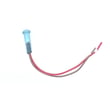
- Green power light is out: power problem; if the freezer seems to run, the indicator light itself may be failed.
Parts to consider for this model (when symptoms point there)
If basic checks do not restore operation, these model-compatible parts are common suspects:
- Temperature not responding to control changes: frigidaire freezer temperature control thermostat 5304476700
- Lid not sealing, frost or moisture around the rim, long run times: freezer lid gasket 5304489972
- Power light not illuminated (but power is confirmed): freezer indicator light 5304492852
Symptom-to-likely-cause guide
| Symptom | Most likely checks | What to do next |
|---|---|---|
| Dead, no lights/no sound | Outlet, breaker/fuse, control set to OFF | Restore power; then recheck cooling after 4 hours |
| Runs too long | Hot room, warm food load, lid opened often, gasket leak | Improve conditions; inspect/replace gasket if leaking |
| Too warm inside | Control set too warm, lid not seating | Adjust control; confirm lid alignment and seal |
Why it matters
A chest freezer can take about 4 hours to cool down after being started or after major temperature changes. Diagnosing with the lid opened frequently can mimic a “not cooling” failure and lead to unnecessary parts replacement.
Last updated: January 2026