Owner’s manual
 Error Codes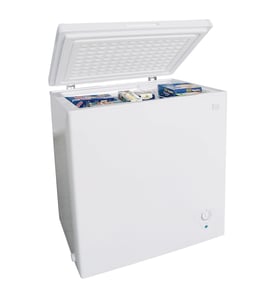



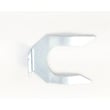

Can I look up Frigidaire parts by model number?
Yes. Looking up parts by model number is the most accurate way to get compatible replacement parts for your Frigidaire chest freezer model FFFC16M5QWA, because the parts list is tied to the exact configuration of that freezer. Use the full model number from the data tag, then confirm the part name and part ID before ordering.
How to find and use the model number
We recommend using the complete model number exactly as shown on the freezer’s model and serial tag, then matching it to the parts list for that model.
- Write the model number exactly (letters and numbers, no spaces)
- Use the model number to open the correct parts breakdown for your freezer
- Match the part by part name and part ID, not just by appearance
- Cross-check symptoms with the troubleshooting section in the owner's manual
- Keep your serial number handy in case there are production variations
What you can find once you search by model
Searching by FFFC16M5QWA helps you narrow down common chest freezer parts such as temperature controls, switches, gaskets, and sealed-system components.
| What you need | What to match | Example from this model’s parts list |
|---|---|---|
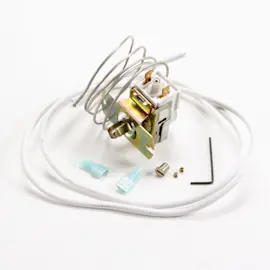
| Temperature adjustment issue | Control and knob | Temperature control 297216043; temperature control knob 216707200 |
| Lid light or “open lid” behavior | Door/lid switch | Freezer door switch 216822900 |
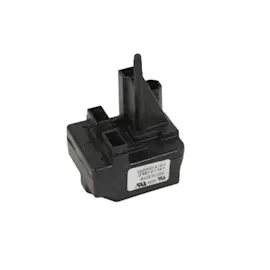
| Compressor will not start | Start/overload components | Compressor overload and relay clamp 216954300 |
Why it matters
Chest freezers often have similar-looking components across model families, but wiring, mounting, and temperature control ranges can differ. Using the exact model number reduces returns and helps ensure the freezer cools correctly after the repair.
Helpful tip for part selection
If you are troubleshooting a no-cool or warm-freezer complaint, we use the owner's manual to confirm the temperature control is not set to OFF/POWER OFF and to review basic “does not run” checks before replacing parts.
Last updated: February 2026
Where is the model number on a Frigidaire chest freezer?
On a Frigidaire chest freezer like model FFFC16M5QWA, the model number label is typically on the left exterior wall, positioned above the access panel. We recommend confirming it against the identification section in the owner's manual so you record the full model and serial number correctly.
What to look for on the label
The model/serial tag is usually a printed sticker or metal plate. Check for:
- MODEL (example: FFFC16M5QWA)
- SERIAL (a longer alphanumeric code)
- Electrical ratings (volts/amps)
- Refrigerant information
- Bar code or QR-style code
Quick location guide (chest vs. upright)
| Freezer type | Most common model number location | When you can see it |
|---|---|---|
| Chest freezer | Left exterior wall above the access panel | With the lid closed or open |
| Upright freezer | Interior side trim | When the door is open |
Tips to find it fast
- Use a flashlight and look along the left outside side panel near the lower area.
- If the freezer is close to a wall, pull it forward a few inches for a clear view.
- Wipe dust off the label gently so the characters are readable.
- Write the model number exactly as shown (letters and numbers matter).
Why it matters
The model number is what we use to match the correct Frigidaire parts and diagrams for your freezer, including items like the temperature control 297216043 or the freezer door switch 216822900 when troubleshooting cooling or lid switch issues.
Last updated: February 2026
What are the parts of a chest freezer?
A Frigidaire chest freezer like model FFFC16M5QWA is built around a sealed refrigeration system (compressor, condenser, evaporator, and refrigerant tubing) plus user and safety components such as the temperature control, lid/door sealing parts, and interior storage baskets.
Main parts you will find in a chest freezer
These are the core components that make the freezer cool and stay cold:
- Compressor: pumps refrigerant through the sealed system to move heat out of the cabinet.
- Condenser coil: releases heat to the room as refrigerant condenses.
- Evaporator (cooling coil): absorbs heat from inside the freezer to create freezing temperatures.
- Refrigerant tubing (capillary tube/lines): meters and routes refrigerant between coils.
- Temperature control and knob: lets you adjust the setpoint; on chest models, the control is typically on the left exterior wall (as described in the owner's manual).
- Lid and sealing system: lid/hinges plus the gasket and liner fasteners that prevent warm air leaks.
- Interior storage: baskets or dividers (some chest models have a slide-aside basket).
- Defrost drain parts (on some models): drain plug(s) and outlet used to route defrost water to a pan.
Model-related parts you can replace on FFFC16M5QWA
If you are troubleshooting or refreshing wear items, these are common service parts listed for this model:
- Refrigerator compressor 240550946 (sealed-system drive component)
- Temperature control 297216043 (controls cooling cycles)
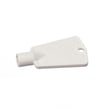
- Freezer temperature control knob 216707200 (user adjustment knob)
- Freezer door switch 216822900 (signals lid/door position on equipped models)
- Freezer condenser coil 5303280307 (heat-rejection coil)
Quick “what it does” reference
| Part | What it does | Common symptom when it fails |
|---|---|---|
| Compressor | Circulates refrigerant | Warm freezer, clicking, won’t start |
| Condenser coil | Dumps heat to room air | Poor cooling, runs long, hot cabinet sides |
| Temperature control | Turns cooling on/off by temperature | Too warm, too cold, won’t cycle |
| Lid seal (gasket/fasteners) | Keeps warm air out | Frost buildup, temperature swings |
Why it matters
Knowing the major chest freezer parts helps you narrow down problems fast. For example, heavy frost and long run times often point to an air leak at the lid seal, while “no cooling” symptoms often point to the temperature control, start components, or compressor.
Last updated: February 2026
What is the most common problem with Frigidaire refrigerators?
Cooling and temperature-control complaints are the most common Frigidaire refrigerator issues; customers most often report the fresh-food section getting warm while the freezer still seems cold, or inconsistent temperatures caused by airflow restrictions, dirty condenser areas, or defrost-related ice buildup. For your Frigidaire FFFC16M5QWA chest freezer, the closest equivalent “most common” issue is temperature not holding steady because the control setting, lid sealing, or run-time conditions are off (see the FFFC16M5QWA owner's manual).
Most common causes behind “not cooling right” symptoms
- Condenser area is dirty or heat cannot dissipate well (unit runs too long)
- Door or lid is opened too often, letting warm air in
- Gasket is not sealing, causing warm air leaks and frost
- Temperature control is set too warm or accidentally set to OFF/POWER OFF
- Unit was recently unplugged or loaded with warm food and needs time to stabilize
Quick checks we recommend (refrigerator or freezer)
- Confirm the temperature control is not set to OFF/POWER OFF.
- Minimize openings for several hours and recheck temperatures.
- Look for frost patterns or heavy ice that suggest an airflow or defrost issue.
- Inspect the lid or door seal for gaps, tears, or areas that do not contact evenly.
- If the compressor is not starting reliably, check the start components.
Parts that commonly relate to these symptoms on FFFC16M5QWA
| Symptom | What to inspect | Example part for this model |
|---|---|---|
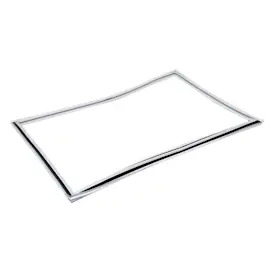
| Warm temps, poor sealing, frost near opening | Lid gasket and liner fasteners | Freezer gasket and liner fastener kit 5304406520 |
| Compressor clicks, struggles to start | Start device/overload components | Freezer compressor overload and relay clamp 216954300 |
| Temps drift or control feels inconsistent | Temperature control and knob | Temperature control 297216043 and freezer temperature control knob 216707200 |
Why it matters
Temperature swings can lead to food quality problems and longer run times. On a chest freezer like the FFFC16M5QWA, a small lid-seal leak or frequent openings can make the unit run much longer and still not stabilize.
Last updated: February 2026
Is a Frigidaire a good chest freezer?
Yes. Frigidaire chest freezers like model FFFC16M5QWA are a strong choice for long-term frozen-food storage because the chest design holds cold air well and the controls are straightforward. For best performance, follow the startup, loading, and temperature-adjustment guidance in the FFFC16M5QWA owner's manual.
What makes a chest freezer “good”
We judge a good chest freezer by temperature stability, lid sealing, and how well it handles normal use.
- Holds a steady freezing temperature after the initial cool-down
- Lid closes squarely and seals tightly all the way around
- Recovers quickly after brief openings
- Runs in normal cycles (not constantly in typical conditions)
- Stays organized enough that the lid is not held open too long
Setup and use habits that improve results
The manual for this model family highlights practical habits that protect food quality.
| Habit | What to do | Why it helps |
|---|---|---|
| Cool-down time | Let it run about 4 hours before loading unfrozen food | Prevents early temperature swings |
| Loading rate | Freeze about 3 lb of fresh food per cubic foot at one time | Helps the freezer keep up |
| Control changes | Turn the control gradually; wait hours between adjustments | Avoids overcorrecting |
| Lid openings | Keep openings short and infrequent | Reduces warm air and frost |
Common tradeoffs (pros and cons)
Chest freezers are efficient, but they come with a few predictable compromises.
- Pros: strong cold retention, simple operation, good bulk storage
- Cons: deep stacking can make organization harder, manual defrost requires periodic defrosting, lid seal condition matters a lot
Why it matters
A “good” freezer stays safe and efficient when it is loaded correctly and allowed to stabilize. Overloading with warm food or frequent long lid openings causes longer run times, more frost, and more freezer burn.
Last updated: February 2026