Installation guide
 Error Codes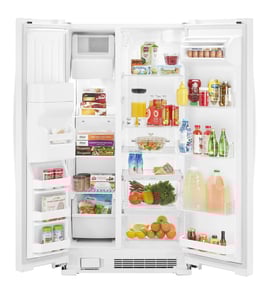


What are side-by-side refrigerators?
Side-by-side refrigerators (like your KitchenAid KSRA22FKSS00) have two full-height compartments next to each other: the refrigerator section on one side and the freezer on the other. This layout prioritizes easy access to both fresh and frozen foods without bending as much.
How a side-by-side layout works
In a side-by-side refrigerator, each door opens to a tall, narrow compartment. That design changes how you store items compared with French door or top-freezer models.
Common characteristics include:
- Full-height refrigerator and freezer sections with separate doors
- Narrower shelf width (wide platters may need angled placement)
- More vertical storage (good for frozen boxes and door-bin organization)
- Frequent use of through-the-door ice and water dispensing (model dependent)
Side-by-side vs. other common refrigerator styles
Here is a quick comparison to help you choose storage strategies and set expectations.
| Style | Best for | Tradeoffs |
|---|---|---|
| Side-by-side | Balanced access to freezer and fridge; vertical organization | Narrow shelves can limit wide items |
| French door | Wide fresh-food shelves; large trays and platters | Freezer is lower; more bending |
| Top freezer | Simple layout; often more usable shelf width | Freezer access is higher; fewer premium features |
Why it matters for parts and troubleshooting
The side-by-side design affects airflow, door sealing, and dispenser systems. For example, cooling performance depends on steady air movement between compartments, and door alignment helps prevent frost and temperature swings.
If you are installing, leveling, or moving the KSRA22FKSS00, follow the clearances and leveling steps in the installation guide to help the doors seal correctly and keep temperatures stable.
Practical tips for everyday use
- Keep vents inside both compartments unblocked to maintain even temperatures
- Store wide items (pizza boxes, party trays) on shelves where they can angle in
- Avoid overloading door bins; it can affect door closing and gasket sealing
- If you notice warm spots, check for blocked airflow and confirm the doors close fully
Last updated: February 2026
Is side by side better than a French door?
A side-by-side is “better” than a French door when you want easier freezer access, more door-bin storage, and a narrower fresh-food compartment that keeps items within reach. A French door is usually better when you want wider shelves for platters and more flexible fresh-food storage; compare features and clearances in the installation guide.
Quick comparison (what most owners notice)
| Feature | Side-by-side (like KitchenAid KSRA22FKSS00) | French door |
|---|---|---|
| Fresh-food shelf width | Narrower | Wider (better for trays, pizza boxes) |
| Freezer access | Eye-level, easy to organize | Lower drawer, can hold bulky items |
| Door storage | Often more bins on both doors | Strong on fresh-food door storage |
| Space in front to open | Two narrower doors | Two doors plus a freezer drawer |
| Typical price/value | Often lower for similar capacity | Often higher for similar capacity |
Choose a side-by-side if you want
- Faster access to frozen foods without bending as much
- More vertical organization (bins, shelves) in both compartments
- A layout that works well in tighter aisle spaces (narrower door swing per door)
- Strong door storage for condiments, drinks, and frequently used items
Choose a French door if you want
- Wide refrigerator shelves for party platters and large containers
- A fresh-food section that is easiest to see and customize
- A freezer that can handle bulky items in a deep drawer
- A layout that fits how you cook (fresh foods up top, frozen down below)
Why it matters
The “best” style is the one that fits your kitchen clearance and how you use food day to day. Door swing, aisle space, and what you store most (fresh vs. frozen) usually matter more than total cubic feet.
Last updated: February 2026
Where is the model number on a KitchenAid fridge?
On a KitchenAid side-by-side refrigerator like model KSRA22FKSS00, the model number is printed on the model and serial tag. You will typically find that tag inside the fresh food (refrigerator) compartment on a side wall or near the top, and sometimes on the door frame.
Most common places to check
Look for a sticker or metal plate that lists Model and Serial.
- Inside the refrigerator section on the left or right interior wall
- On the ceiling area inside the refrigerator compartment
- On the door frame (open the refrigerator door and check the frame edges)
- Behind the crisper drawers (check the side wall just above the drawer rails)
- On the back exterior panel (less common, but worth a quick look)
What the label looks like (and what to write down)
The tag usually includes a few key identifiers. Record them exactly as shown.
| What you’ll see | Example | Why it matters |
|---|---|---|
| Model number | KSRA22FKSS00 | Ensures the parts list matches your exact refrigerator |
| Serial number | (varies) | Helps confirm production series and correct revisions |
| Electrical info | Volts/amps | Useful for diagnosing electrical parts issues |
Why it matters for parts and repairs
We use the model number to match the correct diagrams and replacement parts for your exact KitchenAid refrigerator. Even small model-number differences can change which door gasket, water inlet valve, or dispenser components fit.
- Prevents ordering the wrong part
- Helps match the correct color and door configuration
- Speeds up troubleshooting for cooling, ice maker, and water dispenser issues
Quick tip if the tag is hard to read
If the sticker is smudged or peeling, take a close-up photo and zoom in. If the tag is missing, use the installation paperwork and compare it to the identification details in the installation guide.
Last updated: February 2026
What causes a side-by-side refrigerator to stop cooling?
A KitchenAid side-by-side refrigerator like model KSRA22FKSS00 usually stops cooling because airflow is blocked, the evaporator fan is not moving cold air, the defrost system is iced over, or the sealed system is not running correctly. Start with simple airflow and temperature checks, then move to fan and defrost diagnostics using the installation guide.
Quick checks we do first (fast, no parts)
- Confirm the refrigerator has power and the interior lights come on.
- Set controls to a normal target: 37°F fresh food and 0°F freezer.
- Make sure food packages are not blocking return vents or the air diffuser.
- Check that doors close fully and gaskets seal all the way around.
- Vacuum dust from the condenser area (dirty coils can reduce cooling).
Most common causes (and what you typically notice)
| Symptom | Likely cause | What to check next |
|---|---|---|
| Freezer cold, fridge warm | Airflow problem | Air diffuser stuck, vents blocked, evaporator fan issue |
| Frost buildup on freezer back wall | Defrost problem | Defrost bi-metal, heater, control/timer |
| Clicking, humming, then stops | Start components or compressor issue | Run capacitor, compressor, wiring |
| No water/ice issues plus warm temps | General cooling failure | Fan operation, frost pattern, condenser airflow |
Parts that often fix “not cooling” on KSRA22FKSS00
If the basic checks point to a component failure, these model-matched parts are common next steps:
- Defrost system: refrigerator defrost bi-metal WPW10225581 (helps stop heavy frost that blocks airflow)
- Air distribution: refrigerator air diffuser WP2216112 (controls cold air flow into the fresh food section)
- Fan airflow (noise or weak airflow): refrigerator evaporator fan blade WP2169142
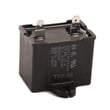
- Sealed system support: upright freezer run capacitor WPW10662129 (if the compressor struggles to start)
Why it matters
When cooling stops, food safety and compressor stress become immediate concerns. Restoring proper airflow and defrost operation early prevents ice blockage, temperature swings, and longer run times that can shorten component life.
Last updated: February 2026
What is the most common problem with a KitchenAid refrigerator?
The most common KitchenAid refrigerator problems are cooling and ice or water dispenser issues. On the KitchenAid KSRA22FKSS00, these symptoms usually trace back to restricted airflow (evaporator area), defrost system trouble, or water supply components such as the inlet valve and filter housing; all of these can cause warm temperatures, noise, leaks, or no ice.
Most common symptoms we see
- Refrigerator section too warm but freezer seems OK
- Ice maker not making ice or dispensing slowly
- Water dispenser slow, sputtering, or not dispensing
- Frost buildup on the freezer back wall (defrost issue)
- Buzzing, rattling, or a loud fan noise
- Water leaking inside the fresh food section or onto the floor
Quick checks you can do first (no parts needed)
- Set temperatures to normal targets: 37°F fresh food and 0°F freezer; wait 24 hours for stabilization.
- Make sure vents are not blocked by food packages (air must circulate).
- Clean condenser coils and confirm the condenser fan area is clear.
- If water is slow, purge air and flush several cups of water after any filter or water line work.
- If you see frost on the freezer back panel, plan to troubleshoot the defrost system.
Common causes and the parts that often fix them
| Problem area | What you notice | Parts on this model that commonly apply |
|---|---|---|
| Airflow through evaporator | Warm fridge, uneven temps, fan noise | Refrigerator evaporator fan blade WP2169142, refrigerator air diffuser WP2216112 |
| Defrost system | Frost buildup, warmer temps over time | Refrigerator defrost bi-metal WPW10225581 |
| Water supply to dispenser/ice maker | No water, slow fill, leaking | Refrigerator inlet valve W10822681, refrigerator water filter housing WP2186443, refrigerator water tube 8201597 |
Why it matters
Cooling, ice maker, and water dispenser complaints often share the same root causes: airflow restrictions, defrost failures, or weak water flow. Fixing the correct system first prevents repeat icing, temperature swings, and unnecessary part replacement.
Best next step for KSRA22FKSS00
Use the troubleshooting and access steps in the installation guide to locate the correct compartments (evaporator area, diffuser, and water valve location), then match your symptom to the table above before ordering parts.
Last updated: February 2026