 Installation guide
 Owner’s manual


How many decibels is a Kenmore Elite dishwasher?
Kenmore Elite dishwashers vary by model, and the exact sound rating (dBA) depends on the specific unit. For the Kenmore Elite 63016303406, the most reliable place to confirm the published decibel rating is the product specifications in the 63016303406 owner's manual.
How to find the dBA rating for model 63016303406
Look for a section labeled Specifications, Features, or Product data in the manual.
- Check the first few pages and any “features” summary
- Look for “Sound level,” “Noise level,” or “dBA”
- If multiple cycles/options are listed, use the rated (not “perceived”) dBA value
- Compare “quiet” claims to the actual dBA number
What dBA numbers mean (quick reference)
Most built-in dishwashers fall into these common ranges:
| Sound level (dBA) | What it’s like in a kitchen | Typical description |
|---|---|---|
| 38 to 44 | Very quiet, often hard to hear | Premium quiet |
| 45 to 50 | Quiet, low background sound | Quiet |
| 51 to 55 | Noticeable but not loud | Standard |
| 56+ | Clearly audible | Loud |
Why your dishwasher may sound louder than its rating
Even a “quiet” Kenmore Elite dishwasher can seem louder if something is off during operation.
- Spray arms hitting tall items or a loose utensil
- Filter system or sump area partially clogged
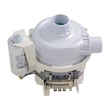
- Pump noise from debris or wear
- Installation issues (unit not secured, toe panel loose)
- Water fill or drain sounds amplified by cabinetry
If you’re troubleshooting noise, routine care steps in the 63016303406 owner's manual help, including checking spray arm nozzles and cleaning the filter system.
Why it matters
Decibel ratings help you compare dishwashers objectively. A difference of about 3 dBA is a noticeable change, and a 10 dBA increase can sound roughly “twice as loud” to many people.
Last updated: January 2026
How to do a hard reset on a Kenmore dishwasher?
To hard reset a Kenmore Elite dishwasher like model 63016303406, we typically use a control-panel reset sequence (or power reset) to clear a stuck cycle and reboot the electronic control. The exact button sequence depends on the control layout, so confirm the steps in the 63016303406 owner's manual.
Reset options that work on most Kenmore dishwashers
- Control-panel reset: Press a specific key sequence (often 2 keys repeated) to cancel and drain, then restart.
- Power reset: Turn the dishwasher off at the breaker for 1 to 5 minutes, then restore power.
- Cancel/Drain reset: Press Cancel/Drain (if your console has it) and let the unit pump out before starting a new cycle.
Step-by-step: safe hard reset (recommended)
- Press Cancel/Drain once (if present) and wait for the drain to finish.
- If the keys are unresponsive, switch the dishwasher OFF at the circuit breaker.
- Wait at least 60 seconds.
- Turn the breaker back ON.
- Start a normal cycle and verify the door is fully shut and latched.
If it still will not start after resetting
The manual troubleshooting for this Kenmore Elite model points to a few common causes:
| Symptom | What to check first | What it can indicate |
|---|---|---|
| No lights or dead console | House breaker/fuse | Power supply issue |
| Won’t start | Door fully shut and latched | Door latch not engaging |
| Cycle won’t advance | Water supply valve open | Fill problem |
- Confirm the door closes firmly; a weak latch can prevent starting.
- Make sure the water supply valve is open.
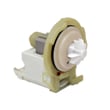
- If the dishwasher is not draining after Cancel/Drain, inspect the drain path and consider the drain pump 00642239 if the pump is noisy or not running.
Why it matters
A proper hard reset clears a stalled control state without forcing repeated restarts that can leave water in the sump, cause odor, or mask a real issue like a door-latch problem or drain failure.
Last updated: January 2026
What is the smart wash cycle on Kenmore dishwashers?
On the Kenmore Elite 63016303406 dishwasher, “Smart Wash” refers to an automatic, sensor-based wash option that adjusts wash time and water use based on how dirty the load is, helping deliver strong cleaning while using only what the cycle needs. For the exact cycle name and how it behaves on your control panel, use the 63016303406 owner's manual.
How Smart Wash typically works
Most Kenmore Elite dishwashers with a “smart” or sensor-driven cycle use feedback (such as water clarity) to fine-tune the wash.
- Starts with a pre-wash to loosen soil
- Uses a sensor to estimate soil level during the cycle
- Adjusts wash time and sometimes water changes based on soil
- May extend heating time to maintain proper wash temperature
- Can run longer than Quick Wash when dishes are heavily soiled
What to expect vs other common cycles
Cycle names vary by model, but the behavior usually compares like this:
| Cycle type | Best for | Typical time behavior |
|---|---|---|
| Smart Wash (sensor) | Mixed loads, everyday use | Varies based on soil level |
| Normal Wash | Standard daily loads | More consistent time |
| Quick Wash | Light soil, small loads | Shortest full wash option |
| Rinse | Holding dishes until a full load | Very short, no full wash |
Tips to get the best results on Smart Wash
- Load so spray arms can spin freely; avoid blocking the lower spray path with large pans
- Use fresh detergent and fill the dispenser correctly
- Use rinse aid to improve drying and reduce spotting
- Scrape off heavy food; avoid loading with large chunks that can clog filtration
- Clean the filter system regularly; a restricted filter reduces wash pressure
Why it matters
Smart Wash is designed to balance cleaning performance and efficiency. When the sensor can “read” the wash water accurately and the dishwasher can circulate water strongly, you get better results with less wasted time, water, and energy.
Last updated: January 2026





