Installation guide
 Owner’s manual
 Error Codes


Are bottom mount fridges better?
A bottom-mount refrigerator like the KitchenAid KBRO36FTX04 is “better” for many kitchens because the fresh-food section sits at eye and waist level, so the items you use most (milk, produce, leftovers) are easier to reach while the freezer stays in a lower pull-out drawer.
Why many owners prefer bottom-mount designs
Bottom-mount layouts prioritize everyday convenience and organization in the refrigerator compartment.
- Fresh-food shelves are higher, so you bend less for daily items
- Wide refrigerator shelves make it easier to see and sort groceries
- Lower freezer drawers can hold bulky frozen items (pizza boxes, bags, bins)
- Better workflow for cooking because ingredients are at a comfortable height
- Built-in models often support a cleaner, cabinet-integrated look (especially with overlay panels)
Trade-offs to consider
Bottom-mount is not automatically “best” for every household; the freezer access and storage style are different.
| If you want... | Bottom-mount is usually a good fit when... | Consider another style when... |
|---|---|---|
| Easy access to fresh food | You cook often and use refrigerated items most | You use frozen food more than fresh |
| Better refrigerator visibility | You dislike crouching to find items | You prefer freezer shelves at eye level |
| Freezer drawer storage | You like bins and stacked storage | You want door bins and fixed freezer shelves |
Built-in installation details that matter (KBRO36FTX04)
Because the KBRO36FTX04 is a 36-inch built-in refrigerator, “better” also depends on fit, door swing, and panel/handle choices.
- Installation requires 2 or more people
- Door swing clearance can limit handle and panel options
- Custom overlay panels typically use a decorative panel, spacer, and backer panel stack
- Moving and leveling procedures matter to prevent floor damage and ensure stability
For the most accurate fit and clearance guidance, use the KBRO36FTX04 installation guide.
Why it matters
Choosing the right configuration affects daily comfort, food visibility, and how well the refrigerator integrates into your kitchen layout, especially with a built-in model where door swing and panel depth can impact usability.
Last updated: January 2026
What is the bottom part of a refrigerator called?
On the KitchenAid KBRO36FTX04 bottom-mount built-in refrigerator, the “bottom part” is most often referring to the machine compartment (the area behind the lower grille) where key cooling components like the compressor and condenser fan are located. For exact component locations, use the KBRO36FTX04 installation guide.
Common names people use for the “bottom part”
Depending on what you are pointing to, the bottom area may be called one of these:
- Lower grille or toe grille (the vented cover at the very bottom front)
- Machine compartment (space behind the grille where cooling parts sit)
- Compressor compartment (another name for the machine compartment)
- Freezer compartment (only if you mean the bottom drawer section on a bottom-mount)
What’s typically located down there (and why it matters)
The bottom section is important because it houses parts that remove heat from the refrigerator.
| If you mean this… | It’s usually called… | What it does |
|---|---|---|
| Vented cover at the bottom front | Lower grille / toe grille | Lets air flow to help cooling components breathe |
| Area behind that cover | Machine compartment | Holds cooling-system components |
| Bottom drawer where frozen food goes | Freezer compartment | Stores food at freezer temperatures |
Quick tips to avoid confusion
Use these checks to match the name to what you see:
- If it is a removable vented panel, it is usually the lower grille.
- If you are hearing a hum or warm air, you are likely near the machine compartment.
- If you are opening a drawer, you are in the freezer compartment.
- If you are looking for the water filter area, confirm the location in the KBRO36FTX04 installation guide.
Why it matters
Using the right term helps you order the correct KitchenAid part and follow the correct repair steps, especially when diagnosing cooling problems, airflow restrictions, or access behind the lower grille.
Last updated: January 2026
What is the most common problem with a KitchenAid refrigerator?
The most common KitchenAid refrigerator problems are temperature control issues and ice maker or water system problems (slow ice, no ice, weak water flow). On the KitchenAid KBRO36FTX04 36" built-in refrigerator, these symptoms usually trace back to airflow restrictions, a clogged water filter, or a failing fan or sensor.
Quick checks we recommend first
- Confirm the controls are set correctly and the doors close and seal fully.
- Make sure vents inside the fresh food section are not blocked by food containers.
- Replace the water filter if flow is slow or ice production dropped.
- Listen for the evaporator fan; if it is not running, cooling can become uneven.
- Clean dust from the condenser area; restricted airflow can cause warm temps and longer run times.
Common symptoms and the most likely causes
| Symptom | Most common cause | What to do next |
|---|---|---|
| Fridge too warm, freezer OK | Airflow problem or air baffle issue | Clear vents; check for frost buildup; inspect airflow parts |
| Freezer too warm, fridge warm | Condenser airflow problem | Clean condenser; check condenser fan operation |
| Slow or no ice | Restricted water supply or ice maker issue | Replace filter; verify supply valve is open; inspect ice maker |
| Noisy operation | Fan blade rubbing ice or worn fan | Check for ice buildup; inspect fan blade and motor |
Parts that often solve these “most common” complaints
If your symptoms match, these are frequently involved on KBRO36FTX04:
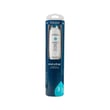
- Refrigerator water filter EDR3RXD1: helps restore water flow and ice production when the filter is restricted.
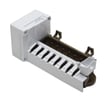
- Refrigerator ice maker WPW10277450: common fix when the unit has power and water but will not cycle or harvest.
- Refrigerator condenser fan W11578915: supports heat removal; a failed fan can cause warm temps and noisy running.
- Refrigerator temperature sensor WP2188820: helps the control board regulate cooling accurately.
Why it matters
Built-in refrigerators like the KitchenAid KBRO36FTX04 rely on steady airflow and correct temperature sensing. When airflow is blocked or a fan or sensor is failing, you can see warm temperatures, longer run times, and ice maker complaints even though the compressor still runs.
Where to confirm model-specific settings and procedures
For control settings, airflow guidance, and service access notes, use the KBRO36FTX04 owner’s manual.
Last updated: January 2026
Why is my KitchenAid refrigerator leaking from the bottom?
Water leaking from the bottom of your KitchenAid KBRO36FTX04 36-inch built-in refrigerator is usually caused by defrost water not draining correctly (a clogged or frozen defrost drain) or by a water supply connection that is seeping and running down to the base area. Use the steps below to pinpoint the source.
Quick checks that solve most bottom leaks
- Look for ice or water under the crisper drawers; that often points to a defrost drain issue.
- Check the drain pan area (behind the lower grille) for overflow or cracks.
- Inspect the water line connections; the installation instructions call out checking connections for leaks after opening the water supply valve. Use the installation guide for the exact access points and setup checks.
- Confirm the refrigerator is level and stable; built-in units must sit on all leveling legs so water flows to the drain pan correctly.
Step-by-step troubleshooting (safe DIY)
- Unplug the refrigerator (or switch it OFF if your model has a power switch).
- Remove the lower grille and look for water trails, a full drain pan, or a slow drip.
- Check the defrost drain path:
- If you see ice buildup, thaw it with warm air (hair dryer on low) and flush the drain with warm water.
- Clear debris with a flexible brush or pipe cleaner.
- If the unit has a water filter, reseat it and check for drips around the filter area; a cracked cap or housing can leak and run down the cabinet.
Parts that commonly relate to leaks on this model
| Symptom | Most likely area | What to inspect first |
|---|---|---|
| Water under fresh-food drawers | Defrost drain | Ice blockage, debris in drain tube |
| Water near filter area | Filter connection | Filter seating, cap condition |
| Slow drip at base after using ice/water | Water line fittings | Supply valve, tubing, compression fittings |
If you suspect the leak is at the filter connection, the correct replacement filter for this model is the refrigerator water filter EDR3RXD1.
Why it matters
Bottom leaks can lead to floor damage, ice buildup in the freezer, and poor cooling if airflow passages start freezing over. Fixing the drain or a small seep early prevents repeat leaks.
Last updated: January 2026