Owner’s manual
 Error Codes



Do you remove cardboard from the bottom of a Whirlpool refrigerator?
For your Whirlpool WRF560SEYB00 bottom-mount refrigerator, do not remove the cardboard (or fiberboard) panel on the bottom or rear lower area. That panel is a protective cover and airflow guide for the condenser area; removing it can reduce cooling performance and expose components.
What cardboard should stay in place vs. what to remove
Keep the bottom or rear lower cover installed; remove only shipping materials that are clearly temporary.
- Keep installed: the flat cardboard or fiberboard panel attached with screws or clips (often under the unit or across the lower back)
- Remove: exterior tape, corner blocks, foam spacers, and plastic wrap used for shipping
- Remove: any cardboard placed loosely inside the fresh food or freezer compartments
- Remove: any packing holding shelves, bins, or the ice maker arm in place
- Keep installed: any metal or plastic service cover that protects wiring and the compressor area
Quick checks before you decide
Use these checks to confirm you are looking at a protective cover, not packaging.
| What you see | Usually means | What to do |
|---|---|---|
| Panel is screwed/clipped on and spans the lower back or bottom | Protective condenser cover/airflow baffle | Leave it installed |
| Loose cardboard sheet under the unit with no fasteners | Shipping spacer | Remove it |
| Cardboard inside the cabinet or taped to shelves | Shipping protection | Remove it |
| Panel blocks access to the compressor and wiring | Safety and airflow protection | Leave it installed |
Why it matters
That lower cover helps direct air across the condenser coils and protects the compressor area from dust, pets, and accidental contact. Keeping it in place helps your refrigerator cool efficiently and run more reliably.
Where to confirm for your exact configuration
We recommend checking the cabinet and rear access panel diagrams and any setup notes in the owner's manual.
Last updated: February 2026
Is it better to have a freezer on top or bottom of the refrigerator?
A bottom-freezer refrigerator (like Whirlpool model WRF560SEYB00) is usually the better everyday choice because the fresh-food section sits at eye level, so you access the most-used items with less bending. A top-freezer design can be more efficient and simpler, but it is less convenient for daily use.
Quick comparison
| Feature | Bottom freezer | Top freezer |
|---|---|---|
| Everyday convenience | Better (fresh food at eye level) | Lower (fresh food requires bending) |
| Typical efficiency | Good | Often very good |
| Typical repair complexity | Moderate (more features) | Often simpler |
| Best for | Frequent fresh-food access | Budget, simplicity, fewer features |
What we recommend for most homes
If you use the refrigerator section far more than the freezer (most households do), a bottom-freezer layout is the better fit.
- Keeps produce, drinks, and leftovers at a comfortable reach
- Reduces door-open time while you search for fresh-food items
- Works well for families that cook often and store lots of refrigerated food
- Pairs well with common convenience features (ice maker, water filter, air filter)
When a top-freezer can be the better choice
A top-freezer refrigerator can be the better pick when you want maximum simplicity.
- You want a typically lower purchase cost
- You prefer a simpler design with fewer features to maintain
- You use the freezer more often than the refrigerator
- You want a layout that is easy to place in tighter kitchens
Why it matters
The “better” freezer position is mostly about how you live day to day. Bottom-freezer models prioritize ergonomics and fresh-food access; top-freezer models prioritize simplicity and often strong efficiency.
For model-specific use and care details (including temperature settings and feature operation), follow the owner's manual.
Last updated: February 2026
What are the disadvantages of a bottom freezer refrigerator?
Bottom-freezer refrigerators like the Whirlpool WRF560SEYB00 keep fresh food at eye level, but the tradeoff is more bending and heavier freezer access. They also tend to cost more than basic top-freezer models, and the freezer drawer hardware can wear faster if it is frequently overloaded.
Common disadvantages you may notice
- You have to bend or squat to reach frozen foods in the lower drawer.
- Freezer drawers can feel heavy when fully loaded (more strain on slides, rollers, and door alignment).
- Freezer organization can be harder; items stack and get buried without bins.
- Ice maker and water system issues can be more noticeable if you rely on them daily (clogs, air in lines, slow fill).
- Some kitchens have tighter clearance for pulling the freezer drawer fully open.
What to check on your WRF560SEYB00 to reduce the downsides
Use your WRF560SEYB00 owner's manual to confirm the correct loading, door closing, and temperature settings. These steps help prevent the most common bottom-freezer complaints:
- Keep heavier items low and centered in the freezer drawer to reduce rail wear.
- Make sure the doors seal evenly; poor sealing increases frost and makes drawers harder to open.
- Replace filters on schedule to keep dispenser flow strong and reduce ice maker problems.
- Level the refrigerator so the doors close smoothly and stay aligned.
Parts that commonly help when symptoms show up
If the “disadvantage” you are feeling is really a performance issue, these model-matched parts are often involved:
| Symptom you notice | Common cause | Part to consider |
|---|---|---|
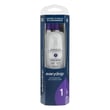
| Slow water, bad taste, cloudy ice | Clogged water filter | Refrigerator filter EDR1RXD1 |
| Odors in fresh food section | Saturated air filter | Refrigerator air filter W10311524 |
| Ice maker not filling or weak dispenser flow | Water supply control problem | Refrigerator water inlet valve WPW10238100 |
Why it matters
Most bottom-freezer “cons” come down to ergonomics and wear: frequent heavy drawer use, door sealing, and water filtration. Keeping seals tight and filters fresh helps your Whirlpool refrigerator run colder, waste less energy, and avoid nuisance issues.
Last updated: February 2026