 Owner’s manual
 Error Codes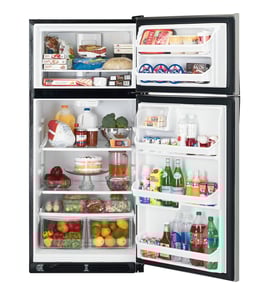


What is the most expensive part to replace on a refrigerator?
On a refrigerator like Kenmore model 11161219611, the most expensive repair is typically the sealed system, especially the compressor. Compressor and refrigerant-system work usually costs the most because it requires specialized tools, refrigerant handling, and higher labor time.
What usually costs the most (and why)
The priciest refrigerator repairs tend to fall into two buckets: sealed-system work and major electronics.
- Compressor (sealed system): high labor, specialized service, refrigerant recovery and recharge
- Refrigerant leak repair (sealed system): time-consuming diagnosis and repair, then recharge
- Evaporator or condenser (sealed system components): often requires extensive disassembly
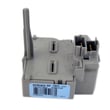
- Main control board: higher part cost, sometimes paired with diagnostic labor
- Ice maker system issues (if equipped): can add up when multiple parts are involved (valve, ice maker, wiring)
Typical cost comparison (parts + labor)
Actual pricing varies by region and service company, but this is the usual cost ranking.
| Repair type | Typical cost level | Why it runs high |
|---|---|---|
| Sealed system (compressor/leak/evaporator) | Highest | Specialized labor and refrigerant work |
| Control board replacement | Medium to high | Electronics cost plus diagnosis |
| Fan motor, thermostat, sensor | Medium | Moderate labor, moderate part cost |
| Door gasket, light switch, bins | Low to medium | Lower part cost, simpler labor |
Safety note for this Kenmore refrigerator
This model uses R600a refrigerant (flammable). Sealed-system repairs (compressor, refrigerant leak, tubing) should be handled by trained service personnel following the safety guidance in the 11161219611 owner's manual.
Why it matters
Knowing the most expensive parts helps you decide where to focus troubleshooting first. If symptoms point to a sealed-system problem (warm fridge, weak cooling, long run times), you can prioritize professional diagnosis before replacing smaller parts that will not restore cooling.
Last updated: January 2026
How to tell cubic feet of Kenmore refrigerator by model number?
For Kenmore model 11161219611, the capacity is 14.2 cubic feet; we pull that directly from the model’s specifications in the 11161219611 owner’s manual. If you’re checking a different Kenmore model, the model number alone usually is not a reliable “code” for cubic feet, so confirming in the manual or by measuring is the best approach.
Fast ways to confirm cubic feet
- Check the product specs section in the 11161219611 owner’s manual.
- Look for a rating label inside the fresh food compartment (often on a side wall or near crisper drawers).
- Search by the full model number (all digits) when comparing similar Kenmore refrigerators.
- If you need an estimate, measure interior space and calculate cubic feet.
How to estimate cubic feet by measuring
Use this when the manual is not handy or the label is unreadable.
- Measure the usable interior of the refrigerator compartment in inches (width x depth x height). Avoid counting door bins and rounded corners.
- Multiply: W x D x H = cubic inches.
- Divide by 1,728 to convert to cubic feet.
| What you measure | What it tells you | Tip for accuracy |
|---|---|---|
| Fresh food compartment | Most of the listed capacity | Measure shelf-to-shelf usable space |
| Freezer compartment | Remaining capacity | Include only usable bin/shelf volume |
| Total (fresh + freezer) | Approximate “cu ft” | Expect your estimate to be slightly lower than published |
Why the model number usually does not “spell out” capacity
Kenmore model numbers identify series, supplier, and configuration; they are not a consistent cubic-feet formula across all lines. For example, 111 models are a specific Kenmore family, but capacity still varies by the exact model.
Why it matters
Knowing cubic feet helps you choose correctly sized shelves, bins, and filters, and it also helps when comparing energy use and storage needs between top-mount refrigerators.
Last updated: January 2026
Can I replace fridge parts myself?
Yes. On the Kenmore 11161219611 top-mount refrigerator, we recommend DIY replacement for non-sealed-system items like shelves, bins, and door gaskets; for anything involving refrigerant tubing or the sealed system, use trained service personnel for safety.
What you can usually replace yourself
These repairs are typically straightforward with basic hand tools and careful handling.
- Shelves and storage bins
- Crisper drawers and drawer rails
- Door bins and small trim pieces
- Light cover (lens) and some interior covers
- Door gasket (seal) and hinge covers
Repairs that should be handled by a trained technician
Your manual notes a flammable refrigerant (R600a). Avoid any repair that could puncture tubing or disturb the sealed system.
- Compressor, condenser, evaporator, or any sealed-system work
- Refrigerant lines/tubing, brazing, or leak repairs
- Defrosting methods that use mechanical devices that could damage tubing
- Power cord replacement (if damaged)
Safe DIY checklist (before you start)
Use this quick checklist to reduce the risk of damage and improve the odds of a successful repair.
- Unplug the refrigerator before removing panels or electrical parts
- Protect floors; pull the unit out carefully to avoid kinking water lines (if equipped)
- Take photos of wire routing and screw locations as you disassemble
- Keep screws sorted by step (cups or labeled bags)
- Restore airflow after reassembly (do not block vents with bins or food)
Quick guide: DIY vs. pro
| Task type | Typical difficulty | Best choice |
|---|---|---|
| Shelves, bins, drawers | Low | DIY |
| Door gasket replacement | Medium | DIY (most cases) |
| Fan motor or control board access | Medium to high | DIY only if comfortable with wiring |
| Sealed system or refrigerant tubing | High | Pro service |
Why it matters
DIY repairs can save time and money, but sealed-system work is different: puncturing refrigerant tubing on an R600a system creates a serious fire risk and can permanently damage cooling performance.
For model-specific disassembly notes and safety warnings, use the 11161219611 owner’s manual.
Last updated: January 2026
What is the upper part of a fridge called?
In a Kenmore top-mount refrigerator like model 11161219611, the upper section is typically called the freezer compartment (or simply the freezer). It is the coldest area and is designed to keep foods frozen; some versions also support an optional ice maker.
What you will see it called
Common names for the upper section include:
- Freezer compartment
- Freezer section
- Freezer cabinet (less common)
- Upper compartment (generic term)
For the exact terminology used for your Kenmore 11161219611, check the 11161219611 owner's manual.
What the freezer compartment does
The freezer section is built to:
- Maintain freezing temperatures for long-term food storage
- Support ice production (ice tray or optional ice maker, depending on configuration)
- Circulate cold air to help stabilize temperatures in both compartments
- Keep frozen items safely stored when the door seals properly
Quick comparison: freezer vs fresh food section
| Section | Typical purpose | Typical temperature range |
|---|---|---|
| Freezer compartment (upper) | Frozen food storage, ice | 0°F to 5°F |
| Fresh food compartment (lower) | Refrigerated food storage | 34°F to 40°F |
Why it matters
Using the right name helps when you are ordering parts, reading troubleshooting steps, or interpreting error-code and temperature-control instructions. It also helps you describe issues accurately, such as “freezer not cooling” versus “refrigerator section warm.”
Related troubleshooting help
If you are seeing a code or performance issue tied to cooling, we use this guide often for this model family: Kenmore 111 model top freezer refrigerator error codes.
Last updated: January 2026





