Owner’s manual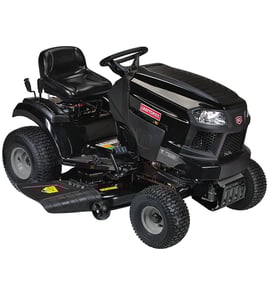



How do I identify my Cub Cadet model?
Your Cub Cadet lawn tractor model number is printed on the model plate under the seat. On model 13AQ11BP756, lift the seat and copy the model and serial numbers exactly as shown; you will use them to match the correct parts and specifications in the owner's manual.
Where to look on the tractor
On this Cub Cadet riding mower, the model plate is located:
- On the underside of the tractor seat
- On a label or metal plate (model plate)
- Near the serial number information
- In a spot you can read after lifting the seat
What to write down (and why)
Record both numbers exactly as printed:
- Model number: identifies the exact tractor configuration
- Serial number: identifies your specific unit and production run
- Any letter suffixes: can affect parts fit and service information
- Engine information (if listed): helpful when matching engine-related parts
Quick reference
| Item to record | What it’s used for | Tip |
|---|---|---|
| Model number | Matching the correct parts diagrams and lists | Copy every character, in order |
| Serial number | Identifying the exact unit for service history | Take a photo as a backup |
| Label details | Confirming you found the correct plate | Look under the seat, not on the hood |
Why it matters
Cub Cadet lawn tractors often have similar-looking frames and decks across multiple series. Using the exact model number (like 13AQ11BP756) prevents ordering the wrong belt, blade, deck component, or electrical part.
Last updated: February 2026
What kind of engine is on a Cub Cadet?
Cub Cadet uses several different engines across its riding mower and lawn tractor lineup, so the exact engine type depends on the model. For your Cub Cadet 13AQ11BP756 front-engine lawn tractor, the engine specifications and maintenance requirements are listed in the owner's manual.
Common engine types you’ll see on Cub Cadet lawn tractors
Most Cub Cadet front-engine lawn tractors are equipped with a 4-cycle gasoline engine, and the most common configurations are:
- Single-cylinder engines (simpler design, common on smaller decks)
- V-twin engines (smoother operation, more torque under load)
- Carbureted fuel system (common on many models; some have fixed main jets)
- 12-volt negative-ground electrical system (battery and charging system)
How to identify the engine on your specific tractor
We recommend confirming the engine by checking the engine ID label and matching it to the manual.
- Look for an engine tag/label on the blower housing or valve cover area
- Record the engine model and spec numbers (often listed together)
- Compare those numbers to the engine section in the manual
- Use the manual’s maintenance specs (oil type, spark plug gap, idle speed) as a cross-check
Quick ID checklist
| What you’re checking | Where to look | What to write down |
|---|---|---|
| Engine model/spec | Engine label/tag | Model and spec numbers |
| Configuration | Visual check | Single-cylinder or V-twin |
| Fuel system | Air cleaner/carb area | Carburetor present (typical) |
Why it matters
The engine type determines the correct oil viscosity range, tune-up parts, and adjustment procedures. For example, many Cub Cadet tractors use a carburetor setup where the main jet is factory-calibrated and not adjustable, so troubleshooting focuses on maintenance items (oil, air filter, fuel quality) first.
Last updated: February 2026
What is the life expectancy of a Cub Cadet riding mower?
Most Cub Cadet riding mowers deliver about 500 to 1,000 engine hours of reliable service; with consistent maintenance and proper storage, many reach 1,200 to 1,500 hours. For your Cub Cadet 13AQ11BP756 lawn tractor, lifespan depends most on oil service, blade/deck upkeep, and keeping safety and wear items adjusted.
Typical lifespan ranges (what to expect)
- Homeowner use (typical): 500 to 1,000 hours
- Well-maintained, lighter loads: 1,200 to 1,500 hours
- Heavy loads, poor maintenance, rough terrain: 300 to 700 hours
- Normal wear parts (belts, blades, tires): replaced multiple times over the tractor’s life
| What you track | What it tells you | What to do next |
|---|---|---|
| Engine hours | Overall wear level | Increase maintenance frequency as hours climb |
| Oil condition/level | Fastest indicator of engine health | Check at least every 4 hours of operation |
| Blade stop time | PTO/brake safety and deck condition | Service if blades do not stop in about 5 seconds |
| Brake feel/holding | Control and safety | Adjust/service when holding power drops |
Maintenance habits that add the most hours
We see the longest-lasting tractors follow the basics in the maintenance schedule:
- Check engine oil at least every 4 hours of operation and change it on schedule
- Use the correct oil type/viscosity for your temperatures (per the manual)
- Keep blades sharp and balanced; replace bent or cracked blades
- Periodically check blade and engine mounting bolts for tightness
- Check brake operation frequently and adjust as needed
- Store the tractor clean and dry; keep the deck free of packed grass
For the exact intervals and specifications for the 13AQ11BP756, use the owner's manual.
Why it matters
Hours alone do not tell the whole story. Clean oil, tight hardware, properly working brakes, and a PTO system that stops the blades quickly prevent the kinds of wear that shorten engine life and create expensive deck and drivetrain problems.
Last updated: February 2026
What is a Cub Cadet 13AQ11BP756 worth?
A used Cub Cadet 13AQ11BP756 front-engine lawn tractor typically sells for $500 to $2,300+, based on condition, hours, and how well it starts, drives, and cuts. This model family is commonly equipped with a 54-inch deck and a 25 HP Kohler Courage SV740 V-twin, which supports higher resale when running strong.
Key model details that affect value
From the specifications section in the 13AQ11BP756 owner's manual, this tractor is listed with:
- Engine: Kohler Courage SV740, V-twin, 25 HP
- Transmission: Hydro-Gear 0510 hydrostatic
- Deck size shown: 54 inches (deck size is a major price driver)
- Weight shown: about 529 lb.
Quick value ranges (typical)
Use these as practical shopping numbers for a running riding mower; local demand can shift pricing.
| Condition level | What it usually means | Typical used value |
|---|---|---|
| Needs work | Won’t start, won’t move, deck problems | $100 to $600 |
| Running, rough | Starts and moves, but worn, needs service | $500 to $1,200 |
| Good | Reliable start, good cut, normal wear | $900 to $1,800 |
| Excellent | Very clean, strong hydro, documented upkeep | $1,500 to $2,300+ |
What drives the price most
- Deck condition: solid shell, no rust-through, spindles quiet, blades not bent
- Engine health: starts cold, no heavy smoke, steady idle
- Hydrostatic drive feel: smooth forward and reverse, no slipping or surging
- Cut quality: even cut with minimal vibration (blade balance and deck leveling matter)
- Hours and maintenance: oil changes, filters, belts, battery, blade sharpening
Why it matters
On a 54-inch, 25 HP hydrostatic tractor like the 13AQ11BP756, buyers pay for performance. Vibration, uneven cut, or weak drive response usually signals blade, spindle, belt, or deck-adjustment work, which lowers resale value.
Last updated: February 2026