Owner’s manual
 View engine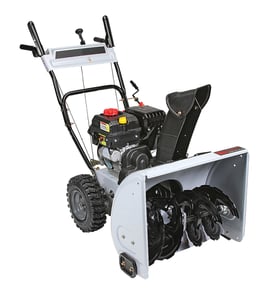



How to find snowblower model number?
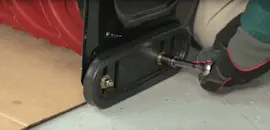
On a Craftsman snow thrower, the model number is printed on the product identification label; for model 247886914, it’s commonly found on the rear of the unit near the wheel area. Use that full model number when ordering parts or checking diagrams in the 247886914 owner’s manual.
Where to look on the machine
Check these common label locations first:
- Rear of the snowblower between or just above the wheels
- Back of the frame near the axle area
- Side of the housing near the engine mount
- Handle support area (near the lower handle brackets)
- Under the belt cover area (after the unit is off and cooled)
What the label usually shows
Most Craftsman labels include more than one identifier. Use the model number for parts lookup.
| Label item | What it’s used for | Example format |
|---|---|---|
| Model number | Correct parts diagrams and part fit | 247886914 |
| Serial number | Manufacturing run identification | Letters and numbers |
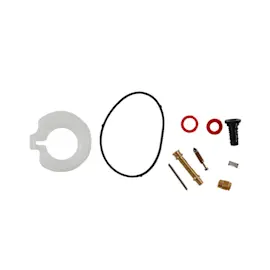
| Engine model | Engine-specific parts (spark plug, carburetor, etc.) | Separate engine ID |
Tips to make the number readable
- Wipe the label with a damp cloth; packed snow and salt residue can hide digits.
- Use a flashlight at an angle to reduce glare.
- Take a close-up photo and zoom in to confirm each digit.
- Write the number exactly as shown (include all digits and punctuation if present).
Why it matters
Craftsman snowblower parts can vary by model even when the machines look similar. Using the exact model number helps match the right drive cable, shear pin, scraper blade, and other parts the first time.
Last updated: January 2026
What is the typical lifespan of a gas snowblower?
For the Craftsman 247886914 gas snowblower, the operator’s manual lists an average useful life of 7 years or about 60 hours of operation; with consistent maintenance and proper off-season storage, many gas snowblowers commonly deliver 10 to 15 years of service in typical homeowner use. See the 247886914 operator's manual for the model-specific guidance.
What “useful life” means for this model
The manual’s useful-life statement is a planning benchmark for inspection and safety checks, not a hard stop date.
- 7 years / 60 hours is the published average useful life for this product
- After that point, we recommend annual inspections of mechanical and safety systems
- Lifespan increases when you prevent fuel-system varnish, rust, and freeze-up
- Lifespan drops with heavy, wet snow use, gravel driveways, and skipped maintenance
Maintenance that extends lifespan the most
These steps have the biggest impact on engine, auger, and drive system longevity.
- Run the machine a few minutes to clear snow and help prevent auger/impeller freeze-up before storage
- Store it in a clean, dry, well-ventilated area away from ignition sources
- For storage over 30 days, run the engine until it stops to empty the fuel system, then change the oil
- Remove the spark plug and add about 1 oz (30 ml) of clean engine oil to the cylinder for off-season protection
- Inspect wear items regularly (belts, friction wheel, cables, shear pins)
Quick lifespan expectations by usage
| Usage pattern | Typical service life | What usually ends life first |
|---|---|---|
| Light homeowner use | 10 to 15 years | Fuel system issues, belts, friction wheel wear |
| Heavy seasonal use | 7 to 12 years | Friction wheel, drive components, auger wear |
| Poor storage or stale fuel | 3 to 8 years | Carburetor and fuel-system deterioration |
Why it matters
A gas snowblower often “fails early” from storage-related problems (stale fuel, corrosion, stuck controls) rather than major engine damage. Following the manual’s storage steps helps you avoid carburetor service and premature wear.
Last updated: January 2026
How to get rid of an old snowblower?
To get rid of an old Craftsman snow thrower like model 247886914, we recommend recycling it as scrap metal (after draining fuel and oil), using your city’s bulky-item pickup, donating it if it still runs, or scheduling a junk-haul service. Prep it safely first.
Safe prep steps (do this before transport or pickup)
- Run the engine outdoors until it stops to reduce fuel left in the tank.
- Let the engine cool completely before moving it.
- Remove the ignition key and keep it with you.
- Clean packed snow and debris off the auger housing and chute.
- Store and transport it upright to help prevent fuel or oil leakage.
Disposal options (most common choices)
- Scrap yard or metal recycler: Best for broken units; they typically accept steel-heavy equipment.
- Municipal bulky waste pickup: Many cities offer scheduled pickup for large items.
- Donation: Good option if it starts, drives, and the auger engages normally.
- Junk removal service: Fastest option if you cannot transport it.
Quick comparison
| Option | Best for | What you do | Typical cost |
|---|---|---|---|
| Scrap/recycling | Non-working snowblower | Drain fluids, drop off | Low to none |
| Bulky pickup | Limited transport | Schedule pickup | Low to moderate |
| Donation | Working unit | Confirm acceptance | Usually free |
| Junk removal | No time or vehicle | Book a pickup | Moderate to high |
Why it matters
Gas snowblowers can leak fuel vapors if stored or transported carelessly. The 247886914 manual also warns against storing equipment with fuel indoors or in poorly ventilated areas near ignition sources, so draining and safe handling protects your home and vehicle. See the 247886914 owner's manual for storage and safety guidance.
Last updated: January 2026
What are common gas snow blower problems?
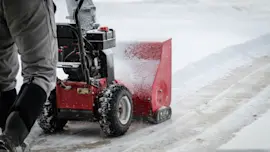
Common problems on the Craftsman 247886914 gas snowblower include hard starting (often fuel or carburetor related), poor snow discharge from a clogged chute or auger issue, and drive or auger problems caused by cable adjustment, belt wear, or a sheared shear pin. Use the 247886914 owner's manual troubleshooting chart to match symptoms to the right fix.
Most common symptoms and what usually causes them
- Won’t start or starts then dies: old fuel, clogged carburetor, incorrect throttle/primer use, fouled spark plug
- Won’t throw snow well: chute or auger housing clogged, foreign object in auger, auger cable out of adjustment, auger belt loose/damaged
- Auger won’t turn: shear pin(s) sheared after hitting ice or debris
- Chute won’t rotate smoothly: chute control assembled incorrectly or packed snow/ice in the chute area
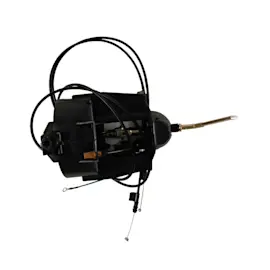
- Poor drive or slipping: drive cable needs adjustment, drive belt worn, friction wheel worn
Quick checks we recommend (safe, fast, and effective)
- Shut the engine off and let all moving parts stop; disconnect the spark plug wire before clearing jams.
- Check the chute and auger housing for packed snow/ice; clear with a clean-out tool or a stick (not your hands).
- Inspect shear pins; if an auger blade is not turning, replace the sheared pin with the correct replacement.
- Confirm control operation: the auger control should engage the auger when squeezed; the drive control should engage wheel drive.
- Look for belt or cable symptoms: loose engagement, squealing, or intermittent drive often points to adjustment or wear.
Problem-to-fix guide
| Problem you see | Most likely cause | What to do next |
|---|---|---|
| Unit fails to discharge snow | Clogged chute/auger housing | Stop engine, disconnect spark plug wire, clear blockage |
| Auger doesn’t turn | Shear pin sheared | Replace with snowblower shear pin 738-04124A |
| Chute won’t rotate 180 degrees easily | Chute assembled incorrectly | Reassemble chute control per manual |
| Auger engages poorly | Cable out of adjustment or belt issue | Adjust cable; inspect/replace belt if worn |
Why it matters
Most “big” snowblower failures start as simple issues (old fuel, a jam, or a sheared pin). Catching them early helps protect expensive components like the auger gearbox and keeps your Craftsman snow thrower throwing snow safely and consistently.
Last updated: January 2026