Installation guide
 Owner’s manual
 Error Codes


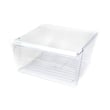
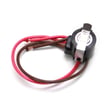
Where is the model number on a Kenmore side by side refrigerator?
On Kenmore side-by-side refrigerator model 10653602202, the model number is printed on the model and serial number label located on the inside wall of the refrigerator (fresh food) compartment. Open the refrigerator door and look along the interior side wall for the rating label. See the owner's manual for the exact label location illustration and what information to record.
What to look for on the label
The label typically includes several identifiers. Use the model number when ordering parts and the serial number when checking age or service history.
- Model number (for example: 10653602202)
- Serial number
- Electrical ratings (voltage/amps)
- Refrigerant and safety markings
- Manufacture and compliance information
Quick steps to find it fast
- Open the fresh food (refrigerator) door.
- Scan the inside walls at eye level first.
- Check the side wall near the crisper area if you do not see it immediately.
- Wipe the area with a damp cloth; labels can be hard to read under dust or spills.
- Write down the full model number exactly as shown before you shop for parts.
Common label locations (side-by-side refrigerators)
| Location | What you will see | Best used for |
|---|---|---|
| Inside wall of refrigerator compartment | Model and serial label | Parts lookup and service info |
| Door liner edge (less common) | Rating label | Quick ID check |
| Back of cabinet (least convenient) | Tech/rating label | Confirming electrical info |
Why it matters
We use the model number to match the correct Kenmore parts and diagrams for your exact configuration (ice maker, water filter system, shelves, and door components). Even small model-number differences can change which parts fit.
Last updated: February 2026
What are the most common problems with Kenmore refrigerators?
The most common problems we see on Kenmore refrigerators like model 10653602202 are cooling issues, ice maker and water dispenser problems, water leaks, frost buildup, door sealing problems, and unusual noises. Many of these trace back to airflow restrictions, control settings, or worn water-system and defrost components; see the owner's manual for model-specific troubleshooting steps.
Common problems and what usually causes them
- Not cooling or temperature too warm: blocked air vents, frequent door openings, warm food loads, or control settings that need adjustment
- Ice maker not making ice or not enough ice: new installation needs time, freezer not cold enough, shutoff arm in OFF position, or water supply issues
- Water dispenser slow or no water: clogged filter, low water pressure, or a failing inlet valve
- Water leaks or puddles: loose water line connections, clogged defrost drain, or cracked water-system parts
- Excessive frost or moisture buildup: door not sealing, doors opened often, high room humidity, or defrost system problems
- Noisy operation: normal operating sounds, fan blade interference, or a failing fan motor
Quick checks we recommend first (fast, no parts)
- Confirm the refrigerator is plugged into a grounded outlet and the breaker is not tripped.
- Make sure air vents are not blocked in either compartment.
- Verify doors close fully and the gaskets seal all the way around.
- Recheck temperature settings; after changes, allow several hours to stabilize.
- If you have digital controls, turn the unit OFF then ON to reset.
Parts that commonly solve these symptoms (when a repair is needed)
| Symptom | Common part to check | Example part for 10653602202 |
|---|---|---|
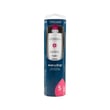
| Poor water flow, bad taste/odor | Water filter | Refrigerator water filter EDR5RXD1 |
| No ice, no water, weak fill | Water inlet valve | Refrigerator inlet valve W10408179 |
| Frost buildup, warm temps | Defrost components | Refrigerator defrost bi-metal WPW10225581 and refrigerator heater WP2323198 |
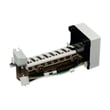
| Ice maker not cycling | Ice maker assembly | Refrigerator ice maker 2198597 |
Why it matters
Cooling, ice, and leak complaints often share the same root causes: airflow (blocked vents or door sealing) and water delivery (filter or inlet valve). Fixing the underlying cause prevents food spoilage, repeat clogs, and recurring frost or puddles.
Last updated: February 2026
How to replace an ice maker in a side by side refrigerator?
To replace the ice maker in your Kenmore 10653602202 side-by-side refrigerator, we disconnect power and shut off the water supply, remove the ice bucket for access, swap the ice maker assembly, then restore power and water and turn the ice maker ON. Use the owner's manual for model-specific access details.
Before you start
- Unplug the refrigerator or switch off the breaker.
- Turn OFF the home water shutoff; run a nearby faucet briefly to relieve pressure.
- Remove the freezer door ice bucket (press the release button and lift straight up).
- Set towels under the fill tube area for minor drips.
- Have a screwdriver and nut driver ready.
Replacement steps (typical for this style)
- Turn the ice maker OFF using the freezer ON/OFF slide control (top right area).
- Remove any shelves/bins blocking the ice maker.
- Disconnect the ice maker wiring harness.
- Remove mounting screws; lift the ice maker off the mounting tabs.
- Install the new unit, tighten screws, reconnect wiring.
- Reinstall the ice bucket; restore water and power; switch the ice maker ON.
Which ice maker part fits?
Use the ice maker that matches your original mounting and connector.
| Part | What it is | Part ID |
|---|---|---|
| Refrigerator ice maker 2198597 | Ice maker assembly | 2198597 |
| Refrigerator ice maker WPW10190961 | Ice maker assembly | WPW10190961 |
If it still does not make ice
- Confirm the shutoff valve is fully open and the supply line is not kinked.
- Verify water pressure is 30 to 120 psi (typical requirement for this model family).
- Allow up to 24 hours for normal ice production after installation.
- If a water filter is installed, reseat or replace it if flow is restricted (example: refrigerator water filter EDR5RXD1).
- If the mold stays dry, check the refrigerator inlet valve W10408179.
Why it matters
Correct installation and good water flow prevent slow production, hollow cubes, and overfilling issues that look like an ice maker failure.
Last updated: February 2026