 Installation guide
 Owner’s manual





What is the life expectancy of a GE profile dishwasher?
A GE Profile dishwasher typically lasts 10 to 12 years. For your GE CDT845P2N0S1, consistent cleaning, correct detergent use, and fixing small issues early (like draining or heating problems) are what most often determine whether it reaches the high end of that range.
Typical lifespan and what changes it
Most dishwashers fall into a similar lifespan window, but these factors move the needle the most:
- Water quality (hard water speeds up mineral buildup on the heating system and internal parts)
- How often you run it (1 to 2 loads daily adds wear faster than a few loads per week)
- Maintenance habits (filter cleaning, spray arm checks, tub wipe-downs)
- Drying and heating performance (weak heat can leave moisture that contributes to odors and residue)
- Door sealing and latching (leaks and door-start issues can shorten service life)
For model-specific care and cleaning steps, follow the owner's manual.
Quick “age vs. repair” guide
This is a practical way we evaluate whether a repair is worth doing.
| Dishwasher age | What we usually recommend | Why |
|---|---|---|
| 0 to 5 years | Repair common failures | Most repairs restore full value |
| 6 to 10 years | Repair if the issue is isolated | Avoid stacking multiple major repairs |
| 11 to 12+ years | Repair only if low-cost and reliable | Replacement planning often makes sense |
Parts that commonly affect longevity
If your dishwasher won’t start, leaks, won’t drain, or won’t dry, these are common wear items to check on GE units like the CDT845P2N0S1:
- Door latch and strike alignment (door must fully latch to run)
- Heating circuit performance (for drying and water temp)
- Drain path restrictions (hose routing, pump performance)
- Door seals and gaskets (leaks, moisture, noise)
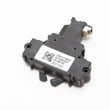
If you’re troubleshooting a door that won’t latch or a unit that won’t start, the GE dishwasher door latch lock WD21X10490 is a common related replacement.
Why it matters
Knowing the expected lifespan helps you decide whether to invest in a repair (like a drain pump, circulation pump, or heating element) or focus on maintenance to prevent repeat failures and extend the dishwasher’s useful life.
Last updated: February 2026
What is the most common problem with GE dishwashers?
The most common issues we see with GE dishwashers like model CDT845P2N0S1 are “won’t start/won’t run” complaints and draining problems. Many of these trace back to simple causes such as the door not latching fully, a power switch being off, or a restriction in the drain path.
Most common symptoms and what they usually mean
- Dishwasher won’t start or seems dead: door not latched, control lock/settings, or power supply issue.
- Dishwasher won’t drain: blockage in the filter/sump area, drain hose restriction, or a weak drain pump.
- Poor drying: heater circuit issue, rinse aid issue, or cycle selection.
- Suds/leaks: wrong detergent (hand dish soap) or oversudsing.
Quick checks we recommend first (fast, no parts)
Use these steps before replacing anything:
- Confirm any wall switch feeding the dishwasher is ON; if it was turned off, wait 5 to 10 seconds after turning it on before pressing Start so the control can initialize (see owner's manual).
- Close the door firmly; if the unit starts only when you push on the door, the latch system is the first place to look.
- If it won’t drain, inspect the drain hose routing for kinks and check for a clog where the hose connects.
- If you see lots of foam, stop the cycle and switch to automatic dishwasher detergent only (hand dish detergent causes suds).
Parts that commonly solve “won’t start” and “won’t drain”
If the basic checks point to a hardware failure, these are frequent fixes for this model family:
| Problem you notice | Common part involved | What it does |
|---|---|---|
| Won’t start, door won’t “click” shut | GE dishwasher door latch lock WD21X10490 | Signals the control that the door is safely closed |
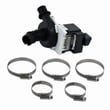
| Won’t drain, water left in tub | Drain pump asm WD19X24829 | Pumps water out during drain portions of the cycle |
| Slow drain or leaks under sink | Dishwasher drain hose WD24X10062 | Carries drain water to the disposal or drain line |
Why it matters
A dishwasher that won’t start is often a safety interlock issue (the control must “see” a closed door). A dishwasher that won’t drain can lead to standing water, odors, and poor cleaning, so clearing restrictions early prevents repeat problems.
When an error code helps
If your CDT845P2N0S1 is beeping or showing a code, use GE electronic dishwasher error codes to match the code to the most likely cause and the right next step.
Last updated: February 2026
How do I reset my GE dishwasher control board?
On your GE CDT845P2N0S1 dishwasher, the most reliable “reset” is canceling the current cycle (press and hold Start for 3 seconds) or power-cycling the dishwasher at the breaker. These steps clear many control glitches and get the control ready to start a fresh cycle; see the owner's manual.
Quick reset options (in order)
- Cancel and drain (soft reset): Press and hold Start for 3 seconds, then close the door; the dishwasher drains and the cycle ends.
- Restart correctly: Press Start, then close the door within 4 seconds to begin the cycle.
- Unlock the controls: If the control panel is locked, press and hold the lock-designated pad(s) for 3 seconds to unlock.
- Hard reset (power cycle): Turn OFF the dishwasher circuit breaker for about 5 minutes, then turn it back ON.
- Check the door latch: If the door is not fully latched, the dishwasher will not start; inspect the latch and strike alignment.
What to check if it still will not run
If the reset steps do not restore normal operation, focus on the common “no start” causes:
| Symptom | What it usually points to | What to do next |
|---|---|---|
| Lights on, won’t start | Door not latched or start sequence not followed | Press Start and close door within 4 seconds; confirm latch clicks shut |
| No response at all | Power issue (breaker, switch) | Reset breaker; check any wall switch that feeds the dishwasher |
| Buttons won’t work | Control lock enabled | Unlock controls (hold the indicated pad(s) 3 seconds) |
| Starts then cancels/drains | Leak detection or drain issue | Look for water under unit; verify drain hose routing and connections |
Why it matters
Canceling a cycle and power-cycling the breaker are the fastest ways to clear a stuck keypad state, a paused cycle, or a control logic hiccup. It also helps you confirm basics like door-latch engagement and proper Start timing before replacing parts.
Parts that commonly relate to “won’t start” symptoms
If you find a physical latch problem (door will not click shut, or it pops open), these model-matched parts are often involved:
- GE dishwasher door latch lock WD21X10490
- Dishwasher door latch strike adapter WD13X22837
- Dishwasher electronic control board WD21X25393
Last updated: February 2026
Is it worth fixing a GE dishwasher?
Yes, it’s worth fixing a GE dishwasher like model CDT845P2N0S1 when the repair is a common wear item (latch, drain pump, inlet valve, heater) and the total cost is clearly less than replacing the dishwasher. If you’re facing repeated major failures, replacement becomes the better value.
Quick decision checklist (CDT845P2N0S1)
- Fix it when the problem is isolated (won’t latch, won’t drain, won’t fill, not drying) and the unit is otherwise in good shape.
- Fix it when the repair is a single part and labor is straightforward.
- Replace it when you’ve had multiple expensive repairs in a short time.
- Replace it when the tub is damaged or leaking from the tub itself (not a gasket or hose).
- Fix it first if the dishwasher is showing an error code you can diagnose quickly using GE electronic dishwasher error codes.
Typical “worth it” repairs and parts to check
These are common, targeted fixes that often restore normal operation:
- Door won’t close or start: GE dishwasher door latch lock WD21X10490
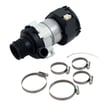
- Not draining: drain pump asm WD19X24829 and dishwasher drain hose WD24X10062
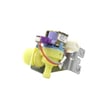
- Not filling: dishwasher water inlet valve WD15X26140
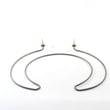
- Not drying or water not heating: dishwasher heating element WD05X30818
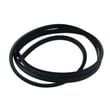
- Leaks at the door perimeter: dishwasher tub gasket WD08X23477
Cost-to-value guide
Use this simple comparison to decide quickly.
| Situation | Usually the better choice | Why |
|---|---|---|
| One clear failed part (latch, hose, valve, pump) | Repair | Predictable fix, limited parts cost |
| Intermittent power, multiple symptoms, repeated shutdowns | Evaluate control-related parts | Can become a higher-cost path |
| Multiple major repairs within 12 months | Replace | Total cost tends to snowball |
Why it matters
Dishwashers are water-heating appliances; when a single component fails (drain, fill, heat, latch), performance drops fast but the rest of the machine can still be solid. A focused repair restores cleaning and drying without paying for a full replacement.
Before you decide, confirm the basics
- Check for a wall switch controlling power; if it was turned off, wait 5 to 10 seconds after turning it on before pressing Start.
- Verify the dishwasher is on a proper 120V, 15A or 20A grounded circuit.
- Review model-specific operating and troubleshooting steps in the owner's manual.
Last updated: February 2026





