Error Codes




Can you order parts directly from Bosch?
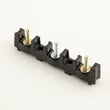
For a Bosch wall oven like model HBLP451LUC, order replacement parts from the parts list for your model so you get the correct fit and compatibility. We stock common HBLP451LUC parts such as the control module 11020743.
Best way to find the right part
Use your full model number (HBLP451LUC) and match the part by description and location in the diagram.
- Confirm the model number from the oven frame label (usually around the door frame)
- Look up the part using the model number, then cross-check the part description
- Compare any numbers printed on the old part (when accessible)
- Replace one part at a time to avoid wiring or hardware mix-ups
- If the oven is down, prioritize safety parts first (fuses, cooling fan)
When ordering parts
Both availability and urgency matter; the best choice depends on stock, price, and how quickly you need the oven back.
| What you need | Best approach |
|---|---|
| Exact part lookup by diagram | Use the model parts list and match by location and description |
| Fast availability on common repairs | Check commonly replaced items first (thermal fuse, cooling fan) |
| One-stop shopping for multiple parts | Add all needed parts and any required hardware before checkout |
Common wall oven parts customers replace
If your Bosch wall oven will not heat, overheats, or shuts down mid-cycle, these are frequent culprits:
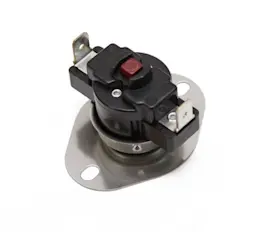
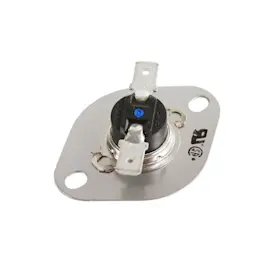
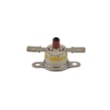
- Wall oven thermal fuse 00631343 (opens if the oven overheats)
- Wall oven cooling fan assembly 00759374 (protects controls by moving hot air out)
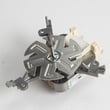
- Thermador wall oven convection fan motor 00642845 (drives convection airflow)
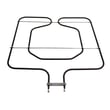
- Wall oven convection element 00755059 (heats during convection baking)
Why it matters
Ordering the correct part the first time prevents repeat tear-downs and helps avoid damage to wiring, control boards, and trim. On built-in wall ovens, correct fit and heat management parts (like a thermal fuse or cooling fan) are especially important.
Last updated: March 2026
What are common Bosch oven problems?
Common problems we see with Bosch wall ovens like model HBLP451LUC include not heating or uneven baking, overheating, error codes or a dead display, a door that will not unlock after self-clean, and loud or nonstop fan noise. These symptoms usually trace back to airflow and safety devices, heating circuits, or the electronic control.
Most common symptoms and what they usually mean
- Oven will not heat (bake or broil): a failed heating circuit, temperature sensing issue, or a safety device opening.
- Uneven baking or long cook times: convection airflow problems or temperature regulation drift.
- Oven shuts off mid-cycle: overheating protection can trip; check cooling airflow and safety cutoffs.
- Fan runs loud, runs constantly, or no fan at all: cooling fan or convection fan motor issues.
- Door will not unlock after self-clean: door lock mechanism problem.
- Display blank, beeping, or random resets: control or power supply issue.
Parts that commonly fix these problems (when symptoms match)
If your symptom points to one of these areas, these model-matched parts are common solutions:
| Symptom | Likely system | Example model-matched part |
|---|---|---|
| No heat or shuts off | Overheat protection | Wall oven thermal fuse 00631343 |
| Overheating cabinet, fan issues | Cooling airflow | Wall oven cooling fan assembly 00759374 |
| Uneven convection baking, noisy convection | Convection airflow | Thermador wall oven convection fan motor 00642845 |
| Door stuck locked | Door lock system | Wall oven door lock assembly 00631192 |
| Error codes, dead display, erratic operation | Electronic control | Control module 11020743 |
Quick checks we recommend before replacing parts
- Power reset: turn the breaker off for 2 to 5 minutes, then back on.
- Confirm mode and settings: test Bake and Broil separately; note whether either element heats.
- Listen for fans: cooling fan should run during and after heating; convection fan should run in convection modes.
- Check door seal condition: a torn gasket can cause heat loss and longer cook times.
- After self-clean: allow full cool-down; if still locked, suspect the lock system.
Why it matters
Wall ovens protect themselves when they sense overheating or airflow problems. Catching a failing cooling fan, thermal fuse, or control issue early helps prevent repeated shutdowns, poor baking results, and nuisance error codes.
For broader troubleshooting steps that apply to most wall ovens, use our 7 reasons your oven isnt working and how to fix the problems guide.
Last updated: February 2026
What are the parts of an electric oven?
An electric wall oven like the Bosch HBLP451LUC is built around heating, airflow, temperature sensing, and safety controls. The core parts include heating elements (bake and broil), a control system, door and insulation components, and fans that move heat and protect electronics.
Main parts you will find in most electric wall ovens
- Bake system: bake element (sometimes hidden), oven cavity, and temperature sensor
- Broil system: broil element at the top of the oven cavity
- Airflow system: convection fan motor and convection element (for convection baking)
- Cooling system: cooling fan and air ducting to keep controls from overheating
- Controls and wiring: control module, user interface, wiring harness, and connectors
- Door system: door gasket, hinges, and (on some models) a door lock for self-clean
Examples of model-related parts for Bosch HBLP451LUC
These are common components you may see listed for this model’s parts catalog:
| System | What it does | Example part for this model |
|---|---|---|
| Convection airflow | Circulates hot air for even baking | Thermador wall oven convection fan motor 00642845 |
| Convection heat | Adds heat near the fan for convection modes | Wall oven convection element 00755059 |
| Cooling/protection | Cools the oven’s control area | Wall oven cooling fan assembly 00759374 |
| Overheat safety | Opens the circuit if temperatures get unsafe | Wall oven thermal fuse 00631343 |
| Heat sealing | Helps keep heat inside the cavity | Door gasket 00755053 |
Why it matters
Knowing the major oven parts helps you troubleshoot faster. For example, “won’t heat” often points to a heating circuit issue (element, fuse, control), while “uneven baking” often points to convection airflow (fan motor, convection element) or rack placement.
Quick troubleshooting clues (symptom to system)
- No heat at all: thermal fuse, control module, power supply, wiring
- Bakes but not evenly: convection fan motor, convection element, rack placement
- Overheats or shuts down: cooling fan assembly, air ducting, thermal fuse
- Heat leaking or long preheat: door gasket, door alignment, hinges
For more common wall oven repair topics and part functions, use our wall oven common questions resource.
Last updated: February 2026
What is the life expectancy of a Bosch oven?
A Bosch wall oven like model HBLP451LUC typically lasts 15 years with normal household use and basic care. Heavy use, frequent self-clean cycles, and poor ventilation shorten life; replacing wear parts (like a door gasket or cooling fan) helps the oven reach its full service life.
Typical lifespan (what to expect)
Most built-in electric wall ovens fall into a predictable range:
| Usage pattern | Typical life expectancy | What usually ends it first |
|---|---|---|
| Light (few times/week) | 15 to 20 years | Door seal wear, control issues |
| Average (most days) | 12 to 18 years | Fan motors, heating circuit faults |
| Heavy (multiple times/day) | 10 to 15 years | Electronics heat stress, door hardware |
What shortens an oven’s life fastest
- Running self-clean often (very high heat stresses wiring, fuses, and controls)
- Blocked airflow around the cabinet (overheats the control area)
- Slamming or leaning on the door (wears hinges and latch parts)
- Cooking with a torn or flattened gasket (heat loss makes components work harder)
- Ignoring unusual noises from the convection or cooling fan
Parts that commonly extend service life
If performance is otherwise good, these repairs are often worth doing on HBLP451LUC:
- Replace a leaking seal with the door gasket 00755053
- Fix overheating or shutdown symptoms by checking the wall oven thermal fuse 00631343
- Address loud rattling or no-airflow issues with the wall oven cooling fan assembly 00759374
Why it matters
A wall oven’s lifespan is mostly about heat management. When the cooling system and door seal are working correctly, the control module, wiring harness, and heating components run cooler and last longer.
For more general maintenance and repair expectations, see wall oven common questions.
Last updated: February 2026