Error Codes



Why does my whirlpool bottom freezer leak out of the bottom right side front?
On your Whirlpool WRFF5333PW02 bottom-mount refrigerator, a leak at the bottom right front is usually meltwater that is not making it through the defrost drain. When the drain trough or drain tube clogs, water can overflow, run under the freezer floor, and seep out the front corner.
Most common causes
- Defrost drain hole or drain tube clogged with ice, food particles, or sludge
- Drain trough under the evaporator iced over
- Freezer door not sealing well, causing excess frost and heavy defrost water
- Refrigerator not level, so water runs toward the front instead of the drain
- Condensation from frequent door openings or warm, humid room air
What to check and fix (safe DIY steps)
- Unplug the refrigerator and remove items from the freezer floor.
- Look for a sheet of ice on the freezer bottom; that often points to a frozen drain.
- Thaw the ice using a hair dryer on low (keep heat moving) or let it melt with towels.
- Flush the drain with hot water using a turkey baster; repeat until it flows freely.
- Clean the drain opening and trough; a small zip tie or pipe cleaner can help clear soft debris.
Parts that can be involved
If the leak is paired with temperature swings or odd cycling, a sensor or airflow issue can increase frost and defrost water. These parts are commonly checked during diagnosis:
| Symptom you notice | What it can point to | Example part for WRFF5333PW02 |
|---|---|---|
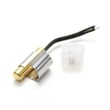
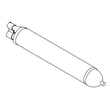
| Temps fluctuate, then water appears | Defrost/temperature sensing issue | Refrigerator thermistor W10316760 |
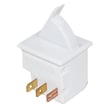
| Door looks closed but light stays on | Door switch not closing consistently | Refrigerator door switch W11396033 |
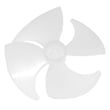
| Frost buildup and weak airflow | Evaporator fan issue | Refrigerator evaporator motor W11024089 |
Why it matters
A blocked defrost drain can keep returning, create ice buildup under the freezer floor, and eventually lead to recurring puddles and slipping hazards. Clearing the drain restores normal defrost water flow to the drain pan.
For step-by-step troubleshooting help, we recommend our DIY guide: how to get rid of refrigerator puddles.
Last updated: February 2026
Are bottom mount fridges better?
Yes, bottom-mount refrigerators are better for many households because the fresh-food section sits at eye and waist level, so you reach everyday items more easily. For a Whirlpool WRFF5333PW02 bottom-mount refrigerator, this layout typically improves convenience and organization for weekly cooking and meal prep.
When a bottom-mount refrigerator is the better choice
- You use the refrigerator section more than the freezer (most households do).
- You want less bending for milk, produce, leftovers, and beverages.
- You like wide shelves and crisper storage for fresh foods.
- You prefer freezer drawers that separate baskets and bins for organization.
When a bottom-mount might not be better
- You access frozen foods many times per day (you will bend more).
- You want the lowest possible purchase price (top-freezer models often cost less).
- You need the simplest layout with the fewest drawers and rails to maintain.
Quick comparison: bottom-mount vs top-freezer
| Feature | Bottom-mount | Top-freezer |
|---|---|---|
| Fresh-food access | Easier (less bending) | More bending |
| Freezer access | More bending | Easier |
| Organization | Strong (drawers/baskets) | Simpler |
| Typical fit/space | Often wider/taller | Often more compact |
Why it matters for repairs and parts
Bottom-mount designs commonly use door gaskets, drawer rails, and airflow components to keep temperatures even across the fresh-food section. If you notice warm spots, frosting, or inconsistent temps, checking airflow and sensing parts is a practical first step.
- For temperature-sensing issues, see refrigerator thermistor W10316760.
- For door-open light and cooling behavior, see refrigerator door switch W11396033.
- For airflow noise or weak cooling, see refrigerator evaporator motor W11024089 and refrigerator evaporator fan blade WP2169142.
For troubleshooting display codes and cooling-related symptoms, use Whirlpool refrigerator error codes.
Last updated: February 2026
What are the disadvantages of a bottom freezer refrigerator?
Bottom-freezer refrigerators like the Whirlpool WRFF5333PW02 put fresh food at eye level, but the tradeoffs are a lower freezer that requires more bending, deep drawers that can hide items, and a few maintenance issues (like drain and frost problems) that show up more often when airflow or door sealing is off.
Common disadvantages (what you will notice day to day)
- More bending and lifting: You reach down for frozen foods, and heavy items (meat, bulk bags) can be awkward to lift out.
- Deep drawer organization: Items stack and slide; smaller packages can get buried.
- Freezer access feels slower: Pull-out baskets take an extra step compared to a swing door.
- Higher upfront cost (typical): Bottom-freezer designs often cost more than basic top-freezer models.
- Kids and safety: A fully loaded freezer drawer can be heavy; fingers can get pinched if the drawer is slammed.
Maintenance and repair downsides to keep in mind
Bottom-freezer layouts can be less forgiving when airflow or sealing is not right. These are the issues we see most often:
- Frost buildup or warm freezer if the door is not sealing well (a worn gasket is a common cause).
- Water puddles or ice under the freezer drawer when the defrost drain clogs.
- Temperature swings if a sensor is out of range or the air path between compartments is restricted.
| Issue you see | What it often points to | Example part for WRFF5333PW02 |
|---|---|---|
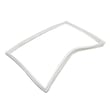
| Frost, moisture, or poor seal | Door not closing or gasket not sealing | Refrigerator door gasket (white) W10830189 |
| Temps not matching the setting | Temperature sensing or control problem | Refrigerator thermistor W10316760 |
| Fresh food warm, freezer cold | Airflow/damper issue between sections | Refrigerator electronic damper WPW10594329 |
Why it matters
Most “bottom-freezer disadvantages” come down to ergonomics and organization, but the maintenance items matter because they can affect food safety, energy use, and compressor run time if the refrigerator is constantly trying to recover temperature.
Helpful DIY guidance
- For troubleshooting display or cooling-related faults, use our Whirlpool refrigerator error codes.
- If you are dealing with water under the freezer, follow how to get rid of refrigerator puddles.
- If the doors do not feel like they close tightly, use how to fix a fridge door seal.
Last updated: February 2026
What is the most common problem with whirlpool refrigerators?
The most common Whirlpool refrigerator problem is a cooling issue (warm fridge, weak airflow, or temperature swings). On the Whirlpool WRFF5333PW02, the usual causes are restricted airflow, dirty condenser coils, a failing evaporator fan, a stuck air damper, or a temperature-sensing problem.
Most common symptoms we see
- Fresh food section is warm but freezer seems OK
- Freezer is cold but ice cream is soft or items thaw slightly
- Fridge runs a lot or seems to never shut off
- Frost buildup on the back wall inside the freezer
- Food freezes in the refrigerator section (damper or sensor issue)
- Ice maker is slow or stops after cooling performance drops
Quick checks that fix many “not cooling” complaints
- Setpoints: Confirm the refrigerator is set around 37°F and the freezer around 0°F.
- Airflow: Make sure vents inside the refrigerator are not blocked by food packages.
- Condenser coils: Clean dust and pet hair from the coils and grille area.
- Door seal: Check for gaps, torn gasket areas, or doors not closing squarely.
- Listen for the evaporator fan: When the compressor is running, you should typically hear airflow from the freezer area.
Parts that commonly solve cooling and airflow problems
If the basic checks do not help, these model-matched parts are frequent fixes:
| Problem pattern | Likely system | Example part for WRFF5333PW02 |
|---|---|---|
| Warm fridge, weak airflow | Evaporator fan system | Refrigerator evaporator motor W11024089 |
| Fan runs but airflow is poor or noisy | Fan blade | Refrigerator evaporator fan blade WP2169142 |
| Fridge too warm or temps swing | Temperature sensing | Refrigerator thermistor W10316760 |
| Freezer OK, fridge warm | Air distribution | Refrigerator electronic damper WPW10594329 |
| Moisture, warm spots near door, long run times | Door sealing | Refrigerator door gasket (white) W10830189 |
Why it matters
Cooling problems usually get worse over time. When airflow is restricted or temperatures are misread, food safety and ice production suffer, and the compressor can run longer than normal.
For model-specific troubleshooting steps, we recommend starting with Whirlpool refrigerator error codes.
Last updated: February 2026
Can I replace fridge parts myself?
Yes. With a Whirlpool WRFF5333PW02 bottom-mount refrigerator, we see many common repairs that are DIY-friendly, especially mechanical parts like a door switch, door gasket, or evaporator fan components. For sealed-system work (refrigerant, compressor) and some electrical diagnostics, we recommend using a qualified technician.
Good DIY repairs vs. pro-only repairs
Many refrigerator fixes are straightforward if you can unplug the unit, remove a few screws, and reinstall parts in the same positions.
- Good DIY: door switch, door gasket, drawer rails, fan blade, some sensors
- Usually pro-only: compressor or refrigerant-line repairs, brazing, leak checks
- Depends on comfort level: control board replacement (simple swap, but diagnosis matters)
Parts on this model that are commonly DIY-replaced
If your symptoms match, these WRFF5333PW02 parts are typical DIY replacements:
- Refrigerator door switch W11396033 (lights not working, fan stops when door is closed)
- Refrigerator door gasket (white) W10830189 (warm spots, moisture, poor seal)
- Refrigerator thermistor W10316760 (temperature swings, incorrect readings)
- Refrigerator evaporator fan blade WP2169142 (fan noise, vibration)
- Refrigerator evaporator motor W11024089 (no airflow, warm refrigerator section)
Quick DIY checklist before you order a part
- Unplug the refrigerator or switch off the breaker.
- Confirm the symptom is consistent (for example, noise only when the door is shut).
- Inspect for simple causes: blocked vents, heavy frost, loose items, dirty condenser area.
- Take a photo of wire connectors and routing before disconnecting anything.
- After reassembly, restore power and allow 24 hours for temperatures to stabilize.
Symptom-to-part guide (fast match)
| Symptom | Common cause | Part to consider |
|---|---|---|
| Interior lights do not respond | Failed door switch | Refrigerator door switch W11396033 |
| Frost, condensation, or door not sealing | Warped/torn gasket | Refrigerator door gasket (white) W10830189 |
| Warm fridge, freezer OK, weak airflow | Damper or evaporator fan issue | Refrigerator electronic damper WPW10594329 or refrigerator evaporator motor W11024089 |
| Clicking, no cooling | Sealed-system or start components | Technician recommended |
Why it matters
DIY replacement can restore proper airflow and temperature control quickly, which helps protect food and reduces compressor run time. The key is matching the symptom to the right component before replacing parts.
For display codes or beeping related to cooling, use our Whirlpool refrigerator error codes guide to narrow the failure area.
Last updated: February 2026