Owner’s manual




How much does it cost to repair a Samsung washing machine?
For a Samsung washer like model WF45R6300AW, most repairs typically land in the $200 to $265 range for parts and labor, with higher costs when major components (like the control board or tub-related parts) are involved. Use the WF45R6300AW owner's manual to confirm symptoms and error codes before pricing parts.
Typical repair cost ranges (what usually drives the bill)
Repair pricing depends on the failed part, how long diagnosis takes, and whether the repair requires major disassembly.
- Service call and diagnosis: often a flat fee plus labor
- Minor repairs (clogs, loose hoses, simple adjustments): usually lowest cost
- Water fill problems (valves, supply issues): moderate cost
- Drain problems (pump, filter, blockage): moderate to higher cost
- Electronic issues (control board, wiring): higher cost
- Major mechanical repairs (tub, basket, suspension): highest cost
Common repairs and ballpark totals
These ranges are typical for front-load washers; your total depends on labor rates and which exact part is needed.
| Repair type | Common symptom | Typical total cost |
|---|---|---|
| Water fill related | Won’t fill, fills slowly, NF-type issues | $150 to $300 |
| Drain related | Won’t drain, ND-type issues | $200 to $400 |
| Control/electronics | Dead display, random stopping, error codes | $300 to $500 |
| Suspension/tub mechanical | Excessive vibration, banging, DC/UB-type issues | $250 to $700+ |
Parts that often affect cost on WF45R6300AW
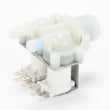
If you are troubleshooting a fill issue, the inlet valve is a common starting point. For this model, we list inlet valve options including washer water inlet valve DC62-30314K and washer water inlet valve DC62-30312J.
Why it matters
Getting the symptom and error code right first prevents buying the wrong part and paying for repeat labor. For example, a “no fill” complaint can be a supply valve issue, a clogged screen, or an inlet valve failure, and the fix cost can vary a lot.
Quick steps before you schedule service
- Confirm both hot and cold supply valves are fully open
- Check inlet hose screens for sediment buildup
- Run a rinse and spin cycle to see if the symptom repeats
- Note any error code and match it to the manual
- If you see a DC/UB-type balance error, reduce load size and re-level the washer
Last updated: February 2026
What is the life expectancy of a Samsung front load washing machine?
A Samsung front-load washer like model WF45R6300AW typically lasts 10 to 15 years with normal household use and basic maintenance. Consistent cleaning, correct detergent use (HE), and avoiding chronic overloading are the biggest factors that keep the tub, bearings, and drain system healthy.
Typical lifespan and what affects it
Most front-load washers fall into a similar lifespan range, but real-world results depend on how hard the machine works and how well it is maintained.
- Loads per week: more cycles means faster wear on bearings, shocks, and the drain pump
- Overloading: increases stress on the suspension and spin system
- Detergent choice: non-HE soap can cause oversudsing and residue buildup
- Moisture control: leaving the door closed traps humidity and speeds odor and mold growth
- Water quality: hard water can increase scale and valve issues
What “end of life” usually looks like
These are the most common failure patterns we see as a front-load washer ages.
| Symptom | Common cause | What to check first |
|---|---|---|
| Loud banging or walking | Worn suspension | Washer shock absorber DC66-00470D |
| Leaks at the door | Worn boot or loose clamp | Washer door boot DC64-03788A and washer door boot spring clamp DC97-04973B |
| Won’t drain or drains slowly | Clogged filter or failing pump | Clean filter; consider drain pump diagnosis |
| Won’t fill or fills slowly | Supply issue or inlet valve problem | Screens/hoses; washer water inlet valve DC62-30314K |
Maintenance that extends life (simple, high impact)
- Run the washer’s tub-clean cycle regularly (see intervals in the WF45R6300AW owner's manual)
- Wipe the door boot dry and leave the door ajar between loads
- Use HE detergent and measure carefully to reduce residue
- Check pockets to prevent coins, screws, and hairpins from damaging the drain system
- Level the washer to reduce vibration and suspension wear
Why it matters
A front-load washer’s most expensive wear areas are the spin system and water sealing surfaces. Preventing chronic vibration, residue buildup, and standing moisture helps you avoid leaks, odor, and premature mechanical wear.
Last updated: February 2026
Is the Samsung 4.5 front load washer any good?
Yes. The Samsung WF45R6300AW front load washer is a solid 4.5 cu. ft. class washer for most households because it typically delivers strong cleaning performance, good capacity for bulky loads, and efficient water use. Long-term satisfaction is highest when you follow the care and cleaning steps in the WF45R6300AW owner's manual.
What “good” usually means for this washer
Most owners judge a front load washer on cleaning, capacity, noise, and reliability. Here is what we see most often with Samsung front load designs like WF45R6300AW:
- Capacity: Handles larger loads (bedding and towels) better than many smaller front load units.
- Cleaning: Strong wash action; best results come from correct detergent type and dose.
- Efficiency: Typically uses less water than many top load washers.
- Noise and vibration: Usually quiet, but can shake if the load is unbalanced or the washer is not level.
- Odor prevention: Requires routine gasket and drum care to avoid musty smells.
Quick pros and cons checklist
| Area | What’s good | What to watch |
|---|---|---|
| Cleaning | Consistent results on everyday loads | Overdosing detergent can cause residue and odors |
| Capacity | 4.5 cu. ft. class fits bigger loads | Overloading can increase vibration and reduce rinse quality |
| Spin performance | High-speed spin helps reduce dry time | Unbalanced loads can trigger vibration or stopping |
| Maintenance | Simple routine care prevents most issues | Door boot area needs wiping and airflow |
How to get the best results (and avoid common complaints)
These steps make the biggest difference in real-world performance:
- Level the washer front-to-back and side-to-side; recheck after the first week of use.
- Use HE detergent only and measure carefully (more soap is not better).
- Load for balance: Mix items and avoid washing one heavy item by itself.
- Leave the door ajar after cycles so the tub and door boot can dry.
- Wipe the door boot and check for small items after washing.
- Run routine cleaning cycles as recommended in the manual.
Why it matters
Front load washers like the Samsung WF45R6300AW can clean extremely well and stay efficient for years, but they are less forgiving about leveling, detergent dosing, and moisture control. Good setup and simple maintenance prevent vibration, odor, and residue issues.
Last updated: February 2026
Is WF45R6300AW high efficiency?
Yes. The Samsung WF45R6300AW washer is a high-efficiency (HE) front-load washer; it is designed to use less water and energy than traditional top-load agitator washers while still delivering strong cleaning performance. For cycle and detergent guidance, use the WF45R6300AW owner's manual.
How to tell you are using it in HE mode (and getting the benefits)
- Use HE detergent only; standard detergent can cause oversudsing, poor rinsing, and longer drain times.
- Measure detergent carefully; more soap does not mean cleaner clothes in an HE washer.
- Select the correct cycle for the load (normal, heavy duty, bedding, quick wash).
- Avoid overloading; leave enough room for items to tumble.
- Run periodic tub-clean cycles to keep sensors and the drain system working efficiently.
Quick comparison: HE front-load vs traditional top-load
| Feature | HE front-load (WF45R6300AW) | Traditional top-load (agitator) |
|---|---|---|
| Water use | Lower | Higher |
| Cleaning action | Tumble and lift | Agitator strokes |
| Detergent type | HE required | Standard or HE |
| Spin speed | Typically higher | Typically lower |
Why it matters
Using the washer like an HE machine helps prevent common issues such as excess suds, slow draining, and odor. If you ever see a drain-related error or the washer will not drain after oversudsing, checking the pump and filter system is a smart next step; the Samsung washer drain pump assembly DC97-20621A is a common component involved in draining problems.
Last updated: February 2026
Does a Samsung washer have a filter that needs to be cleaned?
Yes. The Samsung WF45R6300AW washer uses small inlet screen filters at the water valve connections, and it also has a drain pump debris filter that should be cleaned periodically to prevent slow draining, odors, and drain errors. Use the steps in the WF45R6300AW owner's manual.
What filters you should clean (and where they are)
- Drain pump debris filter: typically at the lower front of the washer behind a small access panel; it catches coins, lint, and hair.
- Water inlet screen filters: small mesh screens inside the hot and cold water inlet ports where the hoses attach.
- Door boot area (not a filter, but a trap): the rubber gasket folds can hold water and debris; wipe it out to reduce mildew.
How to clean the drain pump filter (quick steps)
- Unplug the washer.
- Place a shallow pan and towels under the lower front access area.
- Drain any residual water (if your model has a small drain tube, use it first).
- Unscrew the filter cap, pull the filter out, and remove debris.
- Rinse the filter, reinstall it snugly, and run a rinse and spin cycle to check for leaks.
How often to clean it
| Usage pattern | Drain pump filter | Inlet screens |
|---|---|---|
| Average household | Every 1 to 3 months | Every 6 to 12 months |
| Pets, heavy lint loads, small items | Monthly | Every 6 months |
| Slow fill or low water flow | As needed | Clean now |
When cleaning the filter matters most
Cleaning is especially important if you notice:
- Slow draining or standing water after a cycle
- Musty odors in the drum
- Frequent out-of-balance events from water not draining fully
- Drain-related error codes (use our Samsung wi-fi front load washer error codes guide)
Parts that commonly relate to filter and draining issues
If cleaning does not fix slow draining, the drain pump or hoses can be the next likely cause.
Why it matters
A clogged debris filter restricts water flow out of the tub; that can increase cycle times, leave detergent residue on clothes, and strain the drain pump.
Last updated: February 2026